The human body is a beautiful machine made of millions of blood vessels that work in perfect harmony. These blood vessels carry oxygen, nutrients, and energy to every part of the body, keeping us alive and healthy. But sometimes, due to certain reasons, these blood vessels do not form correctly. One such rare and complex condition is called Arteriovenous Malformation, often referred to as AVM.
Most people have never heard of Arteriovenous Malformation until they or someone they know is diagnosed with it. The condition can be silent for many years, but when it shows symptoms, it can become serious very quickly. Understanding what AVM is, how it develops, what symptoms it causes, and how it is treated is the first step toward better health and safety.
In this detailed blog, we will explain in simple English everything you need to know about Arteriovenous Malformation. We will also share how the expert team at CVIC Indore, including Dr. Alok K Udiya, Dr. Shailesh Gupta, and Dr. Nishant Bhargava, helps patients fight this condition with advanced and compassionate care.
What is Arteriovenous Malformation?
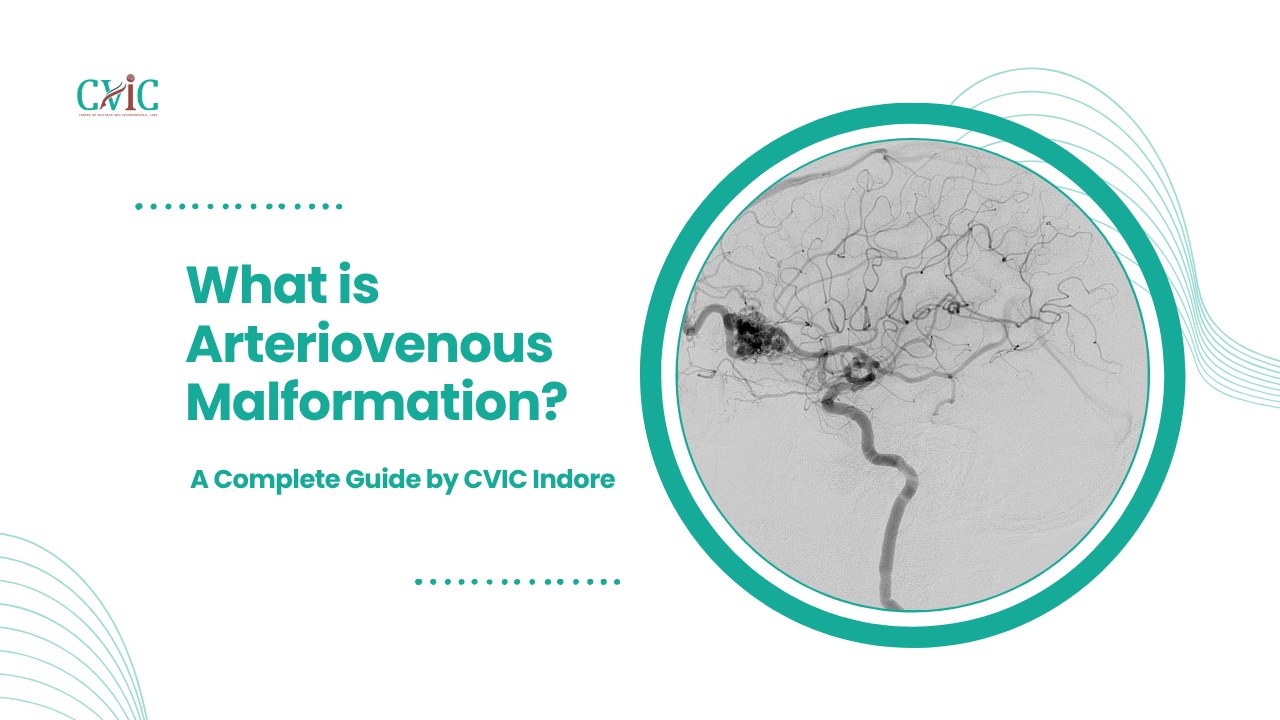
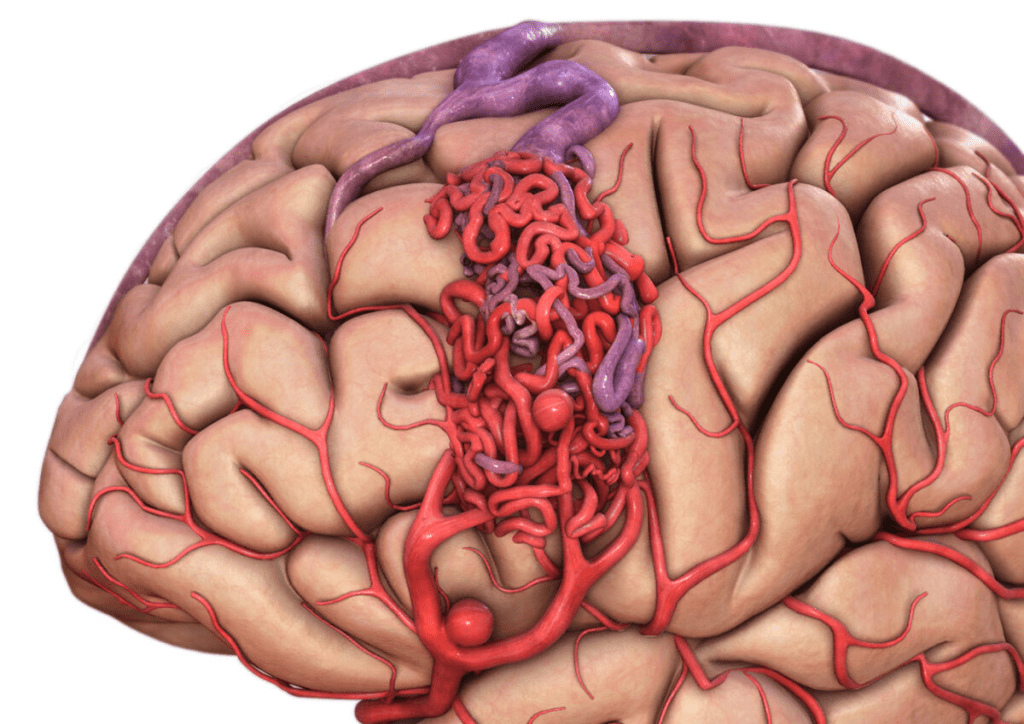
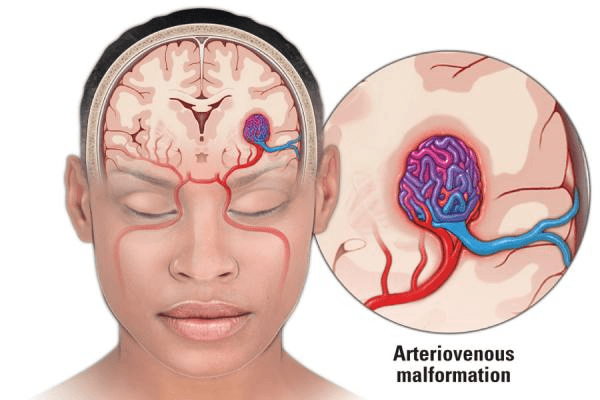
Arteriovenous Malformation is a condition where the blood vessels in a part of the body are tangled together in an abnormal way. To understand this better, we first need to know how normal blood vessels work.
In a healthy body, blood flows from the heart through arteries. Arteries are strong blood vessels that carry oxygen-rich blood under high pressure. From the arteries, blood enters tiny vessels called capillaries. Capillaries are very thin and slow down the flow of blood. They allow oxygen and nutrients to move into the body tissues. After passing through the capillaries, the blood enters the veins, which carry it back to the heart at lower pressure.
In Arteriovenous Malformation, this normal flow is disturbed. The capillaries are missing, and the arteries directly connect to the veins. This causes a tangled mess of blood vessels where blood rushes from arteries straight into veins at high pressure. This is dangerous because veins are not built to handle such high-pressure blood flow. Over time, this can weaken the vessels and cause many problems, including rupture, bleeding, and stroke.
AVM can occur anywhere in the body, but it most commonly affects the brain and spinal cord. Brain AVMs are especially dangerous because the brain is a delicate organ and any bleeding or pressure inside it can be life-threatening.
According to Dr. Alok K Udiya at CVIC Indore, early diagnosis and proper treatment of Arteriovenous Malformation can save lives and prevent serious complications.
Also Read: Chronic Headache Causes in Brain: A Complete Guide by CVIC Indore
How Common is Arteriovenous Malformation?
Arteriovenous Malformation is a rare condition. Studies show that about 1 in every 1000 to 2000 people may have an AVM, mostly without knowing it. Brain AVMs are present in less than 1 percent of the population. Most cases are present from birth, although symptoms usually appear later in life.
AVMs affect both men and women, but men are slightly more prone to brain AVMs than women. Most cases are diagnosed between the ages of 20 and 40, although they can be found at any age, even in children.
Because AVMs often do not show symptoms for many years, many cases are discovered only by accident during a brain scan done for another reason. This is why awareness is so important. The team at CVIC Indore stresses that any unusual headache, seizure, or neurological symptom should be checked promptly by experts like Dr. Shailesh Gupta and Dr. Nishant Bhargava.
Also Read: Treating Brain Tumors with Embolization: A Targeted Approach
Where Can Arteriovenous Malformation Occur?
AVMs can occur in different parts of the body. The most common locations include:
Brain AVMs: These are the most common and dangerous. They can press on brain tissue, cause seizures, or rupture and bleed.
Spinal Cord AVMs: These affect the spinal cord and can cause back pain, weakness, or paralysis if not treated.
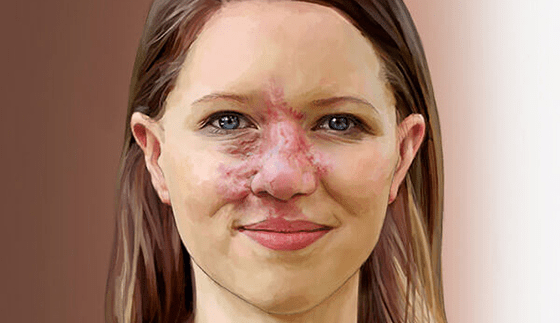
Skin and Soft Tissue AVMs: These appear on or just under the skin as bluish or reddish patches. They may pulse and grow over time.
Lung AVMs: These can cause low oxygen levels, breathing problems, and sometimes coughing up blood.
Liver and Kidney AVMs: These are rare but can affect organ function and cause internal bleeding.
Uterine AVMs: These can cause heavy bleeding in women, especially after childbirth.
Each type of AVM requires special evaluation and treatment. CVIC Indore offers complete care for all kinds of vascular malformations with advanced imaging and modern interventional techniques.
Also Read: Top Vascular Center in MP – CVIC Indore
What Causes Arteriovenous Malformation?
The exact cause of Arteriovenous Malformation is not fully understood. Most cases are believed to be congenital, meaning they are present from birth. They form during fetal development when the blood vessel network does not grow correctly.
However, AVM is usually not hereditary in most cases. This means it does not pass from parents to children. But in some rare conditions, like Hereditary Hemorrhagic Telangiectasia (HHT) or Osler-Weber-Rendu syndrome, AVMs can run in families. People with HHT may develop multiple AVMs in different organs throughout life.
Other possible causes or contributing factors include head injuries, infections, or radiation exposure, although these are very rare and not well established. Most AVMs simply form due to random errors in blood vessel development before birth.
Dr. Alok K Udiya at CVIC Indore explains that even though AVMs are present from birth, they may stay quiet for decades. The risk of symptoms or rupture builds slowly over time, which is why timely diagnosis matters so much.
How Dangerous is Arteriovenous Malformation?
Arteriovenous Malformation can be a silent but very serious condition. The danger depends on the size, location, and behavior of the AVM. Some AVMs cause no symptoms throughout a person’s life, while others can lead to devastating complications.
The biggest danger of an AVM is rupture. Because veins cannot handle high-pressure blood flow, they can weaken over time and eventually burst. When this happens in the brain, it causes a hemorrhagic stroke, which is bleeding inside the brain. This is a medical emergency that can lead to disability or death within minutes.
About 2 to 4 percent of brain AVMs rupture each year. Over a lifetime, the risk of rupture can be significant. Each rupture can damage brain tissue and increase the chance of future bleeds.
Other dangers of AVM include seizures, severe headaches, neurological problems like weakness or speech difficulty, and reduced oxygen supply to surrounding brain tissue. Spinal AVMs can lead to paralysis if not treated.
Dr. Shailesh Gupta points out that while not every AVM needs immediate treatment, every AVM needs proper evaluation. Knowing the risk helps doctors and patients make the right decisions together.
Symptoms of Arteriovenous Malformation
Many people with AVM have no symptoms at all. The condition may be discovered only during imaging done for another reason. But when symptoms do appear, they vary depending on where the AVM is located and how large it is.
For brain AVMs, the most common symptom is bleeding in the brain. This may show as a sudden severe headache, vomiting, neck stiffness, confusion, loss of consciousness, or seizures. Other symptoms include weakness or paralysis on one side of the body, vision problems, difficulty speaking, dizziness, loss of coordination, memory issues, and learning difficulties.
For spinal AVMs, symptoms may include back pain, weakness in the legs, loss of bladder or bowel control, and numbness or tingling.
For skin AVMs, the affected area may appear as a red or purple birthmark, may feel warm to touch, and may pulse like a heartbeat.
For lung AVMs, symptoms include shortness of breath, fatigue, blue tint to skin or lips, and coughing up blood.
Whenever you notice such symptoms, it is important to seek medical advice immediately. The team at CVIC Indore, led by Dr. Nishant Bhargava, has the expertise to recognize and manage AVM-related symptoms with precision.
Warning Signs You Should Never Ignore
Some symptoms are warning signs that an AVM may be about to rupture or has already started bleeding. These include sudden, severe headache that feels different from any before, vision changes, numbness, weakness on one side of the body, slurred speech, sudden seizures, loss of consciousness, or extreme dizziness.
If any of these signs appear, do not wait. Rush to CVIC Indore or the nearest emergency hospital immediately. Quick action can save brain cells and even life.
How is Arteriovenous Malformation Diagnosed?
Diagnosing AVM requires advanced imaging tests. These tests help doctors see the size, location, and pattern of the tangled blood vessels. Based on the results, they can plan the best treatment.
The first step is a detailed medical history and physical examination. Doctors will ask about symptoms, family history, and any past health problems.
The next step is imaging. A CT scan is often the first test done to look for bleeding or abnormalities in the brain. MRI gives a more detailed view of the brain tissue and can clearly show the AVM. MRA, or magnetic resonance angiography, focuses on the blood vessels and shows the abnormal connections.
The most accurate test is cerebral angiography or digital subtraction angiography (DSA). In this test, a thin tube is inserted into an artery in the leg and guided up to the brain. A special dye is injected, and X-rays are taken to show the AVM in detail. This test is the gold standard for diagnosing AVMs.
CVIC Indore is equipped with the latest imaging technology, ensuring quick and accurate diagnosis. Dr. Alok K Udiya and his team perform every test with precision to design the safest and most effective treatment plan.
Treatment Options for Arteriovenous Malformation
The treatment of Arteriovenous Malformation depends on the size, location, type, and symptoms of the AVM. The goal of treatment is to stop bleeding, prevent rupture, and reduce the risk of complications.
There are three main treatment options for AVM today: surgery, endovascular embolization, and stereotactic radiosurgery. Sometimes a combination of these is used for the best result.
Surgical Removal
In this method, the surgeon removes the entire AVM through open brain surgery. The skull is opened, the AVM is carefully separated from surrounding tissue, and the abnormal blood vessels are clipped and removed. This is the most direct way to treat an AVM and works well for AVMs that are easy to reach.
However, surgery is not always possible for AVMs located deep in the brain or near important areas like the speech or motor centers. In such cases, other treatments are preferred.
Endovascular Embolization
This is a minimally invasive procedure where doctors close off the AVM from inside the blood vessels. A thin tube called a catheter is inserted into an artery in the leg and guided up to the AVM. Special glue, coils, or particles are then injected to block the abnormal vessels.
Embolization may be used alone for small AVMs or combined with surgery or radiosurgery for larger ones. It reduces blood flow to the AVM and lowers the risk of rupture. CVIC Indore is well known for performing this advanced procedure with high precision.
Stereotactic Radiosurgery
Despite its name, this is not real surgery. It is a highly focused radiation treatment that targets the AVM with precise beams. Over time, usually 1 to 3 years, the radiation causes the AVM vessels to close off and disappear.
This option is best for small AVMs in deep or risky brain areas. It is non-invasive, painless, and very effective for the right patients.
Combined Treatment
Many AVMs need a combination of treatments. For example, embolization may be done first to shrink the AVM, followed by surgery or radiosurgery. The team at CVIC Indore designs each treatment plan based on the patient’s unique condition.
Dr. Shailesh Gupta and Dr. Nishant Bhargava work closely with Dr. Alok K Udiya to ensure every AVM patient receives the safest and most effective care.
What If the AVM Has Already Bled?
If an AVM has already ruptured and caused bleeding, emergency care is needed immediately. The first step is to stabilize the patient, stop the bleeding, and reduce brain pressure. Once the patient is stable, the AVM is then treated using one of the methods mentioned above.
Time is the most important factor here. Faster treatment means better outcomes. CVIC Indore offers 24×7 emergency neurovascular care to handle such critical situations.
Recovery After AVM Treatment
Recovery after AVM treatment depends on the size of the AVM, the type of treatment used, and whether bleeding had occurred before treatment. For embolization, most patients recover within a few days. For open surgery, recovery may take several weeks, including hospital stay and rehabilitation. For radiosurgery, no recovery time is needed immediately, but the AVM takes 1 to 3 years to disappear fully.
Patients who had a hemorrhage may need longer rehabilitation, including physical therapy, occupational therapy, and speech therapy. Some may regain full function, while others may have lasting effects.
CVIC Indore provides complete post-treatment care, ensuring every patient gets the support they need for a strong recovery. The dedicated team helps patients return to their normal life with confidence.
Can Arteriovenous Malformation Be Prevented?
Since most AVMs are present from birth, they cannot be prevented. However, certain steps can help reduce the risk of complications and rupture once an AVM is diagnosed.
Controlling blood pressure is one of the most important steps. High blood pressure increases the risk of AVM rupture, so keeping it in check is critical. Avoid smoking, limit alcohol, and avoid recreational drugs.
People diagnosed with AVM should avoid heavy lifting, contact sports, and activities that suddenly raise blood pressure. Manage stress through yoga, meditation, or counseling.
Pregnant women with known AVMs need close medical monitoring, as pregnancy and childbirth can increase the risk of rupture.
Regular follow-up imaging is also important to track the AVM and detect any changes early. Dr. Nishant Bhargava advises that timely monitoring at CVIC Indore can prevent emergencies and improve long-term outcomes.
Living with Arteriovenous Malformation
Being diagnosed with AVM can be emotionally difficult. Many patients feel anxious, scared, or uncertain about the future. But with the right care, most people with AVM can live happy, full, and active lives.
If you have an AVM, follow your doctor’s advice carefully. Take all prescribed medicines, including blood pressure medications. Stay in regular touch with your medical team for follow-ups and imaging. Avoid known risk factors like smoking, drugs, and uncontrolled blood pressure.
Take care of your mental health too. Joining support groups, talking to a counselor, or sharing your concerns with family can make a big difference. Stay informed about your condition and ask your doctor any questions you have.
At CVIC Indore, the team not only treats the AVM but also supports patients emotionally and mentally throughout their journey. Dr. Alok K Udiya often reminds patients that knowledge is power, and informed patients recover faster and better.
Why Choose CVIC Indore for AVM Treatment?
CVIC Indore, known as the Center for Vascular and Interventional Cardiology, is one of the leading centers in Central India for the treatment of vascular and neurovascular conditions, including Arteriovenous Malformation. The center is known for combining cutting-edge technology with personalized care.
The team at CVIC Indore is led by Dr. Alok K Udiya, a renowned specialist in interventional cardiology and neurovascular procedures. With years of experience, he has successfully managed many complex AVM cases, including ruptured and large malformations.
Dr. Shailesh Gupta is another senior expert at CVIC Indore. Known for his diagnostic accuracy and skill in minimally invasive procedures, he ensures that each patient receives the most precise treatment plan suited to their unique condition.
Dr. Nishant Bhargava brings deep knowledge of modern endovascular techniques. He is highly skilled in embolization, coiling, and stent placements that play a key role in AVM management.
Together, this expert team uses the latest imaging tools like high-resolution MRI, MRA, CT angiography, and DSA. The center offers advanced operation theaters, 24×7 emergency services, and complete rehabilitation support, making it one of the most trusted destinations for AVM treatment in India.
Myths and Facts About Arteriovenous Malformation
There is a lot of confusion around AVM. Let us clear some common myths.
Myth: AVM is a tumor. Fact: AVM is not a tumor. It is a tangle of abnormal blood vessels. It does not spread or grow like cancer.
Myth: AVM always causes symptoms. Fact: Most people with AVM have no symptoms for years. Symptoms usually appear only when the AVM grows large or ruptures.
Myth: AVM cannot be treated. Fact: AVMs can be treated successfully with surgery, embolization, or radiosurgery. Most patients have good outcomes when treated by experts.
Myth: Only adults get AVM. Fact: AVMs are present from birth, so they can affect children, teenagers, and adults of all ages.
Myth: Surgery is the only treatment. Fact: Today, many AVMs are treated with non-invasive methods like embolization and radiosurgery. Open surgery is only one of several options.
Myth: AVM always runs in families. Fact: Most AVMs are not hereditary. They happen randomly during fetal development. Only rare types like HHT can be inherited.
Dr. Shailesh Gupta says that clear knowledge helps patients make confident decisions and removes unnecessary fear.
Frequently Asked Questions About AVM
Is AVM life-threatening? AVM can be life-threatening if it ruptures or causes major bleeding. With timely diagnosis and treatment, most patients recover well.
Can AVM be cured completely? Yes, many AVMs can be completely removed or closed off with proper treatment. Once treated, the chance of recurrence is very low.
Is AVM treatment safe? Modern AVM treatments are very safe in experienced hands. CVIC Indore has an excellent track record of successful AVM procedures.
Can AVM be detected before symptoms appear? Yes, AVMs are sometimes found by chance during MRI or CT scans done for other reasons. Early detection allows safer treatment.
Can children have AVM? Yes, AVMs are present from birth and can affect children. Pediatric specialists at CVIC Indore handle such cases with care.
Does pregnancy affect AVM? Pregnancy can slightly increase the risk of AVM rupture due to hormonal and blood pressure changes. Pregnant women with AVM need close monitoring.
How long does AVM treatment take? Embolization may take a few hours. Surgery usually takes a few hours and requires hospital stay. Radiosurgery is a one-time treatment, but results appear over 1 to 3 years.
Will I have permanent disability after AVM treatment? Most patients recover well without major disability, especially if treated early. The outcome depends on AVM location, size, and whether bleeding occurred.
The Future of AVM Treatment
Medical science is making big strides in the treatment of AVMs. New embolization materials, advanced microsurgical tools, robotic-assisted procedures, and AI-based imaging are improving outcomes every year.
Researchers are also studying the genetic causes of AVM, which may lead to preventive treatments in the future. Personalized medicine and 3D printing of brain models for surgical planning are now becoming part of routine care in advanced centers.
CVIC Indore stays at the forefront of these innovations. The team regularly updates their skills and technology to bring the latest care to patients across Indore, Madhya Pradesh, and Central India.
Tips to Stay Healthy with AVM
If you have been diagnosed with AVM, you can still live a happy and productive life by following some simple tips.
Maintain a healthy blood pressure. Eat a balanced diet rich in fruits, vegetables, and whole grains. Drink plenty of water daily. Avoid smoking, alcohol, and recreational drugs. Exercise gently and avoid heavy lifting or strenuous activities. Sleep at least 7 to 8 hours every night. Manage stress through yoga, meditation, or hobbies. Visit your doctor regularly for follow-ups and scans. Take all medications as prescribed.
Dr. Nishant Bhargava emphasizes that the combination of medical care and a healthy lifestyle is the best way to keep AVM under control.
When to See a Doctor
You should see a doctor immediately if you experience sudden severe headache, seizures, weakness on one side of the body, vision problems, slurred speech, loss of balance, or any unusual neurological symptom. Even if you have been diagnosed with AVM but feel fine, regular check-ups are very important.
Do not wait or ignore warning signs. The earlier the diagnosis, the better the treatment outcome. CVIC Indore is ready to provide expert evaluation and care whenever you need it.
Awareness and Action
Awareness is one of the strongest tools against AVM. Many lives can be saved when people know about this condition and take it seriously. If you have a family member with neurological symptoms or unexplained headaches, encourage them to get a thorough check-up.
By spreading awareness, you can help others recognize the signs of AVM and seek timely care. Sharing information from trusted centers like CVIC Indore is also a great way to make a positive impact.
Final Thoughts
Arteriovenous Malformation is a rare but serious condition that requires expert care. Although it can be silent for years, an AVM has the potential to cause severe complications if left untreated. With modern diagnostic tools and advanced treatment options, most AVMs can now be managed successfully, allowing patients to live full and healthy lives.
The key lies in awareness, early diagnosis, and proper treatment by experienced professionals. CVIC Indore, with the trusted team of Dr. Alok K Udiya, Dr. Shailesh Gupta, and Dr. Nishant Bhargava, is committed to providing the best AVM care possible. From accurate diagnosis to advanced treatment and complete recovery, the team supports every patient throughout the journey.
If you or someone you love has been diagnosed with Arteriovenous Malformation or shows symptoms that worry you, do not wait. Visit CVIC Indore today and meet the experts who can make a difference. Your brain and your life deserve nothing less than the best care.
With knowledge, timely action, and the right medical team by your side, Arteriovenous Malformation can be treated safely and effectively. Let CVIC Indore be your trusted partner in this journey toward better health and a brighter future.