“My father had a stroke. Should we just start physiotherapy, or does he need neuro treatment first?”
“I’ve had back pain and leg weakness for months. The physiotherapist says exercise will fix it. My neighbour says see a neurologist. Who is right?”
“My hand has been trembling and getting weaker. Is physiotherapy enough, or is something deeper going on?”
Questions like these come up in almost every family at some point. And they reflect a very real confusion: when the body stops working the way it should — weakness, numbness, tremors, imbalance, paralysis — should you go to a physiotherapist or seek neuro treatment from a specialist?
Ask around, and you’ll get conflicting advice. Some people swear physiotherapy cured their weakness. Others tell horror stories of months wasted on exercises while an undiagnosed brain or spine problem silently worsened.
So let’s settle the question properly: Physiotherapy vs neuro treatment — what is better?
The honest answer, which the expert team at CVIC Indore — Dr. Alok K Udiya, Dr. Shailesh Gupta, and Dr. Nishant Bhargava — explains in this detailed guide, is this: it’s the wrong question. Physiotherapy and neuro treatment are not competitors. They are two different tools that answer two different questions — and the real skill lies in knowing which one your condition needs, in what order, and when both are required together.
Get that sequence right, and recovery can be remarkable. Get it wrong, and the consequences can be permanent.
What Exactly Is Physiotherapy?
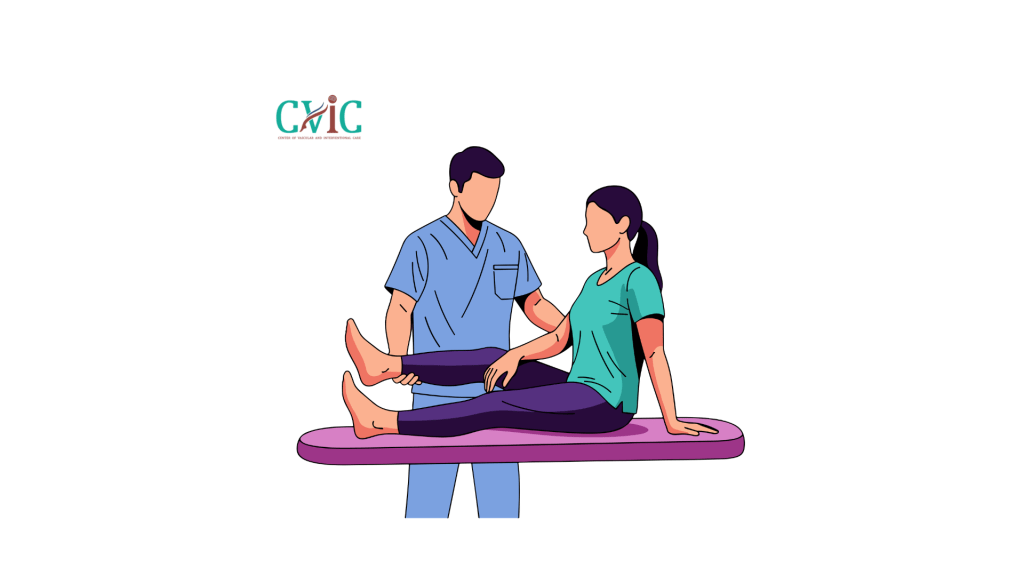
Physiotherapy (physical therapy) is a treatment discipline that uses movement, exercise, manual therapy, and physical techniques to restore strength, mobility, balance, and function.
A qualified physiotherapist helps patients through:
- Strengthening exercises — rebuilding weakened muscles
- Range-of-motion and stretching work — preventing stiffness and contractures
- Gait and balance training — relearning to walk safely
- Neuro-rehabilitation techniques — retraining the brain and body connection after stroke or injury
- Pain management modalities — heat, cold, ultrasound, TENS
- Posture correction and ergonomic advice
Physiotherapy is powerful. It is evidence-based, it has no significant side effects when properly supervised, and for many conditions — a frozen shoulder, post-fracture stiffness, simple mechanical back pain, sports injuries — it is the primary and complete treatment.
But here is what physiotherapy fundamentally cannot do: it cannot diagnose or treat the underlying cause of a neurological problem. Physiotherapy strengthens the machinery of movement — muscles and joints. It cannot dissolve a blood clot in the brain, close a leaking aneurysm, shrink a tumor pressing on the spinal cord, or reopen a blocked artery.
Also Read: Understanding Aneurysms Treatment in Indore – Neuro Intervention Explained
What Is Neuro Treatment?
Neuro treatment is a broad term covering the diagnosis and treatment of diseases of the brain, spinal cord, nerves, and their blood vessels. It includes:
Diagnosis First
- Clinical evaluation by a neuro specialist
- Advanced imaging — MRI, CT scan, CT/MR angiography, DSA (digital subtraction angiography)
- Nerve conduction studies, EEG, and laboratory tests
Medical Neuro Treatment
- Medications for stroke prevention, epilepsy, Parkinson’s disease, neuropathy, migraine, multiple sclerosis, and more
Interventional Neuro Treatment
This is where modern medicine has made spectacular advances — and it is the special expertise of CVIC Indore:
- Mechanical thrombectomy — physically removing a clot from a blocked brain artery during acute stroke, through a catheter inserted at the wrist or groin
- Intravenous thrombolysis — clot-dissolving medication given within the golden window of a stroke
- Aneurysm coiling and flow diversion — sealing brain aneurysms without open surgery
- AVM and fistula embolization — closing abnormal blood vessel tangles
- Carotid artery stenting — reopening narrowed neck arteries that threaten to cause stroke
Surgical Neuro Treatment
- Operations for tumors, severe disc compression, hydrocephalus, and trauma, performed by neurosurgeons when needed
In short: neuro treatment addresses the root cause. Physiotherapy restores the function. Both matter — but they answer different questions.
The Critical Principle: Diagnosis Before Rehabilitation
Here is the single most important message of this entire blog.
Before anyone begins physiotherapy for a neurological symptom — weakness, numbness, imbalance, facial droop, speech difficulty — the cause must be diagnosed first.
Why? Because the symptom looks the same on the outside, but the causes range from harmless to life-threatening:
- Leg weakness could be a pinched nerve — or a spinal cord tumor
- Hand weakness and slurred speech could be fatigue — or an evolving stroke
- Facial drooping could be Bell’s palsy (excellent recovery with medication and physiotherapy) — or a brain stroke (an emergency where every minute counts)
- Back pain with leg numbness could be a muscle strain — or cauda equina compression that can cause permanent paralysis if not treated urgently
Dr. Alok K Udiya at CVIC Indore sees the consequences of this confusion regularly: “We meet patients who spent weeks doing physiotherapy for ‘weakness’ that was actually a stroke, a spinal cord compression, or a brain lesion. Physiotherapy was not wrong — it was premature. Without a diagnosis, you may be exercising a limb while the disease that weakened it continues to advance. Diagnosis first. Always.”
The reverse mistake also happens: patients who needed only physiotherapy undergo endless tests and medications, when a structured exercise program would have resolved the problem. That’s why expert evaluation matters — to place each patient on the right path, not the default one.
Also Read: What Treatment Options Are Available for Neurological Disorders?
When Physiotherapy Alone Is the Right Answer
For many conditions, physiotherapy is not just helpful — it is the best and complete treatment:
- Mechanical back and neck pain without red-flag signs — the majority of cases improve with exercise-based therapy
- Post-fracture and post-surgery stiffness — restoring joint movement and strength
- Frozen shoulder, tennis elbow, sports injuries
- Postural problems from desk work and poor ergonomics
- Balance training in stable elderly patients to prevent falls
- Bell’s palsy recovery — once the diagnosis is confirmed and medical treatment started, facial exercises support recovery
If a proper evaluation has ruled out a neurological cause, committing fully to physiotherapy — with a qualified therapist and a structured plan — delivers excellent results without medicines or procedures.
When Neuro Treatment Must Come First
There are situations where going straight to physiotherapy — skipping neuro evaluation — is genuinely dangerous. Neuro treatment must come first when:
1. Stroke — The Ultimate Time Emergency
If weakness, facial drooping, slurred speech, or vision loss appears suddenly, it is a stroke until proven otherwise. Remember BE-FAST: Balance, Eyes, Face, Arm, Speech, Time.
In an acute stroke, the treatment is not exercise — it is emergency neuro intervention:
- Clot-dissolving medication within 4.5 hours
- Mechanical thrombectomy — available at CVIC Indore — which can physically remove the clot and reverse paralysis, in selected patients up to 24 hours from onset
Dr. Nishant Bhargava of CVIC Indore is emphatic: “Every minute of a stroke, nearly two million brain cells die. Physiotherapy has a vital role — but it begins after we save the brain, not instead of saving it. A patient rushed to us for thrombectomy may walk out of hospital in days. The same patient taken for ‘massage and exercise’ first may be disabled for life.”
2. Red-Flag Back Pain
Back pain with loss of bladder or bowel control, numbness in the inner thighs, or rapidly progressing leg weakness signals spinal cord or cauda equina compression — a surgical emergency, not a physiotherapy case.
3. Progressive Weakness
Weakness that is steadily worsening week by week — rather than improving — needs imaging to look for tumors, spinal compression, or neurological disease before any exercise program.
4. Symptoms With Headache, Seizures, or Confusion
Weakness accompanied by severe headache, a first seizure, personality change, or drowsiness points to a brain problem — tumor, bleed, or vascular malformation — requiring urgent scans and neuro treatment.
5. Known Vascular Conditions
Patients with brain aneurysms, AVMs, or severe carotid narrowing need definitive neuro treatment — coiling, embolization, or stenting, all available at CVIC Indore — before or alongside any rehabilitation plan.
Also Read: Brain Stroke Treatment Cost in India: A Complete Guide by CVIC Indore
The Real Answer: Not “Versus” — But “In the Right Sequence, Together”
Now we come to the truth that resolves the whole debate. In serious neurological illness, physiotherapy and neuro treatment are partners in a relay race — each running its leg at the right time.
Take the most common example: stroke recovery.
Phase 1 — Emergency neuro treatment (hours): The blocked artery is reopened — thrombolysis or mechanical thrombectomy at a specialised centre like CVIC Indore. This determines how much brain survives.
Phase 2 — Acute care and early mobilisation (days): Blood pressure, sugar, and swallowing are managed; physiotherapy often begins gently within 24–48 hours, right at the bedside, preventing stiffness, clots, and pneumonia.
Phase 3 — Intensive neuro-rehabilitation (weeks to months): This is physiotherapy’s time to shine. Thanks to neuroplasticity — the brain’s ability to rewire itself — repetitive, structured, task-specific exercise literally teaches surviving brain regions to take over lost functions. Walking, grip, balance, and speech can improve dramatically. The evidence is clear: patients who undergo structured rehabilitation recover significantly better than those who don’t.
Phase 4 — Long-term prevention (lifelong): Neuro treatment returns — medications, risk-factor control, and follow-up imaging to prevent the next stroke, alongside continued exercise.
Notice what happened: neither treatment alone produces the best outcome. Neuro intervention without rehabilitation leaves recovery incomplete. Rehabilitation without neuro treatment misses the disease. Together, sequenced correctly, they produce results that neither could achieve alone.
The same partnership applies across neurology — Parkinson’s disease (medication + physiotherapy for gait and balance), multiple sclerosis (disease-modifying therapy + rehabilitation), neuropathy, spinal disorders, and post-surgical recovery.
Dr. Shailesh Gupta of CVIC Indore summarises it perfectly: “Asking ‘physiotherapy vs neuro treatment — what is better?’ is like asking whether the fire brigade or the rebuilding contractor is better after a house fire. You need the fire brigade first, urgently — then the contractor, patiently. The tragedy is calling them in the wrong order.”
How to Decide: A Simple Practical Guide
Use this framework when you or a family member faces weakness, numbness, imbalance, or paralysis:
Go for urgent neuro evaluation FIRST if:
- Symptoms appeared suddenly (minutes to hours)
- There is facial drooping, slurred speech, or vision loss
- Weakness is progressively worsening
- There is severe headache, seizure, confusion, or loss of consciousness
- There is loss of bladder/bowel control with back pain
- There is a known aneurysm, AVM, carotid disease, or previous stroke
Physiotherapy is likely the right primary path if:
- The problem is joint or muscle pain after injury, surgery, or strain
- Symptoms are stable or improving, and a doctor has ruled out neurological causes
- You are in the recovery phase after a diagnosed and treated neuro condition
When in doubt — get evaluated first. A consultation and, where needed, an MRI or angiography takes little time. At CVIC Indore, the team routinely guides patients on exactly this question — confirming whether the underlying cause needs intervention, and then charting the rehabilitation plan.
The Bottom Line
So — physiotherapy vs neuro treatment: what is better?
- Physiotherapy is better for restoring strength, mobility, and function — and is the complete treatment for many musculoskeletal problems
- Neuro treatment is better — and often life-saving — for diagnosing and treating the root cause: stroke, aneurysms, tumors, nerve compression, and vascular disease
- For serious neurological conditions, the best outcomes come from both, in the right sequence: diagnose and treat the cause first, then rehabilitate intensively
- The most dangerous mistake is starting physiotherapy for an undiagnosed neurological symptom — especially sudden weakness, which is a stroke until proven otherwise
Your body deserves both the fire brigade and the rebuilding contractor — in the right order.
Get the Right Guidance at CVIC Indore
If you or a loved one is facing weakness, paralysis, imbalance, or an unclear diagnosis — and you’re unsure whether physiotherapy or neuro treatment is the right next step — get an expert opinion before committing to either path.
At CVIC Indore, Dr. Alok K Udiya, Dr. Shailesh Gupta, and Dr. Nishant Bhargava provide comprehensive neurological evaluation, advanced imaging, emergency stroke intervention, and minimally invasive neuro treatments — and work hand-in-hand with rehabilitation specialists to plan your complete recovery journey.
The right treatment, in the right order, at the right time — that’s what changes outcomes. Contact CVIC Indore today.
Frequently Asked Questions (FAQs)
1. Should I start physiotherapy immediately after a stroke?
Not before emergency neuro treatment. In the first hours of a stroke, the priority is reopening the blocked artery — thrombolysis or mechanical thrombectomy at a centre like CVIC Indore. Once the patient is stable, physiotherapy should begin early — often within 24–48 hours — and continue intensively for months. Early, structured rehabilitation significantly improves recovery.
2. Can physiotherapy cure paralysis without any neuro treatment?
Physiotherapy cannot treat the cause of paralysis — a clot, bleed, tumor, or nerve compression. What it does brilliantly is harness neuroplasticity to retrain the brain and rebuild function after the cause has been addressed. Skipping diagnosis and going straight to physiotherapy risks letting the underlying disease progress.
3. How do I know if my weakness needs a neurologist or a physiotherapist?
Sudden onset, progressive worsening, facial droop, slurred speech, severe headache, seizures, or bladder/bowel problems all point to a neurological cause — see a neuro specialist urgently. Stable pain or stiffness after injury or strain, with normal neurological findings, usually suits physiotherapy. When in doubt, get a neuro evaluation first.
4. Is neuro treatment always surgery?
No. Modern neuro treatment is largely non-surgical — medications, and minimally invasive endovascular procedures like stroke thrombectomy, aneurysm coiling, and carotid stenting performed through a pinhole in the wrist or groin. These are the specialised procedures offered at CVIC Indore by Dr. Alok K Udiya and team.
5. How long does neuro-rehabilitation take after stroke or brain injury?
Recovery is fastest in the first 3–6 months — the golden window of neuroplasticity — but meaningful improvement can continue for a year or more with consistent therapy. Duration varies with the severity of the injury, how quickly the initial neuro treatment was delivered, and the intensity of rehabilitation. Regular follow-up helps adjust the plan as you improve.
Disclaimer: This article is for educational purposes only and is not a substitute for professional medical advice, diagnosis, or treatment. If you or someone near you develops sudden weakness, facial drooping, slurred speech, or any stroke symptoms, call emergency services or reach the nearest stroke-ready hospital immediately.