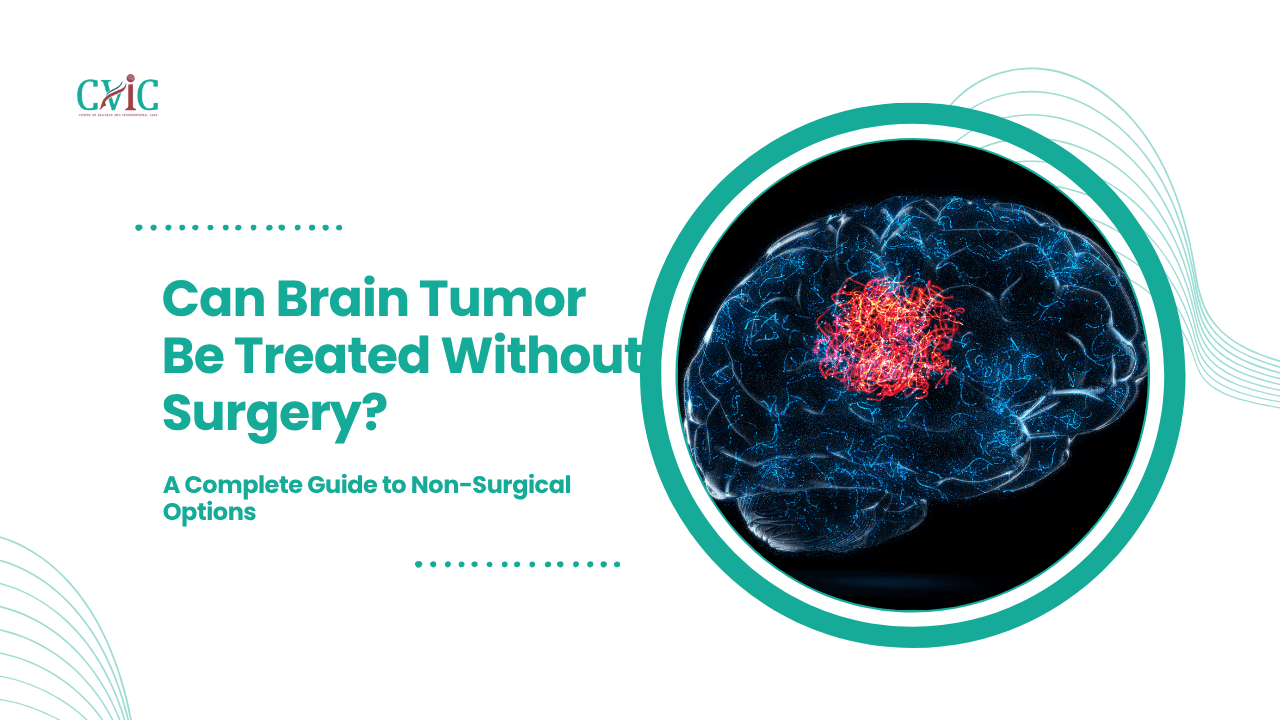
“Doctor, is there any way to treat this without opening the skull?”
This is one of the very first questions patients and families ask after hearing the words brain tumor. And it’s completely understandable. The thought of brain surgery — the risks, the recovery, the fear of waking up “different” — is terrifying for most people. For many families, the fear of the operation feels almost as heavy as the fear of the tumor itself.
So let’s answer the question honestly and in detail: Can a brain tumor be treated without surgery?
The answer is: Yes — in many cases, it can. Modern medicine has developed a remarkable range of non-surgical treatments — highly focused radiation, advanced medications, minimally invasive catheter-based procedures, and in some cases, simply careful observation. For certain tumors, these approaches work as well as — or even better than — surgery.
But the answer also comes with an important caveat: not every brain tumor can or should be treated without surgery. The right treatment depends entirely on the tumor’s type, size, location, and behaviour.
In this detailed guide, the expert team at CVIC Indore — Dr. Alok K Udiya, Dr. Shailesh Gupta, and Dr. Nishant Bhargava — explains all the non-surgical treatment options available today, which tumors they work for, and how the right treatment decision is made.
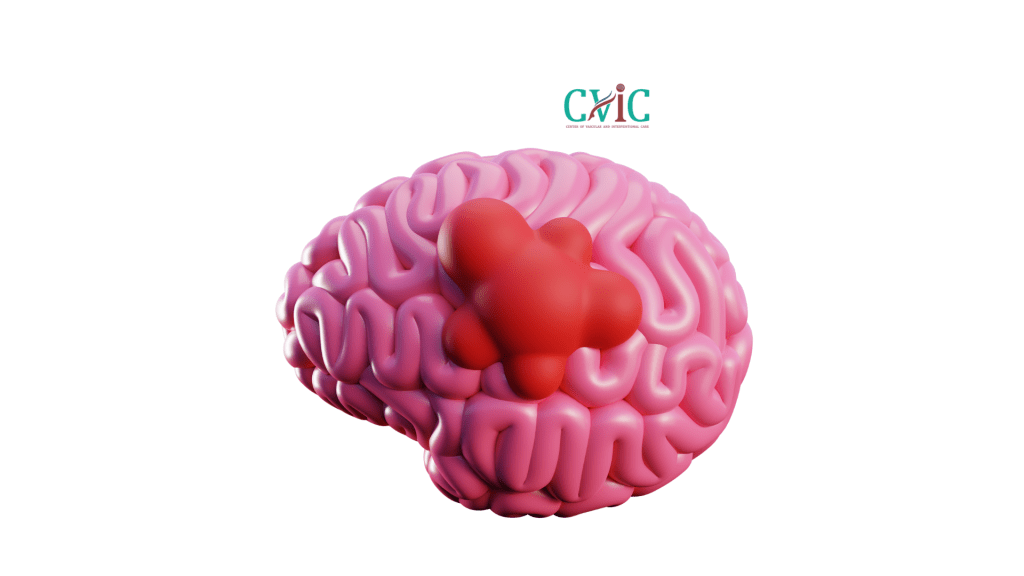
First, Understand This: Not All Brain Tumors Are the Same
The phrase “brain tumor” covers a huge range of conditions — and the differences between them determine everything about treatment.
Benign vs Malignant
- Benign (non-cancerous) tumors — such as most meningiomas, pituitary adenomas, and acoustic neuromas — grow slowly, do not spread, and often don’t invade surrounding brain tissue. Many can be observed or treated without surgery.
- Malignant (cancerous) tumors — such as gliomas and glioblastomas — grow aggressively and invade nearby brain tissue. These usually require a combination of treatments.
Primary vs Metastatic
- Primary brain tumors start in the brain itself.
- Metastatic (secondary) brain tumors spread to the brain from cancer elsewhere in the body — lung, breast, kidney, or skin. These are actually the most common brain tumors in adults, and many respond very well to non-surgical treatment.
The Key Point
A small, benign, slow-growing meningioma in a 70-year-old and an aggressive glioblastoma in a 40-year-old are both “brain tumors” — but their treatment paths are completely different. This is why an accurate diagnosis with advanced imaging is the essential first step, something the team at CVIC Indore emphasises with every patient.
Also Read: What Is the Encor Enspire Breast Biopsy System and How Does It Work?
Option 1: Active Surveillance — When the Best Treatment Is No Treatment (Yet)
It surprises many patients to learn that the first recommendation for some brain tumors is: do nothing — but watch carefully.
This approach, called active surveillance or “watchful waiting,” is often appropriate when:
- The tumor is small and benign (commonly a meningioma discovered incidentally on a scan done for another reason)
- It is causing no symptoms
- It is not growing, or growing extremely slowly
- The patient is elderly or has other health conditions that make treatment riskier than the tumor itself
With active surveillance, the patient undergoes periodic MRI scans — typically every 6 to 12 months — to monitor the tumor. If it remains stable, no treatment is needed. If it starts growing or causing symptoms, treatment begins at that point, with no loss of advantage.
Studies show that a large proportion of small, incidental meningiomas never grow significantly and never require any treatment at all. Dr. Shailesh Gupta at CVIC Indore explains: “Treating a tumor that would never have caused harm exposes the patient to risk without benefit. Sometimes the wisest, most courageous decision is disciplined observation with high-quality imaging.”
Also Read: Early Signs of Dementia: Warning Symptoms You Should Never Ignore
Option 2: Stereotactic Radiosurgery (SRS) — “Surgery” Without a Single Cut
Despite its name, stereotactic radiosurgery is not surgery at all. There is no incision, no anaesthesia in most cases, no opening of the skull — and often the patient goes home the same day.
SRS — delivered by systems like Gamma Knife, CyberKnife, and modified linear accelerators (LINAC) — uses hundreds of precisely focused beams of radiation that converge on the tumor from different angles. Each individual beam is weak and harmless to the tissue it passes through, but at the point where they all meet — the tumor — the combined dose is powerful enough to destroy tumor cells or stop their growth.
What Can SRS Treat?
- Meningiomas — especially small-to-medium ones or those in surgically difficult locations (like the skull base)
- Acoustic neuromas (vestibular schwannomas) — with tumor control rates exceeding 90–95%, and better hearing preservation than surgery in many cases
- Pituitary adenomas — particularly residual or recurrent tumors
- Brain metastases — SRS has become a first-line treatment for limited brain metastases, often replacing whole-brain radiation
- Recurrent tumors after previous surgery
The Advantages
- No incision, no infection risk, no long recovery
- Usually an outpatient or single-day procedure
- Return to normal activities within a day or two
- Can reach tumors in deep or delicate locations that are risky or impossible to operate on
The Limitations
- Works best for tumors under about 3 cm
- The tumor doesn’t vanish immediately — it stops growing and shrinks gradually over months to years
- Not suitable for large tumors causing dangerous pressure on the brain, which need physical removal
Also Read: First Seizure – Should I Worry? Everything You Need to Know
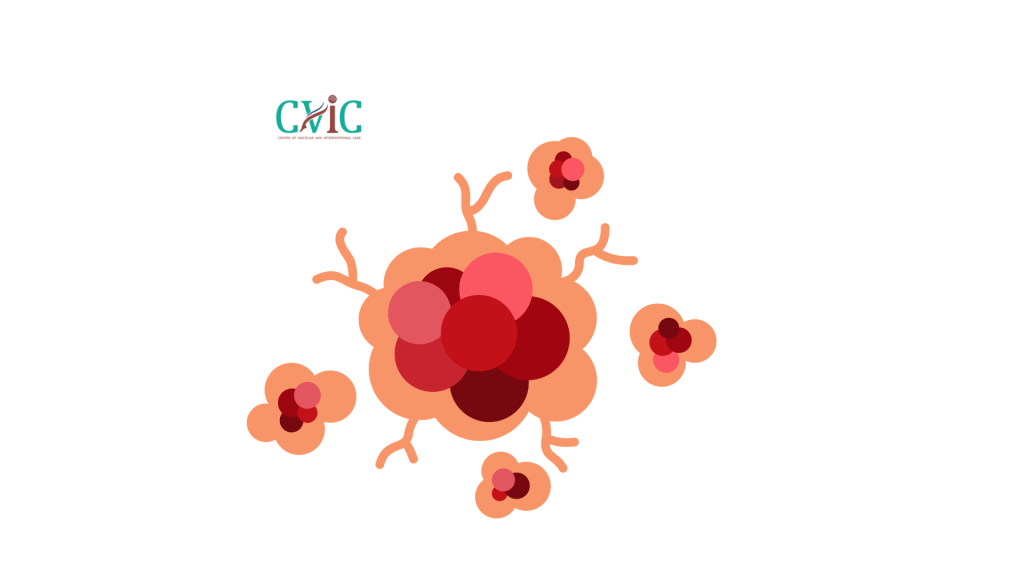
Option 3: Radiation Therapy — The Workhorse of Non-Surgical Treatment
For larger tumors, or tumors that infiltrate brain tissue, fractionated radiation therapy delivers radiation in small daily doses over several weeks. This allows healthy brain tissue to repair itself between sessions while tumor cells accumulate lethal damage.
Modern techniques have transformed how precise and safe radiation has become:
- IMRT (Intensity-Modulated Radiation Therapy) — sculpts the radiation dose to fit the tumor’s exact 3D shape
- IGRT (Image-Guided Radiation Therapy) — verifies the tumor’s position before every session
- Proton beam therapy — available at select centres, deposits radiation with minimal exit dose, valuable for tumors near critical structures
Radiation is a cornerstone of treatment for gliomas, medulloblastomas, lymphomas of the brain, and many metastatic tumors — and for patients who cannot undergo surgery for medical reasons, it is often the primary treatment.
Option 4: Medical Therapy — Chemotherapy, Targeted Drugs, and Immunotherapy
Medicines play a major and growing role in treating brain tumors without surgery.
Chemotherapy
Drugs such as temozolomide — an oral chemotherapy taken as a capsule at home — are standard treatment for gliomas, usually combined with radiation. Certain tumors are exquisitely chemo-sensitive:
- Primary CNS lymphoma — treated primarily with chemotherapy (like high-dose methotrexate), not surgery. Surgery beyond a biopsy offers no benefit for this tumor.
- Germinomas — highly curable with chemotherapy and radiation alone.
Targeted Therapy
As our understanding of tumor genetics has advanced, drugs that attack specific molecular abnormalities have emerged:
- BRAF/MEK inhibitors for tumors with BRAF mutations
- mTOR inhibitors (everolimus) for subependymal giant cell astrocytomas in tuberous sclerosis — a tumor that can now often be shrunk with a tablet instead of removed with surgery
- IDH inhibitors — a newer class showing promise in low-grade gliomas
Medications for Pituitary Tumors
Here’s a striking example of medicine replacing surgery: prolactinomas — the most common hormone-secreting pituitary tumors — are treated first with tablets (cabergoline or bromocriptine), not surgery. These drugs shrink the tumor and normalise hormone levels in the great majority of patients. Surgery is reserved only for the minority who don’t respond.
Immunotherapy and Tumor Treating Fields
- Immunotherapy (checkpoint inhibitors) is increasingly used for brain metastases from melanoma and lung cancer — sometimes with dramatic responses.
- Tumor Treating Fields (TTF) — a wearable device delivering alternating electrical fields — has been shown to extend survival in glioblastoma when added to chemotherapy.
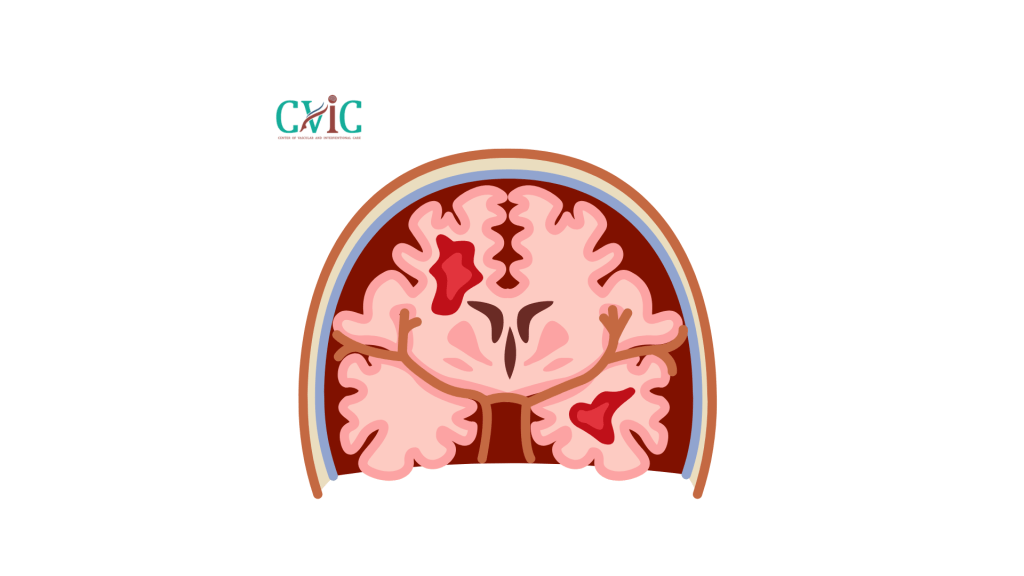
Option 5: Minimally Invasive Interventional Procedures
Between “no surgery” and “open surgery” lies a middle path — minimally invasive, image-guided procedures — an area of special expertise at CVIC Indore.
Tumor Embolization
Some tumors — particularly meningiomas and highly vascular tumors like hemangiopericytomas or glomus tumors — have a rich blood supply. In endovascular tumor embolization, a catheter is navigated through the arteries (from the wrist or groin) to the vessels feeding the tumor, which are then blocked with special particles or glue.
Embolization can:
- Shrink or devascularise the tumor, slowing its growth
- Dramatically reduce blood loss if surgery is later needed, making the operation shorter and safer
- Serve as palliative treatment for inoperable vascular tumors
Dr. Alok K Udiya at CVIC Indore, an expert in neuro-interventional procedures, explains: “Embolization is done through a pinhole in the wrist or groin — no incision on the head at all. For vascular tumors, it can transform a dangerous, high-blood-loss operation into a safe, controlled one, and in selected patients it is a valuable treatment in its own right.”
Stereotactic Biopsy
When the diagnosis is uncertain, a needle biopsy guided by precise 3D navigation can obtain a tissue sample through a tiny opening — avoiding open surgery entirely while providing the crucial information needed to choose the right non-surgical treatment.
Laser Interstitial Thermal Therapy (LITT)
An emerging option in which a thin laser fibre, inserted through a small opening under MRI guidance, heats and destroys tumor tissue from within — used for deep-seated tumors and radiation-resistant recurrences at advanced centres.
So When Is Surgery Still Necessary?
Honesty matters here. Despite all these advances, surgery remains the best first treatment for many brain tumors, and choosing non-surgical treatment when surgery is truly needed can cost precious time.
Surgery is usually recommended when:
- The tumor is large and causing dangerous pressure on the brain (mass effect)
- There is raised intracranial pressure or risk of herniation — a life-threatening emergency
- The tumor is causing progressive neurological deficits (weakness, vision loss, speech difficulty) that decompression can reverse
- A definitive tissue diagnosis is needed and maximal removal also improves outcomes (as in most gliomas)
- The tumor is blocking cerebrospinal fluid flow, causing hydrocephalus
Even then, modern neurosurgery is far safer than most patients imagine — with neuronavigation, intraoperative monitoring, and awake craniotomy techniques minimising risk. And surgery and non-surgical treatments are not rivals; they are teammates. Many patients receive surgery followed by radiation and chemotherapy, or embolization followed by surgery.
How the Right Decision Is Made at CVIC Indore
There is no one-size-fits-all answer to the question “can my brain tumor be treated without surgery?” The decision depends on:
- Tumor type — benign vs malignant, confirmed by imaging characteristics and, when needed, biopsy
- Size — small tumors favour radiosurgery or observation; large ones often need surgery
- Location — tumors in deep, eloquent, or surgically hazardous areas favour non-surgical approaches
- Symptoms — asymptomatic tumors allow more conservative options
- Patient factors — age, general health, and personal preferences
- Tumor biology — genetic and molecular markers increasingly guide drug therapy
At CVIC Indore, Dr. Alok K Udiya, Dr. Shailesh Gupta, and Dr. Nishant Bhargava follow a multidisciplinary approach — combining advanced MRI and angiographic imaging, neuro-interventional expertise, and coordination with neurosurgeons and oncologists — to ensure each patient receives the treatment that is right for their tumor, not a default answer.
Dr. Nishant Bhargava puts it this way: “The question is never simply ‘surgery or no surgery.’ The question is: what combination of options gives this particular patient the best outcome with the least risk? Sometimes that’s observation, it’s radiosurgery or medication. Sometimes it’s embolization. And sometimes, yes, it’s an operation. Getting that decision right is everything.”
Warning Signs: When to Get Checked for a Brain Tumor
Whatever the treatment, early detection dramatically improves options and outcomes. See a specialist promptly if you experience:
- Persistent, progressive headaches — especially worse in the morning or waking you from sleep
- Headaches accompanied by nausea, vomiting, or blurred vision
- New seizures at any age
- Gradual weakness or numbness on one side of the body
- Vision changes, hearing loss, or ringing in one ear
- Personality changes, memory problems, or difficulty speaking
- Loss of balance or coordination
These symptoms don’t always mean a brain tumor — but they always deserve proper evaluation with an MRI.
The Bottom Line
Can a brain tumor be treated without surgery? Yes — very often, it can.
- Small benign tumors can frequently be observed safely with regular MRI scans
- Stereotactic radiosurgery controls many meningiomas, acoustic neuromas, and metastases without a single incision
- Radiation therapy, chemotherapy, targeted drugs, and immunotherapy are primary treatments for many tumor types
- Prolactinomas are treated with tablets; CNS lymphomas with chemotherapy
- Endovascular embolization — available at CVIC Indore — offers a minimally invasive option for vascular tumors, alone or before surgery
But the honest, complete answer is that the best treatment is individualised. Some tumors still need surgery, and delaying it in the wrong situation is dangerous. What every patient deserves is an expert, unbiased evaluation of all the options — surgical and non-surgical — before deciding.
Get an Expert Opinion at CVIC Indore
If you or a loved one has been diagnosed with a brain tumor — or you’re experiencing warning symptoms — don’t make decisions based on fear or incomplete information.
The specialists at CVIC Indore — Dr. Alok K Udiya, Dr. Shailesh Gupta, and Dr. Nishant Bhargava — provide comprehensive evaluation, advanced imaging, minimally invasive neuro-interventional treatments, and honest guidance on whether your tumor can be managed without surgery.
A second opinion costs you a consultation. The wrong treatment path can cost far more. Contact CVIC Indore today.
Frequently Asked Questions (FAQs)
1. Can all brain tumors be treated without surgery?
No. Many can — small benign tumors, pituitary prolactinomas, CNS lymphomas, and limited brain metastases often respond to observation, medication, or radiosurgery. But large tumors causing pressure on the brain, or tumors where removal improves survival (like most gliomas), still need surgery. The right choice depends on tumor type, size, and location.
2. Is Gamma Knife or CyberKnife actual surgery?
No. Despite the name, stereotactic radiosurgery involves no cutting, no incision, and no opening of the skull. It delivers hundreds of focused radiation beams that destroy the tumor from outside. Most patients go home the same day and resume normal activities within a day or two.
3. Can medicines alone shrink a brain tumor?
Yes, for specific tumors. Prolactinomas (a common pituitary tumor) shrink with tablets like cabergoline in most patients. CNS lymphoma is treated primarily with chemotherapy. Certain genetic tumor types respond to targeted drugs. However, most other tumors need medication combined with radiation or surgery.
4. What is brain tumor embolization and is it available in Indore?
Embolization is a minimally invasive procedure in which a catheter is passed through blood vessels from the wrist or groin to block the arteries feeding a tumor — shrinking it or making later surgery far safer. It is performed at CVIC Indore by Dr. Alok K Udiya and the neuro-interventional team.
5. What happens if I choose to just monitor my brain tumor?
For small, benign, symptom-free tumors, active surveillance with MRI scans every 6–12 months is a safe, evidence-based strategy. Many such tumors never grow or need treatment. If the tumor grows or symptoms appear, treatment can begin then — without losing the window for a good outcome. Regular follow-up is essential; monitoring is not the same as ignoring.
Disclaimer: This article is for educational purposes only and is not a substitute for professional medical advice, diagnosis, or treatment. Treatment decisions for brain tumors must be made in consultation with qualified specialists after complete evaluation. If you are experiencing emergency symptoms such as sudden severe headache, seizures, or loss of consciousness, seek immediate medical care.