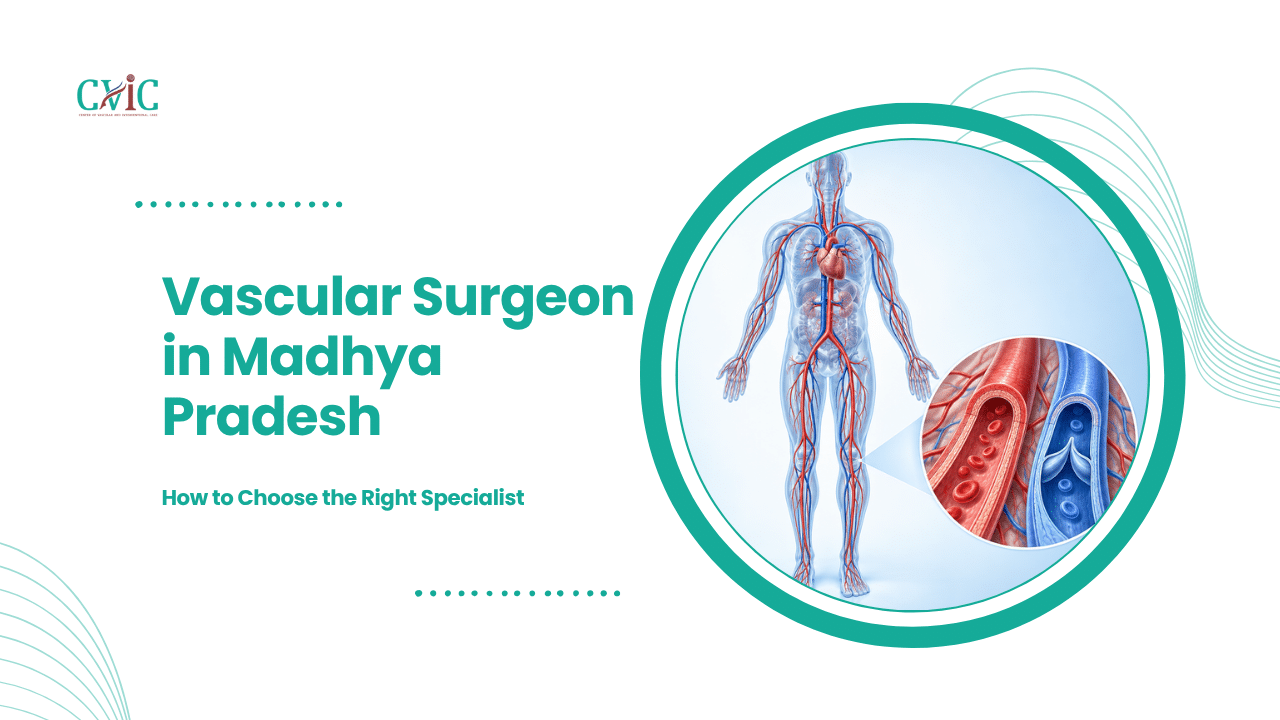
Your blood vessels are like the roads of your body. Arteries carry fresh, oxygen-rich blood from the heart to every organ. Veins bring used blood back to the heart. When these roads get blocked, narrow, weak, or damaged, the whole body can suffer.
This is where a vascular surgeon steps in.
If you or someone in your family has swollen legs, painful veins, cold feet, a wound that will not heal, or a doctor has told you about a blocked artery, you may be searching for a vascular surgeon in Madhya Pradesh. The search can feel confusing. Who treats what? When should you go? What kind of treatment will you need? And how do you know you are choosing the right doctor?
This guide answers all of these questions in simple English. You will learn what a vascular surgeon does, which diseases they treat, the warning signs you should never ignore, the treatments available today, and how the specialist team at CVIC Indore helps patients from Indore and across Madhya Pradesh.
What Is a Vascular Surgeon?
A vascular surgeon is a doctor who specialises in diseases of the blood vessels. This includes arteries, veins, and the lymphatic system (the network that drains fluid from tissues). Vascular surgeons treat conditions in every part of the body except the heart and the brain’s own tissue.
What makes a vascular specialist unique is the range of tools they use. They do not only perform open surgery. A modern vascular surgeon can treat you in three ways:
- Medicines and lifestyle advice for early-stage disease
- Minimally invasive procedures using small cuts, thin tubes (catheters), balloons, stents, lasers, and radiofrequency energy
- Open surgery for complex or advanced problems
Because of this, a good vascular surgeon can match the treatment to your exact condition instead of using one method for everyone.
Also Read: Vascular and Endovascular Surgeon in Indore
Vascular Surgeon vs Cardiologist vs Neurologist: What Is the Difference?
Many people ask this question, so let us make it clear.
- A cardiologist treats the heart and the vessels that feed the heart.
- A neurologist treats the brain, spinal cord, and nerves.
- A vascular surgeon treats the blood vessels in the rest of the body, such as the neck, belly, legs, arms, and kidneys.
Sometimes these specialists work together. For example, a blocked artery in the neck (carotid artery) can cause a stroke. In that case, a vascular specialist, an imaging expert, and a neurology team may all be involved. At CVIC Indore, this team approach is a core part of care. Dr. Alok K Udiya, Dr. Shailesh Gupta, and Dr. Nishant Bhargava work in a coordinated way so that your diagnosis and treatment plan come from more than one expert opinion.
Conditions Treated by a Vascular Surgeon
A vascular surgeon in Madhya Pradesh sees a wide range of problems. Here are the most common ones.
1. Varicose Veins
Varicose veins are swollen, twisted, bluish veins that you can see under the skin, usually in the legs. They happen when the small valves inside the veins stop working properly, so blood collects instead of flowing upward to the heart.
Common signs include heaviness in the legs, aching, itching, swelling at the end of the day, night cramps, and skin colour changes near the ankle. Many people think varicose veins are only a “cosmetic problem.” This is not true. If left untreated, they can cause skin darkening, eczema, and painful ulcers.
2. Peripheral Artery Disease (PAD)
PAD happens when the arteries in the legs become narrow or blocked, usually because of fat and cholesterol buildup (plaque). The legs do not get enough blood.
The classic sign is pain in the calf or thigh while walking, which goes away after resting. This is called claudication. In advanced PAD, the feet feel cold, the skin turns pale or blue, hair loss occurs on the legs, and wounds do not heal.
3. Deep Vein Thrombosis (DVT)
DVT means a blood clot forms in a deep vein, most often in the leg. It causes sudden swelling, pain, warmth, and redness in one leg. The danger is that a piece of the clot can break off and travel to the lungs. This is called a pulmonary embolism, and it can be life-threatening.
4. Diabetic Foot and Non-Healing Wounds
People with diabetes are at high risk of blood vessel damage in the legs and feet. A small cut can turn into a deep ulcer that refuses to heal. Often, poor blood supply is the hidden reason. Restoring blood flow can save the foot and prevent amputation. This is one of the most important reasons diabetic patients should see a vascular specialist early.
5. Aortic Aneurysm
The aorta is the largest artery in the body. An aneurysm is a weak, bulging spot in its wall. Many aneurysms cause no symptoms until they grow large or burst, which is an emergency. Regular screening with ultrasound or CT scan can find them early, especially in people above 60, smokers, and those with high blood pressure.
6. Carotid Artery Disease
The carotid arteries run along both sides of your neck and supply blood to the brain. Plaque buildup here can reduce blood flow or send small clots to the brain, causing a stroke or a “mini stroke” (TIA). If you want to understand how a stroke happens, read our detailed guide on what happens during a brain stroke.
7. Blood Vessel Problems in Kidney Patients
People on dialysis often need a special blood vessel connection, called an AV fistula, in the arm. Vascular surgeons create and maintain these lifelines.
8. Lymphoedema and Other Vein Disorders
Chronic swelling of a limb due to lymph fluid blockage, venous ulcers, and vascular malformations also fall under vascular care.
Also Read: Vascular Surgeon in Indore | Expert Diagnosis and Advanced Vascular Treatment at CVIC Indore
Warning Signs: When Should You See a Vascular Surgeon?
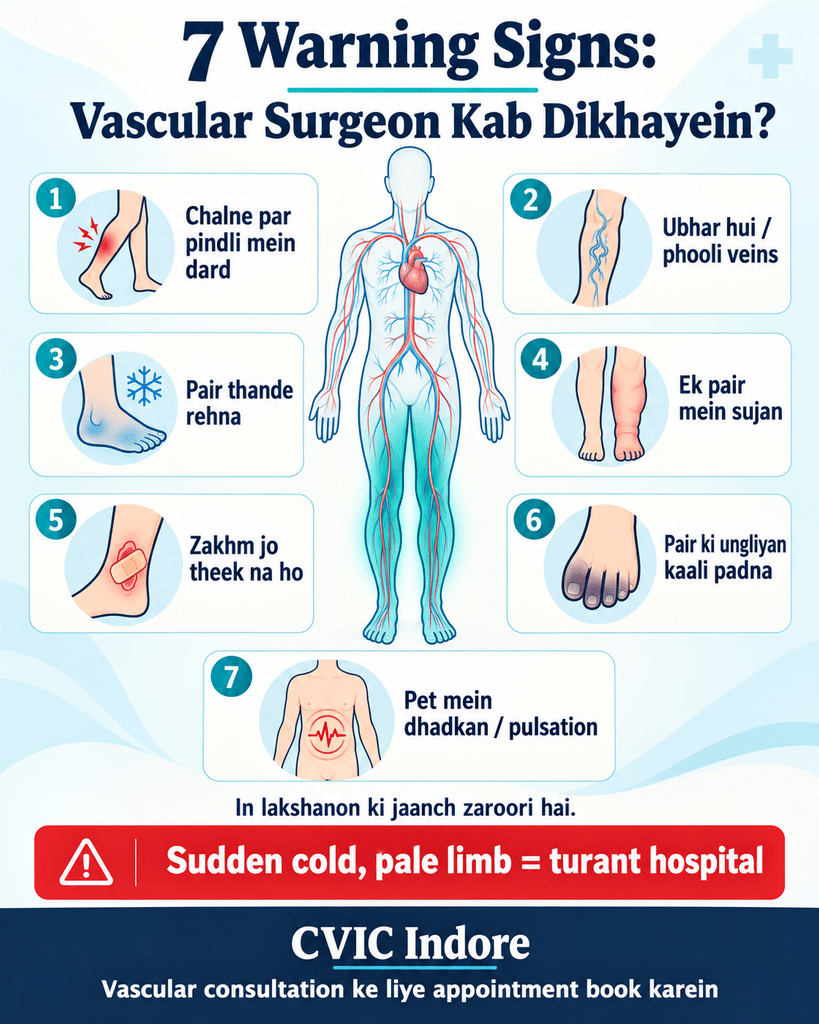
Do not wait for the pain to become unbearable. Please consult a vascular surgeon if you notice any of these:
- Leg pain or cramps while walking that settle with rest
- Swollen, twisted, or bulging veins in the legs
- Heaviness, itching, or burning in the legs
- Sudden swelling in one leg, with pain or redness
- Cold, pale, or bluish feet or toes
- A wound on the foot or leg that is not healing for more than 2 weeks
- Black or dark patches on the toes
- Pulsating lump in the belly or a sudden severe belly or back pain
- Temporary loss of vision, slurred speech, or weakness on one side (go to emergency immediately)
- Diabetes, high blood pressure, high cholesterol, or smoking history with any of the above
Emergency alert: Sudden severe leg pain with a cold, pale limb, or sudden one-sided weakness or speech difficulty is an emergency. Go to the nearest emergency department at once.
Who Is at Risk of Vascular Disease?
Vascular disease can happen to anyone, but your risk is higher if you have:
- Diabetes: damages the lining of blood vessels over time
- High blood pressure: puts constant stress on artery walls
- High cholesterol: builds plaque inside arteries
- Smoking or tobacco use: the single most harmful habit for blood vessels
- Obesity and inactivity
- Standing or sitting for long hours: a common risk for varicose veins, especially for teachers, shopkeepers, drivers, and office workers
- Family history of vein or artery disease
- Age above 50
- Pregnancy (for varicose veins)
The good news is that many of these risks can be controlled with the right medical advice.
How Do Doctors Diagnose Vascular Problems?
A correct diagnosis is the foundation of good treatment. A vascular surgeon in Indore will usually begin with a conversation about your symptoms, your medical history, and a physical examination. They will check the pulses in your feet and legs, look at the skin, and examine your veins.
After that, one or more of these tests may be advised:
Doppler Ultrasound: A painless scan that uses sound waves to show blood flow in arteries and veins. It is the most common first test for varicose veins, DVT, and PAD.
Ankle-Brachial Index (ABI): A simple test that compares blood pressure in your ankle with the arm. A low number suggests blocked leg arteries.
CT Angiography: A detailed scan, using contrast dye, that gives a clear map of the arteries. It helps plan treatment for blockages and aneurysms.
MR Angiography: A similar map made using magnetic resonance, useful when X-ray dye needs to be avoided.
Digital Subtraction Angiography (DSA): A catheter-based test that shows blood flow in real time. It is often done just before treatment so that diagnosis and treatment happen in the same sitting.
Advanced imaging plays a huge role in vascular care. At CVIC Indore, expert imaging interpretation by Dr. Alok K Udiya helps the team see exactly where the problem is and how severe it is, which leads to safer and more precise treatment planning.
Also Read: Best Vascular Surgeons in Indore | Complete Treatment Guide
Modern Treatment Options for Vascular Disease
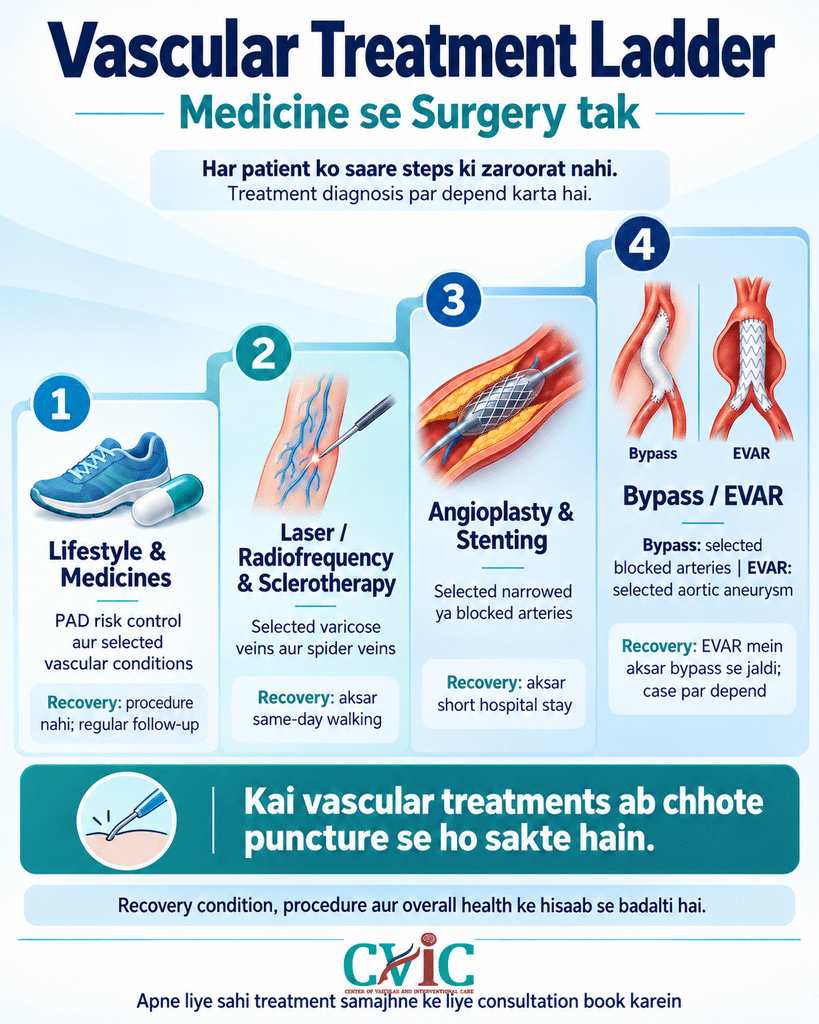
Vascular care has changed a lot in the last 20 years. Many problems that once needed large operations can now be treated through a tiny puncture in the skin. Here are the main treatment options.
Lifestyle Changes and Medicines
For early disease, doctors often start with medicines to thin the blood, control cholesterol, manage blood pressure and sugar, and improve walking. Compression stockings are very helpful for varicose veins and swelling. Quitting tobacco and daily walking are powerful, free treatments.
Endovenous Ablation (Laser or Radiofrequency) for Varicose Veins
This is the modern standard for varicose veins. A thin fibre or catheter is placed inside the faulty vein using ultrasound guidance. Heat energy closes the vein from the inside. The body then reroutes blood through healthy veins.
Benefits include a small puncture instead of large cuts, local anaesthesia in most cases, little or no hospital stay, quick return to normal work, and very good results.
Sclerotherapy
A special medicine (foam or liquid) is injected into smaller veins and spider veins, making them close and fade away.
Angioplasty and Stenting
For blocked arteries, a thin catheter with a small balloon is threaded to the blocked spot. The balloon opens the artery, and a small mesh tube (stent) may be left behind to keep it open. This is used for leg arteries, neck arteries, kidney arteries, and more.
Bypass Surgery
When an artery is too badly blocked for a balloon or stent, the surgeon creates a new path for blood using a vein from the patient’s own body or a special graft. This is the open surgery option for long or complex blockages.
Endovascular Aneurysm Repair (EVAR)
Instead of opening the belly, a covered stent is placed inside the aneurysm through small cuts in the groin. This reinforces the weak aorta from the inside. Recovery is faster than traditional surgery for suitable patients.
Clot Removal and Thrombolysis
For DVT or sudden artery blockage, clot-dissolving medicines or catheter-based clot removal can restore flow quickly and protect the limb.
Carotid Endarterectomy or Carotid Stenting
These procedures clear or support a narrowed neck artery to reduce the risk of stroke.
Wound Care and Limb Salvage
For diabetic and non-healing wounds, treatment combines restoring blood flow, careful wound dressing, infection control, and pressure offloading. The aim is simple: save the limb.
The team at CVIC Indore, including Dr. Shailesh Gupta and Dr. Nishant Bhargava, focuses on minimally invasive and image-guided techniques wherever medically suitable, so that patients experience less pain, smaller cuts, and a faster recovery.
Why Minimally Invasive Vascular Surgery Is Becoming the First Choice
Patients in Madhya Pradesh increasingly prefer minimally invasive treatment, and for good reason:
- Smaller cuts or just a needle puncture
- Less pain after the procedure
- Shorter hospital stay, often same-day or next-day discharge
- Faster return to work and daily life
- Lower risk of wound infection
- Often possible with local anaesthesia, which is helpful for older patients or those with other illnesses
Of course, not every patient is suited for minimally invasive treatment. Some complex conditions still need open surgery. The right choice depends on your scans, your overall health, and the exact location and type of the disease. A skilled specialist will explain the pros and cons of each option honestly.
How to Choose the Best Vascular Surgeon in Madhya Pradesh
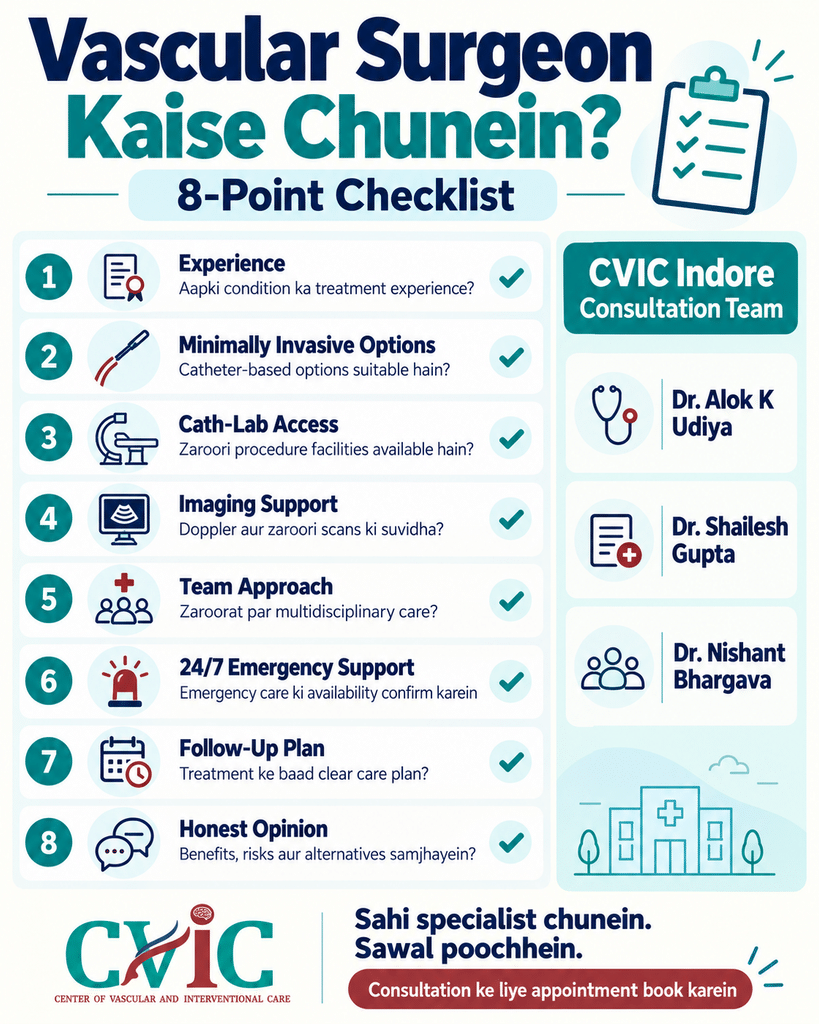
Choosing a doctor is a big decision. Use this simple checklist.
1. Qualification and experience. Check the doctor’s training and how many vascular procedures they handle regularly. Experience matters, especially in complex cases.
2. Full range of treatments. Choose a team that offers both open and minimally invasive options, so they recommend what is best for you and not just what they can offer.
3. Advanced imaging and cath-lab facilities. Accurate diagnosis needs good Doppler, CT/MR angiography, and a well-equipped cath lab.
4. A team approach. Vascular disease often overlaps with heart, brain, kidney, and diabetes problems. A multidisciplinary team gives safer care.
5. Clear communication. A good doctor explains your condition in simple words, tells you the risks and alternatives, and gives you time to ask questions.
6. Emergency readiness. Blocked arteries and ruptured aneurysms do not wait for office hours. Choose a centre that can respond day and night.
7. Follow-up and rehabilitation. Vascular disease is long-term. Look for a team that guides you after the procedure too, with medicines, lifestyle advice, and regular checks.
8. Honest opinions. A trustworthy specialist will tell you when you do not need surgery, and will support you in getting a second opinion if you want one.
Why Patients Choose CVIC Indore for Vascular Care
CVIC Indore (Cardiovascular and Interventional Centre, Indore) is built around one idea: complex blood vessel diseases deserve focused, specialist care. Patients from Indore, Ujjain, Dewas, Bhopal, Ratlam, Khandwa, Khargone, Dhar, and many other parts of Madhya Pradesh come here for diagnosis and treatment.
Here is what patients can expect.
An experienced specialist team. Dr. Alok K Udiya, Dr. Shailesh Gupta, and Dr. Nishant Bhargava bring together expertise in advanced vascular imaging, interventional procedures, and clinical decision-making. Each case is looked at from several angles.
Precision through imaging. Detailed Doppler, CT angiography, and image-guided procedures help the team plan treatment accurately and reduce the chance of surprises.
Minimally invasive focus. Wherever safe and suitable, the team prefers techniques that need smaller cuts and less recovery time.
Complete care under one roof. From the first consultation and scans to the procedure and follow-up, patients do not have to run from place to place.
Patient-friendly guidance. The team takes time to explain the diagnosis, treatment options, expected results, and costs in simple language, so that you and your family can decide with confidence.
Care for related conditions. Because vascular disease is closely linked with diabetes, hypertension, heart disease, and stroke risk, the team looks at your whole health, not only the one problem you came with.
What to Expect During Your First Visit
Many patients feel nervous before meeting a specialist. Here is what usually happens, so you can feel prepared.
- Registration and history. You will be asked about your symptoms, how long you have had them, your other illnesses, medicines, and habits like smoking.
- Examination. The doctor will check your pulses, skin, veins, and limbs.
- Basic tests. A Doppler ultrasound or ABI test is often done on the same day.
- Explanation of findings. The doctor will show your scan results and explain them in plain language.
- Treatment plan. You will be told whether you need medicines, a procedure, or monitoring, along with the benefits, risks, and alternatives.
- Questions. You and your family are encouraged to ask anything. There is no such thing as a silly question.
What to carry: Previous reports, scans, a list of current medicines, and any prescriptions. If you have diabetes, bring recent sugar reports as well.
Recovery and Aftercare
Recovery depends on the procedure.
- After varicose vein laser or radiofrequency treatment: Most people walk the same day and return to routine activity within a few days. Compression stockings are usually advised for a short period.
- After angioplasty or stenting: Hospital stay is usually short. You will need regular medicines, especially blood thinners, as advised.
- After bypass or open surgery: Recovery takes longer, with a few days in hospital and gradual return to activity over weeks.
- After aneurysm repair or carotid procedures: You will need follow-up scans to check that the repair is working well.
For every patient, long-term success depends on healthy habits:
- Walk daily, as advised by your doctor
- Stop all tobacco
- Control blood sugar, pressure, and cholesterol
- Eat a balanced diet with less oil, salt, and processed food
- Take medicines exactly as prescribed
- Keep your follow-up appointments
Prevention: Keep Your Blood Vessels Healthy
Many vascular diseases can be delayed or prevented. A few simple habits make a big difference:
- Stay active. Even 30 minutes of brisk walking most days improves circulation.
- Do not sit or stand for hours without a break. Move your legs every hour and elevate them when you rest.
- Quit smoking and tobacco in all forms.
- Maintain a healthy weight.
- Check your blood pressure, sugar, and cholesterol regularly.
- Take care of your feet if you have diabetes. Check them daily, wear proper footwear, and never ignore even a small wound.
- Stay hydrated and eat fibre-rich food.
- Get screened if you are over 50 or have risk factors. A simple scan can find silent problems like aneurysms and blocked arteries before they become emergencies.
Common Myths About Vascular Problems
Myth 1: Varicose veins are only a cosmetic problem. Fact: They can cause pain, swelling, skin damage, and ulcers if left untreated.
Myth 2: Leg pain while walking is just old age. Fact: It can be a sign of blocked leg arteries and should be checked.
Myth 3: Vascular surgery always means a big operation. Fact: Many treatments are now done through tiny punctures with quick recovery.
Myth 4: Diabetic foot wounds will heal on their own. Fact: Poor blood supply often prevents healing. Early specialist care can save the foot.
Myth 5: Leg swelling on one side is just tiredness. Fact: Sudden swelling in one leg can be DVT, which needs urgent attention.
Myth 6: Once treated, veins and arteries never cause problems again. Fact: Vascular disease is long-term. Lifestyle changes and follow-up remain important.
Frequently Asked Questions
Q1. Who is the best vascular surgeon in Madhya Pradesh? The best choice is a specialist with solid training, regular experience in vascular procedures, access to advanced imaging and cath-lab facilities, and a team that explains options honestly. CVIC Indore brings together Dr. Alok K Udiya, Dr. Shailesh Gupta, and Dr. Nishant Bhargava to offer this kind of focused, team-based vascular care.
Q2. Where can I find a vascular surgeon in Indore? CVIC Indore provides consultation, diagnosis, and treatment for vein and artery diseases for patients from Indore and across Madhya Pradesh.
Q3. What does a vascular surgeon treat? Varicose veins, peripheral artery disease, DVT, diabetic foot and non-healing wounds, aortic aneurysm, carotid artery disease, dialysis access problems, and other blood vessel disorders.
Q4. Is varicose vein treatment painful? Modern laser and radiofrequency treatments are done through a tiny puncture, usually with local anaesthesia. Most patients feel only mild discomfort and walk the same day.
Q5. Can blocked leg arteries be treated without open surgery? In many cases, yes. Balloon angioplasty and stenting can open blocked arteries through a small puncture. Your doctor will advise the best option after scans.
Q6. When should a diabetic patient see a vascular surgeon? If you have leg pain on walking, cold feet, numbness, or any foot wound that does not heal in about two weeks, see a vascular specialist without delay.
Q7. Is a vascular surgeon the same as a cardiologist? No. A cardiologist treats the heart. A vascular surgeon treats arteries and veins in the rest of the body, though both may work together on some patients.
Q8. How much does vascular treatment cost? Cost depends on the condition, tests, type of procedure, and hospital stay. After examination and scans, the CVIC Indore team can explain the plan and expected cost clearly.
Conclusion
Healthy blood vessels are the foundation of a healthy life. When they are damaged, the signs may be small at first, such as tired legs, a visible vein, a cold foot, or a slow-healing wound. But early attention can prevent serious problems like ulcers, amputation, and stroke.
If you are looking for a vascular surgeon in Madhya Pradesh, choose a team that listens carefully, uses modern diagnostic tools, offers both minimally invasive and open surgical options, and cares about your long-term health. At CVIC Indore, Dr. Alok K Udiya, Dr. Shailesh Gupta, and Dr. Nishant Bhargava work together to give patients clear answers and safe, effective treatment.
Do not ignore your legs. Do not ignore the warning signs. Book a consultation with the vascular team at CVIC Indore today and take the first step toward healthier blood vessels and a more comfortable life.
Disclaimer: This blog is for general educational purposes only and is not a substitute for professional medical advice, diagnosis, or treatment. If you have symptoms, please consult a qualified doctor. In an emergency, go to the nearest hospital immediately.