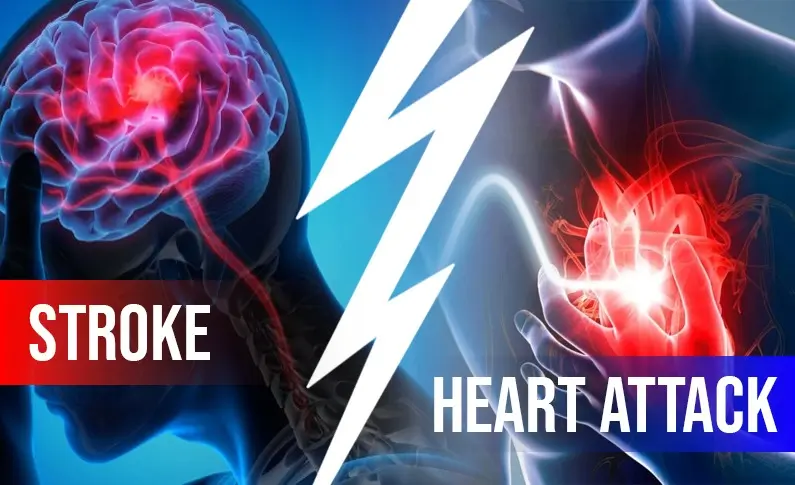
When people hear the terms Stroke vs heart attack, they often think both are the same or related conditions. While both are serious medical emergencies and share some common risk factors, they affect different parts of the body and require different types of treatment.
A stroke affects the brain, while a heart attack affects the heart. Understanding the difference between these two conditions can help you act quickly and save lives.
At CVIC Indore, expert doctors like Dr. Alok K Udiya, Dr. Shailesh Gupta, and Dr. Nishant Bhargava provide advanced non-surgical treatments for stroke and vascular conditions.
In this detailed guide, we will explain everything about Stroke vs heart attack in simple English so that everyone can understand.
What is a Stroke?
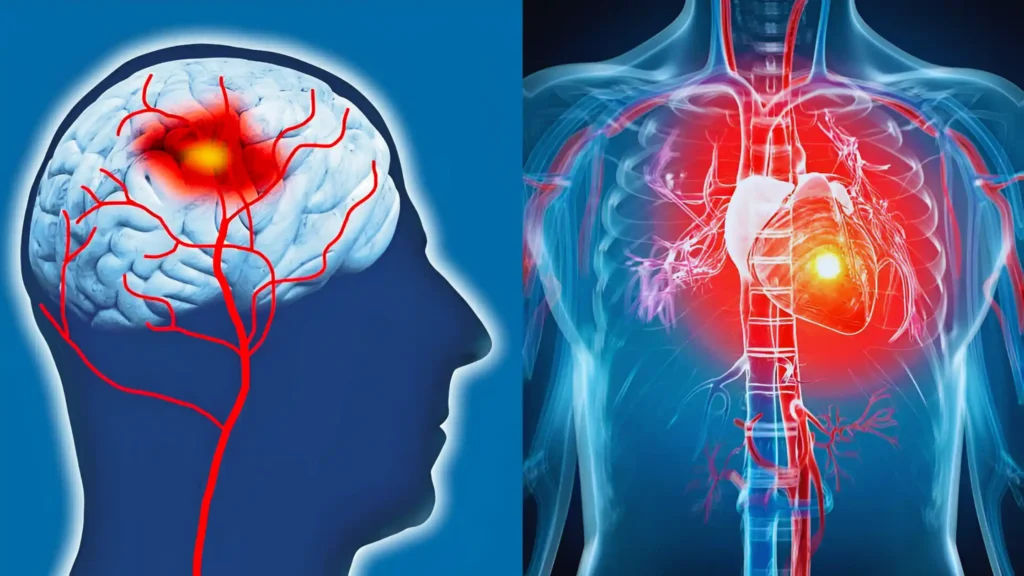
A stroke happens when blood flow to the brain is suddenly stopped or reduced. Without oxygen and nutrients, brain cells begin to die within minutes.
Types of Stroke
- Ischemic Stroke
This is the most common type. It occurs when a blood clot blocks an artery supplying blood to the brain. - Hemorrhagic Stroke
This happens when a blood vessel in the brain bursts, causing bleeding. - Transient Ischemic Attack (TIA)
Also called a “mini-stroke,” it is temporary but a warning sign of a future stroke.
Also Read: What Happens During a Brain Stroke? A Complete Guide
What is a Heart Attack?
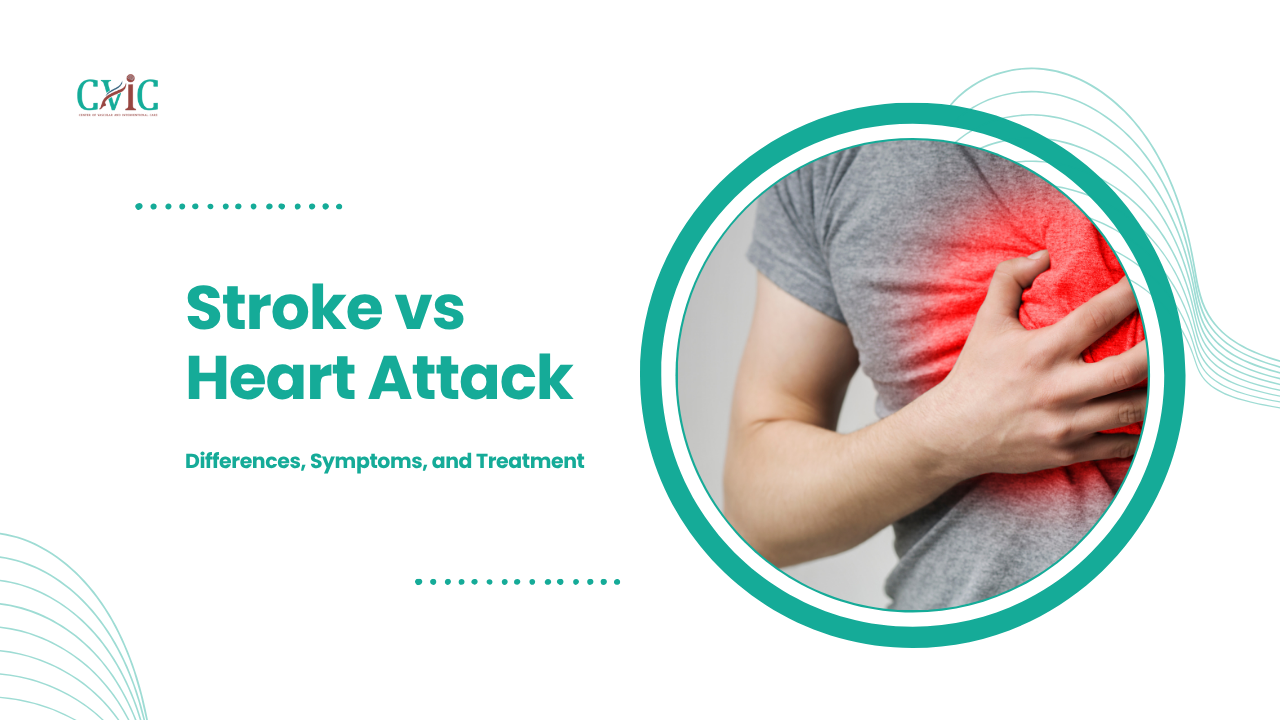
A heart attack (also called myocardial infarction) occurs when blood flow to a part of the heart muscle is blocked. This blockage is usually caused by fat, cholesterol, and other substances forming plaque in the arteries.
When the blood flow stops, the heart muscle starts to get damaged or dies.
Stroke vs Heart Attack: Key Difference
Understanding Stroke vs heart attack becomes easy when you compare them side by side.
| Feature | Stroke | Heart Attack |
|---|---|---|
| Affected Organ | Brain | Heart |
| Cause | Blocked or burst blood vessel in brain | Blocked artery in heart |
| Main Problem | Brain damage | Heart muscle damage |
| Symptoms | Weakness, speech issues, confusion | Chest pain, breathlessness |
| Emergency Type | Neurological emergency | Cardiac emergency |
Causes of Stroke and Heart Attack
Both conditions share similar causes because they are related to blood flow problems.
Common Causes
- High blood pressure
- High cholesterol
- Smoking
- Diabetes
- Obesity
- Lack of exercise
- Stress
At CVIC Indore, specialists like Dr. Alok K Udiya focus on identifying these risk factors early and preventing complications.
Also Read: Paralysis After Stroke – Will I Recover? | Complete Guide by CVIC Indore
Symptoms of Stroke
Stroke symptoms appear suddenly. The easiest way to remember them is FAST:
- F – Face drooping
- A – Arm weakness
- S – Speech difficulty
- T – Time to call emergency
Other Symptoms
- Sudden confusion
- Trouble seeing
- Severe headache
- Loss of balance
Symptoms of Heart Attack
Heart attack symptoms may develop gradually or suddenly.
Common Symptoms
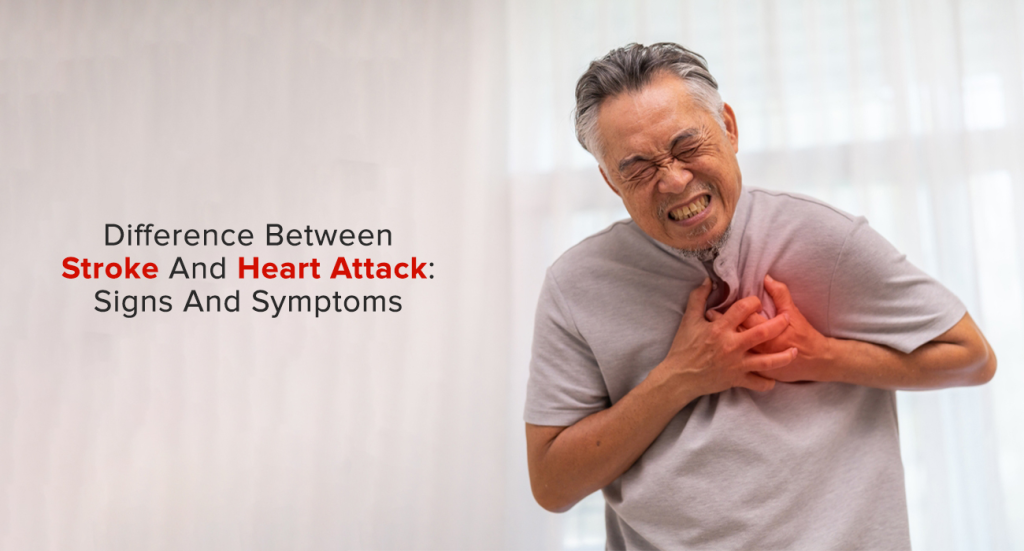
- Chest pain or pressure
- Pain in left arm, neck, or jaw
- Shortness of breath
- Sweating
- Nausea or vomiting
Unlike stroke, heart attack pain is usually centered in the chest.
Why Stroke and Heart Attack Are Medical Emergencies
Both conditions require immediate treatment.
- In stroke: Brain cells die quickly
- In heart attack: Heart muscle gets permanently damaged
That is why early treatment at centers like CVIC Indore is critical.
Experts such as Dr. Shailesh Gupta and Dr. Nishant Bhargava emphasize the importance of the “golden hour” in saving lives.
Also Read: Brain Stroke Recovery Time in India | Complete Guide for Patients & Families
Diagnosis: How Doctors Identify Stroke vs Heart Attack
Stroke Diagnosis
- CT Scan
- MRI Brain
- Blood tests
- Angiography
Heart Attack Diagnosis
- ECG (Electrocardiogram)
- Blood tests (Troponin)
- Coronary angiography
Treatment Options
Stroke Treatment
- Clot-busting medicines (Thrombolysis)
- Mechanical thrombectomy (clot removal)
- Blood pressure control
- Rehabilitation therapy
Heart Attack Treatment
- Angioplasty (stent placement)
- Medications
- Lifestyle changes
- Surgery (in severe cases)
At CVIC Indore, advanced minimally invasive procedures are performed by experts like Dr. Alok K Udiya.
Recovery: Stroke vs Heart Attack
Stroke Recovery
- May take weeks to months
- Requires physiotherapy
- Speech therapy may be needed
Heart Attack Recovery
- Recovery is usually faster
- Lifestyle changes are important
- Cardiac rehabilitation recommended
Prevention Tips
Preventing both conditions is possible with simple lifestyle changes.
Healthy Habits
- Eat a balanced diet
- Exercise regularly
- Quit smoking
- Control blood pressure and sugar
- Reduce stress
Doctors like Dr. Nishant Bhargava recommend regular health checkups.
When to See a Doctor?
You should seek immediate medical help if:
- Sudden weakness or speech problem
- Severe chest pain
- Difficulty breathing
- Loss of consciousness
Delaying treatment can be life-threatening.
Role of CVIC Indore in Stroke and Heart Care
CVIC Indore is known for advanced non-surgical treatments for vascular diseases.
Key Advantages
- Experienced specialists like Dr. Alok K Udiya
- Modern imaging technology
- Minimally invasive procedures
- Faster recovery time
Stroke vs Heart Attack: Final Thoughts
Understanding Stroke vs heart attack can save lives. While both are serious, they affect different organs and have different symptoms.
- Stroke = Brain problem
- Heart attack = Heart problem
Recognizing the signs early and getting immediate treatment at centers like CVIC Indore can make a huge difference.
FAQs
1. Is stroke worse than heart attack?
Both are dangerous. Stroke affects the brain, while a heart attack affects the heart.
2. Can a person have both stroke and heart attack?
Yes, especially if risk factors like high blood pressure and diabetes are not controlled.
3. How fast should I act?
Immediately. Every minute matters.
4. Can stroke be cured?
If treated early, damage can be reduced significantly.
5. Can heart attack be prevented?
Yes, with a healthy lifestyle and regular checkups.