Imagine sitting down for your morning tea. Everything feels normal — until one side of your face goes strange. Your arm turns numb. You try to speak, but the words simply won’t come out. Within seconds, one of the most feared medical emergencies in the world has begun.
This is what happens during a brain stroke — and understanding it could save your life, or the life of someone you love.
A brain stroke strikes suddenly, without warning. It does not wait for a convenient time. It can happen to a 35-year-old at the gym, a 60-year-old reading a newspaper, or an 80-year-old asleep in bed. Worldwide, stroke is the second leading cause of death and the third leading cause of disability. In India, the numbers are rising sharply — making it more important than ever to understand this condition deeply.
In this blog, we will walk you through — in simple, everyday language — exactly what a brain stroke is, what happens inside your brain during one, the different types, the warning signs, the treatments available, and how expert centres like CVIC Indore, with specialists such as Dr. Alok K Udiya, Dr. Shailesh Gupta, and Dr. Nishant Bhargava, are making a life-saving difference every single day.
What Is a Brain Stroke?
Your brain is the command centre of your entire body. It controls your heartbeat, your breathing, your speech, your movement, your memory, your emotions — everything. To do all of this, it needs a constant, uninterrupted supply of oxygen and glucose, delivered through blood.
A brain stroke happens when this blood supply is suddenly cut off or severely reduced to a part of the brain. Without oxygen, brain cells begin to die — and once brain cells die, they cannot come back. This is why the medical world uses the phrase “Time is Brain.” Every single minute that a stroke goes untreated, approximately 1.9 million brain cells are destroyed forever.
Doctors at CVIC Indore often explain it this way: a stroke is to the brain what a heart attack is to the heart. Just as a blocked coronary artery kills heart muscle, a blocked or burst blood vessel in the brain kills brain tissue. The urgency is exactly the same. The golden window for treatment is equally narrow.
Also Read: Early Signs of Stroke: Recognize It Early, Save a Life
The Different Types of Brain Stroke
Not all strokes are the same. Understanding the type is critical because the treatments are completely different — and the wrong treatment can be fatal.
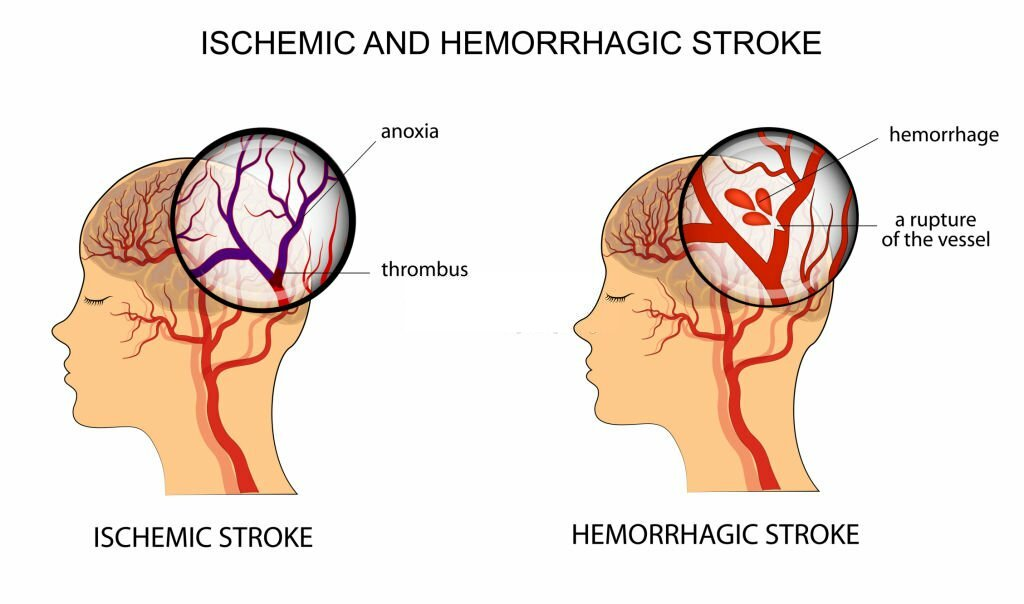
1. Ischemic Stroke — The Blocked Artery
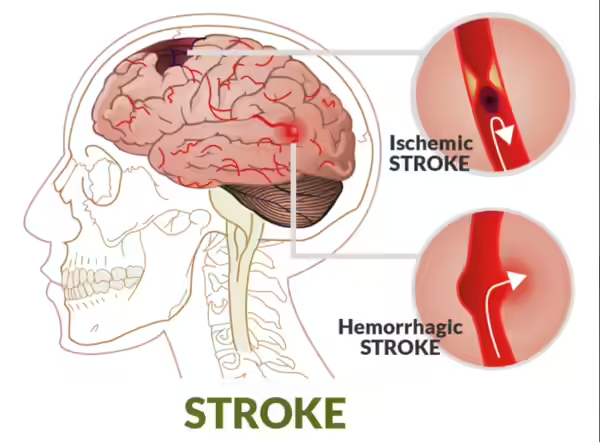
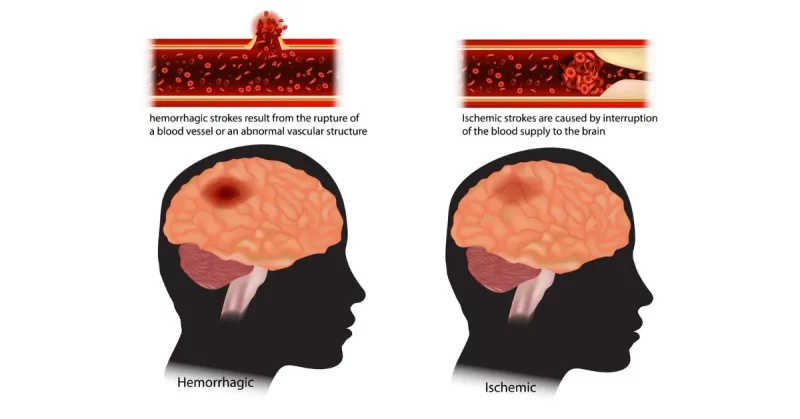
This is the most common type, responsible for about 87% of all strokes. In an ischemic stroke, an artery carrying blood to the brain becomes blocked, usually by a blood clot. There are two main ways this happens:
Thrombotic stroke: A clot forms directly inside one of the brain’s arteries, usually at a spot where the artery wall has been narrowed by plaque (fatty deposits).
Embolic stroke: A clot forms somewhere else in the body — most often in the heart — breaks loose, travels through the bloodstream, and gets lodged in a brain artery. This is common in people with a heart rhythm condition called atrial fibrillation (AFib).
2. Hemorrhagic Stroke — The Bleeding Brain
In a hemorrhagic stroke, a blood vessel in or around the brain ruptures and bleeds. The blood that leaks out puts pressure on the surrounding brain tissue, damaging it. This type is less common but often more immediately life-threatening.
Intracerebral hemorrhage: Bleeding inside the brain itself — usually caused by severely uncontrolled high blood pressure.
Subarachnoid hemorrhage: Bleeding in the space between the brain and its protective covering, often caused by a burst aneurysm — a ballooned, weakened spot in an artery wall.
3. TIA — The “Mini Stroke” You Must Never Ignore
A Transient Ischemic Attack (TIA) happens when blood flow to part of the brain is temporarily blocked, then restores itself. Symptoms last only minutes to hours. Many people feel fine afterwards and assume it was nothing serious. This is a deadly mistake.
Research shows that 1 in 10 people who have a TIA will suffer a full stroke within 90 days if they do not receive prompt evaluation and treatment. Dr. Nishant Bhargava of CVIC Indore frequently sees patients who dismiss TIAs as tiredness or a bad headache — and this delay costs them dearly.
A TIA is not a minor event. It is a warning signal that a major stroke may be imminent. Seek emergency care immediately.
Also Read: What Causes Alzheimer’s Disease? Science Finally Has Some Answers
What Actually Happens Inside the Brain During a Stroke?
This is the step-by-step biological story of what happens during a brain stroke — from the very first second to the hours that follow.
Step 1 — Blood Flow Stops The moment an artery is blocked or bursts, the region of brain it supplies is instantly cut off from oxygen and glucose.
Step 2 — Energy Failure (Within Seconds) Brain cells run entirely on energy produced using oxygen. Without it, the tiny molecular pumps inside each neuron stop working immediately.
Step 3 — The Ischemic Core Forms (Within 4–6 Minutes) At the very centre of the affected area — called the ischemic core — brain cells begin to die within just 4 to 6 minutes. This damage is permanent.
Step 4 — The Penumbra: The Zone That CAN Be Saved Surrounding the dead core is a region called the ischemic penumbra. These cells are damaged and not functioning — but they are still alive, receiving just barely enough blood from surrounding vessels to survive temporarily.
Step 5 — The Toxic Cascade As brain cells die, they release toxic chemicals — including glutamate and inflammatory proteins — that begin damaging the cells around them.
Step 6 — Brain Swelling (Cerebral Edema) As cells die, fluid leaks into the surrounding brain tissue, causing swelling. This swelling increases pressure inside the skull, potentially compressing other vital brain structures and causing further harm.
Step 7 — Functional Deficits Appear Because different brain regions control different functions, the symptoms of a stroke depend entirely on where it strikes:
- Left hemisphere stroke → right-side body weakness, speech and language problems
- Right hemisphere stroke → left-side weakness, spatial disorientation, visual problems
- Brainstem stroke → affects breathing, heartbeat, swallowing, consciousness — potentially immediately life-threatening
- Cerebellar stroke → affects balance and coordination
Also Read: 10 Early Warning Signs of Alzheimer’s Disease You Should Never Ignore
Recognising a Stroke: The FAST Test
The most powerful tool every single person can have is the ability to recognise a stroke the moment it is happening. The FAST test makes this simple:
F — Face: Ask the person to smile. Does one side of their face droop or appear uneven?
A — Arms: Ask them to raise both arms. Does one drift downward or feel weak and numb?
S — Speech: Ask them to repeat a simple sentence. Is their speech slurred, confused, or impossible?
T — Time: If you see ANY of these signs — call emergency services immediately. Do not wait. Do not drive them yourself. Call now.
Other warning signs to watch for:
- A sudden, severe headache described as “the worst headache of my life” — this can indicate a burst aneurysm
- Sudden confusion or difficulty understanding what people are saying
- Sudden loss of vision in one or both eyes
- Sudden dizziness, loss of balance, or inability to walk straight
- Sudden numbness on one side of the face, arm, or leg
Never wait to see if it gets better on its own. Every minute of delay destroys more brain cells. The window for effective treatment is measured in hours — not days.
Who Is at Risk? Key Risk Factors for Brain Stroke
Stroke does not discriminate — but certain conditions dramatically raise your risk. The medical team at CVIC Indore, including Dr. Shailesh Gupta, works with patients to identify and address these risk factors before a stroke ever strikes.
Controllable Risk Factors:
- High Blood Pressure (Hypertension) — The single biggest risk factor for stroke. It silently damages artery walls over years, making them vulnerable to blockage or rupture.
- Diabetes — Damages blood vessels throughout the body and promotes clot formation.
- Atrial Fibrillation (AFib) — This irregular heart rhythm causes blood clots to form in the heart, which can travel directly to the brain. Blood thinners can reduce stroke risk from AFib by 60–70%.
- High Cholesterol — Builds plaque inside arteries, narrowing or fully blocking blood flow to the brain.
- Smoking — Doubles stroke risk. Smoking damages blood vessel walls and dramatically promotes clot formation.
- Obesity and Physical Inactivity — Associated with virtually every other major stroke risk factor.
- Excessive Alcohol Consumption — Raises blood pressure and can trigger abnormal heart rhythms.
Uncontrollable Risk Factors:
- Age — Risk doubles every decade after 55
- Family history of stroke
- Prior stroke or TIA
- Being of South Asian origin — Indians have a higher incidence of stroke than many Western populations
How Is a Stroke Diagnosed?
When a patient arrives at CVIC Indore with stroke symptoms, the team acts with immediate, coordinated precision. Diagnosis must be both fast and accurate — because treating an ischemic stroke with clot-busting drugs in a patient who is actually bleeding would be catastrophic.
CT Scan: The first imaging test performed in any stroke emergency. A CT scan quickly identifies bleeding in the brain. At CVIC Indore, CT is available 24 hours a day, 7 days a week. This is not a convenience — it is a life-saving necessity.
MRI: Provides far more detailed brain imaging. MRI detects ischemic strokes earlier and more precisely than CT, and shows the exact location and extent of brain damage. Dr. Alok K Udiya, a highly experienced neuroradiology and vascular imaging specialist at CVIC Indore, plays a central role in interpreting these scans rapidly and accurately — guiding the entire treatment team on the precise nature and location of the stroke.
CT Angiography / MR Angiography: These specialised scans visualise the blood vessels themselves — showing exactly where a clot is lodged, which artery has ruptured, or whether an aneurysm is present. This information is critical for planning any interventional procedure.
ECG (Electrocardiogram): Checks for atrial fibrillation or other heart rhythm abnormalities that may have caused the stroke.
Blood Tests: Assess clotting ability, blood sugar, infection markers, and help rule out stroke mimics (conditions that can look like a stroke but are not).
Treatment: The Race Against the Clock
For Ischemic Stroke — Restoring Blood Flow
tPA (Clot-Busting Medication) The most important drug for ischemic stroke is tissue plasminogen activator, or tPA. Given as an intravenous infusion within 4.5 hours of symptom onset, tPA dissolves the blood clot and restores blood flow to the starving brain tissue. The sooner it is given, the better the outcome. Every 15 minutes of earlier treatment translates to measurably better recovery.
Mechanical Thrombectomy For large vessel occlusions — when a major artery supplying the brain is blocked — a remarkable procedure is available. A thin, flexible catheter is threaded through the blood vessels up into the brain, where a specialised device physically grabs the clot and removes it. This procedure can be performed up to 24 hours after symptom onset in carefully selected patients, and the outcomes can be extraordinary — patients who arrived unable to move or speak walking out of hospital days later.
CVIC Indore is fully equipped to perform both thrombolysis and mechanical thrombectomy, with Dr. Shailesh Gupta and Dr. Nishant Bhargava providing expert interventional stroke care for eligible patients around the clock.
For Hemorrhagic Stroke — Controlling the Bleed
Treatment focuses on stopping the bleeding, reducing pressure inside the skull, and preventing further damage. This involves rapidly lowering blood pressure, reversing blood-thinning medications if the patient was taking them, managing brain swelling with targeted medications, and in some cases, surgical intervention to drain accumulated blood or repair a burst aneurysm.
Recovery: The Brain’s Remarkable Ability to Adapt
Recovery from a stroke is a deeply personal journey. Some people recover almost fully within weeks. Others are left with lasting effects on their movement, speech, memory, or independence. The extent of recovery depends on which brain area was damaged, how large the area of damage is, how quickly treatment was received, and the patient’s age and overall health.
What is remarkable, however, is the brain’s capacity for neuroplasticity — its ability to rewire itself. When brain cells in one area are lost, neighbouring regions can often learn to take over those functions, given sufficient time, effort, and professional rehabilitation.
The rehabilitation programme at CVIC Indore begins within 24 to 48 hours of a stroke, once the patient is medically stable. Early rehabilitation is not just beneficial — it is the difference between regaining function and losing it permanently.
Rehabilitation includes:
- Physiotherapy — to regain strength, movement, balance, and coordination
- Speech Therapy — to rebuild communication skills and address swallowing difficulties
- Occupational Therapy — to relearn everyday activities like dressing, cooking, and writing
- Psychological Support — depression and anxiety affect up to 40% of stroke survivors and require dedicated, compassionate care
Prevention: Stopping a Stroke Before It Starts
Here is the most hopeful fact about stroke: up to 80% of strokes are preventable. The expert team at CVIC Indore — Dr. Alok K Udiya, Dr. Shailesh Gupta, and Dr. Nishant Bhargava — works with patients not just during emergencies, but in comprehensive preventive care consultations designed to reduce stroke risk before a crisis ever occurs.
Control your blood pressure. Check it regularly. If it is high, treat it with your doctor — through medication, a low-sodium diet, and consistent exercise.
Manage diabetes carefully. Uncontrolled blood sugar silently damages blood vessels over years. Keep it in range every single day.
Stop smoking immediately. The benefits of quitting begin within hours and compound significantly over months and years.
Exercise regularly. At least 30 minutes of moderate activity most days. Consistency matters far more than intensity.
Eat a heart-healthy diet. More vegetables, fruits, whole grains, and oily fish. Less salt, processed food, and saturated fat.
Know your heart rhythm. If you experience palpitations, get an ECG. Atrial fibrillation is a silent stroke factory that is entirely treatable.
Take your medications every day. Blood pressure drugs, anticoagulants, and statins are stroke-prevention medications. Skipping doses eliminates their protection.
Get a stroke risk screening. CVIC Indore offers comprehensive cardiovascular and cerebrovascular risk assessments for people with multiple risk factors.
Why CVIC Indore? The Difference Specialist Care Makes
In a stroke emergency, the hospital you go to can mean the difference between life and death, or between recovery and permanent disability. Not every hospital has the speed, equipment, and expertise that stroke demands.
CVIC Indore (Cardiovascular and Interventional Centre, Indore) is a dedicated centre for complex cardiovascular and cerebrovascular conditions. It operates with a 24/7 stroke response team, state-of-the-art CT and MRI imaging interpreted by Dr. Alok K Udiya, full capability for thrombolysis and mechanical thrombectomy led by Dr. Shailesh Gupta and Dr. Nishant Bhargava, a neurocritical care unit, and a structured multidisciplinary rehabilitation programme.
The philosophy at CVIC Indore is simple: treat the stroke as fast as possible, treat it as completely as possible, and then rebuild the person as fully as possible.
Conclusion: Every Second Is a Brain Cell
Understanding what happens during a brain stroke is one of the most valuable pieces of health knowledge any person can carry. Stroke strikes fast. It does not announce itself politely. But armed with the right information, you can respond fast too — and fast response saves brains, saves lives, and saves futures.
Know the FAST signs. Act immediately. Choose a hospital equipped for stroke. And take your health seriously before a crisis demands it.
The team at CVIC Indore — Dr. Alok K Udiya, Dr. Shailesh Gupta, and Dr. Nishant Bhargava — is ready, prepared, and fully committed to giving every stroke patient the best possible chance at recovery and life.