

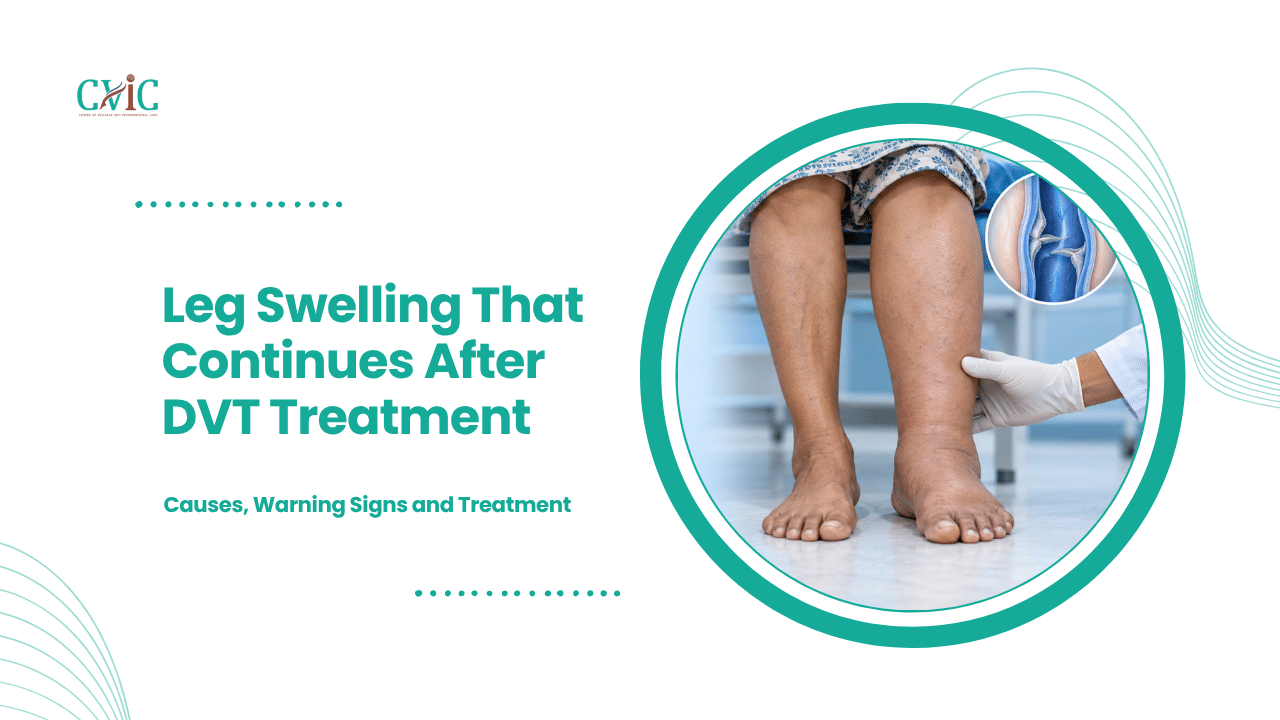
You completed your DVT treatment. You took your medicines on time and followed your doctor’s advice. Yet your leg is still swollen, heavy, or aching. It is natural to wonder: is the clot still there? Did the treatment fail?
In most cases, the answer is no. Leg swelling after DVT treatment is common. It often improves slowly over weeks to months. But when swelling continues for a long time, it can be a sign of vein damage that needs proper care.
At CVIC Indore, we regularly see patients with leg swelling that continues after DVT treatment. In this guide, we explain in simple words why the swelling lingers, which signs need urgent attention, and the modern treatments that can bring real relief.
Key Takeaways
- Some leg swelling after DVT treatment is normal and often improves over weeks to months.
- Swelling that lasts beyond a few months may be due to post-thrombotic syndrome, leftover clot, or a narrowed vein.
- Compression, leg elevation, walking, and taking blood thinners as prescribed are the first line of care.
- Image-guided, minimally invasive procedures can help when a vein stays blocked or narrowed.
- Sudden new swelling, pain, or breathlessness needs urgent medical care.
What Is DVT?
Deep vein thrombosis (DVT) is a blood clot in a deep vein, usually in the leg or thigh. The clot blocks blood from flowing back to the heart, which causes pain, swelling, and warmth in the leg.
DVT is serious because a piece of the clot can break off and travel to the lungs. This is called a pulmonary embolism (PE) and can be life-threatening.
How Does DVT Treatment Work?
DVT treatment aims to stop the clot from growing, prevent new clots, and protect the lungs. Common treatments include:
- Blood thinners (anticoagulants): Medicines that stop the clot from growing and lower the risk of new clots. They are usually taken for at least three months, sometimes longer.
- Compression stockings: Special stockings that gently squeeze the leg to reduce swelling and support blood flow.
- Catheter-directed treatment: In selected cases with large clots, a thin tube (catheter) is guided into the vein using imaging to dissolve or remove the clot.
- IVC filter: A small device placed in the main vein of the abdomen to catch clots, used only when blood thinners cannot be given.
An important point: blood thinners do not dissolve the clot directly. They stop it from growing while your body slowly breaks it down. This takes time, and the vein may not fully recover, which is why swelling can continue.
Also Read: Varicose Veins vs DVT (Deep Vein Thrombosis): How to Tell the Difference
Is Leg Swelling Normal After DVT Treatment?
Yes, some leg swelling after DVT treatment is normal. The clot and the inflammation it caused take time to settle. The vein walls and valves also need time to heal.
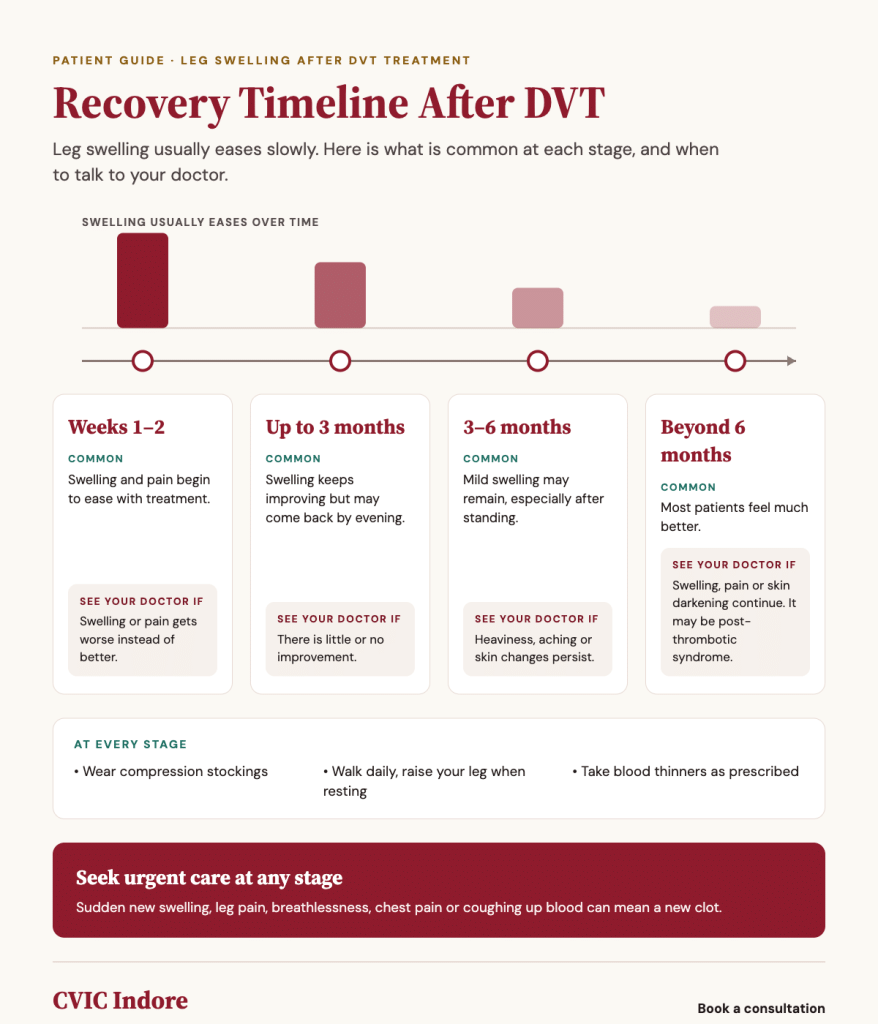
As a general guide, here is what many patients experience. Every person heals differently, so follow your doctor’s advice.
| Time after DVT | What is common | When to talk to your doctor |
|---|---|---|
| First 1 to 2 weeks | Swelling and pain begin to ease with treatment | Swelling or pain getting worse instead of better |
| Up to 3 months | Swelling keeps improving but may come back by evening | Little or no improvement |
| 3 to 6 months | Mild swelling may remain, especially after standing | Heaviness, aching, or skin changes that persist |
| Beyond 6 months | Most patients are much better | Ongoing swelling, pain, or skin darkening may point to post-thrombotic syndrome |
If your leg swelling after DVT treatment is not improving, or is getting worse at any stage, do not wait. Get it checked.
Why Does Leg Swelling Continue After DVT Treatment?
There are several possible reasons. Finding the right one is the key to the right treatment.
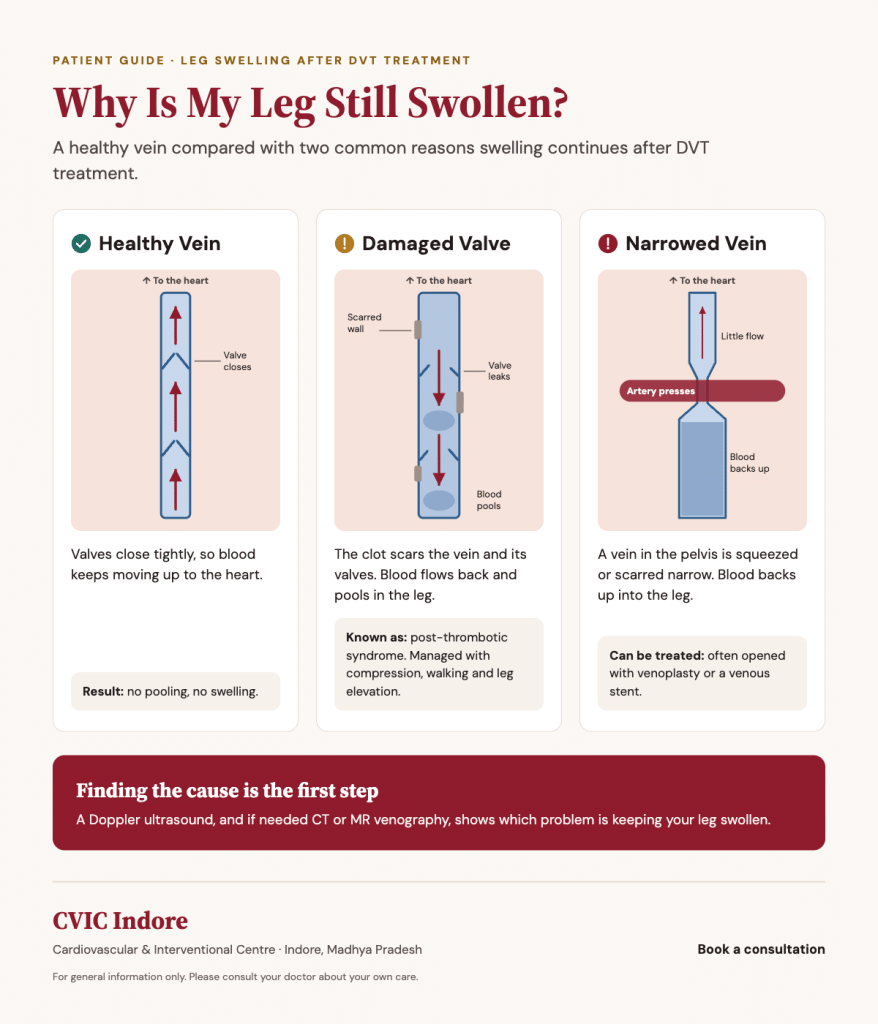
- Post-thrombotic syndrome (PTS): The most common reason. The clot damages the valves inside the vein. Blood then flows backwards and pools in the leg, causing long-term swelling and heaviness.
- Leftover (residual) clot: Part of the clot may not fully dissolve. It can harden into scar tissue that keeps the vein partly blocked.
- Narrowed or compressed vein: Sometimes a vein higher up in the pelvis is narrowed or squeezed by a nearby artery. This blocks blood flow from the leg and can also be the reason the DVT formed in the first place.
- A new or recurrent clot: A fresh DVT can cause sudden new swelling, even during or after treatment.
- Not wearing compression or staying inactive: Long sitting or standing, and skipping compression, can make swelling worse.
- Other health conditions: Heart, kidney, or liver problems, thyroid issues, lymphoedema (a build-up of lymph fluid), and some medicines can also cause leg swelling.
Because the causes are so different, persistent leg swelling after DVT should always be properly evaluated rather than simply accepted.
Also Read: What is DVT? Causes, Symptoms, and Effective Treatment Options
What Is Post-Thrombotic Syndrome?
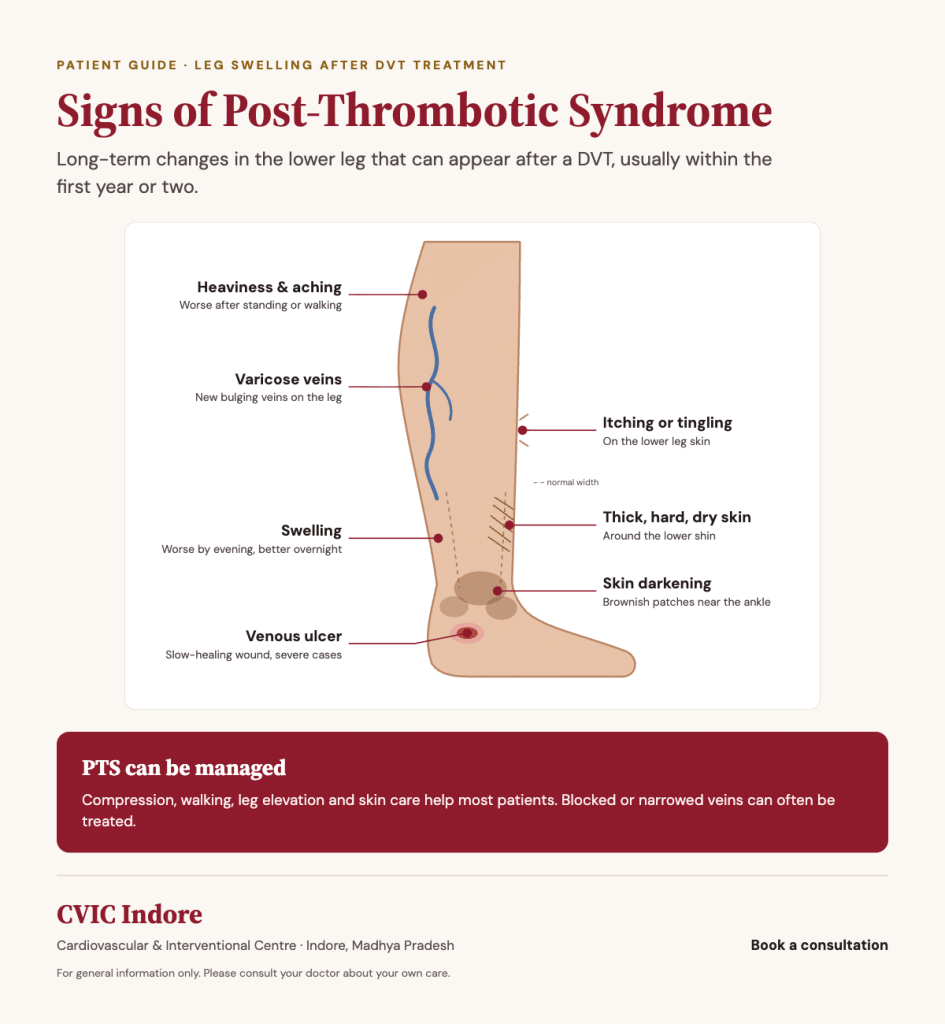
Post-thrombotic syndrome (PTS) is a long-term condition that can develop after a DVT. It happens when the clot damages the vein and its valves, so blood does not flow back to the heart properly. A good share of people with leg DVT develop some degree of PTS, usually within the first year or two.
Common Symptoms of PTS
- Leg swelling that gets worse during the day and better overnight
- Heaviness, aching, or tiredness in the leg
- Cramps or pain, especially after standing or walking
- Itching or tingling of the skin
- New varicose veins on the leg
- Darkening or brownish discolouration of the skin around the ankle
- Thick, hard, or dry skin on the lower leg
- In severe cases, a slow-healing wound near the ankle, called a venous ulcer
Who Is More Likely to Develop PTS?
- People with a large clot, or a clot high up in the thigh or pelvis
- A second DVT in the same leg
- Ongoing symptoms one month after the DVT
- Being overweight
- Missing doses of blood thinners early in treatment
- Older age
The good news is that PTS can be managed, and early care makes a real difference.
Warning Signs: When to Seek Urgent Care
Ongoing mild swelling is usually not an emergency. But some changes can mean a new clot or a clot in the lungs. Seek medical help urgently if you notice:
- Sudden increase in swelling in the same or the other leg
- New or worsening pain, tenderness, warmth, or redness in the leg
- The leg turning pale, bluish, or very tight
- Sudden shortness of breath
- Chest pain, especially when breathing in
- Coughing up blood
- Fast heartbeat, dizziness, or fainting
Breathlessness, chest pain, or coughing up blood can be signs of a pulmonary embolism. Call emergency services immediately.
Also tell your doctor quickly if you notice unusual bleeding while on blood thinners, such as blood in urine or stools, heavy bruising, or bleeding gums that do not stop.
Also Read: Unlocking the Secrets: 10 Proven Strategies for DVT Management and Successful Venous Stenting
How Is Persistent Leg Swelling After DVT Diagnosed?
To find out why your leg is still swollen, your doctor will review your DVT history, treatment, and symptoms, and examine your leg. Tests may include:
- Venous Doppler ultrasound: A painless scan that uses sound waves to show the veins and blood flow. It can detect leftover clot, a new clot, and damaged valves that let blood flow backwards.
- CT or MR venography: Detailed scans that show the large veins in the abdomen and pelvis. They help find a narrowed or compressed vein higher up that ultrasound may miss.
- Catheter venography: A thin tube is placed into the vein and a special dye is injected while X-ray images are taken. It gives a clear map of the veins and is often done when treatment is being planned.
- Intravascular ultrasound (IVUS): A tiny ultrasound probe on a catheter looks at the vein from inside, showing exactly how narrow it is.
- Blood tests and other checks: To rule out heart, kidney, liver, or thyroid causes of swelling.
Good imaging is the foundation of good treatment. It tells your doctor whether simple care is enough or whether the vein itself needs to be opened.
Treatment for Leg Swelling After DVT Treatment
Treatment depends on the cause. Most patients improve with simple, consistent care. Those with a blocked or narrowed vein may benefit from a minimally invasive procedure.
1. Compression Therapy
Graduated compression stockings are the mainstay of managing leg swelling after DVT. They squeeze the leg most at the ankle and less higher up, helping blood flow back to the heart. Your doctor will advise the right strength and size. Wear them during the day and remove them at night.
2. Leg Elevation and Movement
- Raise your leg above heart level for 15 to 30 minutes, a few times a day.
- Walk daily. Calf muscles act like a pump that pushes blood upward.
- Avoid sitting or standing still for long periods.
3. Blood Thinners as Prescribed
Keep taking your blood thinners exactly as advised, and do not stop them on your own. Your doctor will decide how long you need them based on your risk of another clot.
4. Skin Care
Keep the skin on your lower leg clean and moisturised. Protect it from cuts and injuries, as damaged skin heals slowly with PTS. Report any wound or skin breakdown early.
5. Minimally Invasive Procedures
When imaging shows a vein that is still blocked or narrowed, image-guided procedures can restore blood flow. These are done through a small needle puncture, usually in the leg, under local anaesthesia (numbing only the area):
- Venoplasty (balloon angioplasty): A small balloon is guided into the narrowed vein and inflated to widen it.
- Venous stenting: A small metal mesh tube (stent) is placed inside the vein to keep it open. This is often used for narrowed veins in the pelvis.
- Catheter-based clot removal: Special catheters can remove or dissolve leftover clot in suitable patients.
- Treatment of surface vein reflux: If varicose veins develop, they can be sealed with minimally invasive methods to reduce pressure in the leg.
Not every patient needs a procedure. Your doctor will recommend one only if imaging shows it is likely to help.
6. Venous Ulcer Care
If a wound develops, it needs regular dressing, strong compression, and treatment of the underlying vein problem to heal and prevent it from coming back.
Daily Self-Care Tips to Reduce Leg Swelling
- Put on compression stockings in the morning, before swelling builds up.
- Walk for short periods several times a day.
- Do ankle pumps: point and flex your feet 10 to 15 times every hour when sitting.
- Raise your leg on pillows while resting.
- Keep a healthy weight to reduce pressure on leg veins.
- Cut down on very salty food, which can increase fluid build-up.
- Drink enough water unless your doctor has told you to limit fluids.
- On long journeys, stand up and move every hour.
- Avoid smoking, which harms blood vessels.
- Keep all follow-up appointments and scans.
Questions to Ask Your Doctor
- Why is my leg still swollen after DVT treatment?
- Is there any clot left, or a new clot?
- Do I have post-thrombotic syndrome?
- Could a narrowed vein in my pelvis be causing this?
- Do I need a Doppler ultrasound or CT or MR venography?
- Which compression stockings should I wear, and for how long?
- How long should I continue blood thinners?
- Am I a candidate for venoplasty or stenting?
- What warning signs should make me come back immediately?
- What can I do to lower my risk of another DVT?
Why Choose CVIC Indore for DVT Treatment and Leg Swelling Care
Persistent leg swelling after DVT is a vein problem, and solving it needs accurate vascular imaging and, when needed, skilled image-guided intervention. CVIC Indore is built around exactly these strengths, serving patients from Indore and across Madhya Pradesh.
Our Specialist Team
- Dr. Alok K Udiya — Neuroradiology and Vascular Imaging: Dr. Udiya brings deep expertise in vascular imaging, helping detect leftover clots, damaged valves, and narrowed veins that may be causing ongoing leg swelling.
- Dr. Shailesh Gupta — Interventional Neurology and Stroke Management: Dr. Gupta has extensive experience managing blood clot-related conditions and long-term blood thinner therapy, supporting safe, well-planned care.
- Dr. Nishant Bhargava — Cerebrovascular Intervention: Dr. Bhargava specialises in minimally invasive, catheter-based procedures inside blood vessels, the same core skills used to open blocked or narrowed veins.
What You Can Expect
- Doppler ultrasound and advanced venous imaging to find the real cause
- Image-guided, minimally invasive procedures such as venoplasty, stenting, and clot removal when needed
- Personalised compression and medication plans
- Clear explanations of every finding and option
- Long-term follow-up to prevent recurrence
If your leg is still swollen after DVT treatment, our team can help you understand why and find the right way forward.
Frequently Asked Questions
Is leg swelling normal after DVT treatment?
Yes, some swelling is normal and often improves over weeks to months. Swelling that does not improve, or gets worse, should be checked by a doctor.
How long does leg swelling last after DVT?
For many patients, swelling improves within a few weeks to three months. Some have mild swelling for six months or more, especially if post-thrombotic syndrome develops.
Does ongoing swelling mean the clot is still there?
Not always. Swelling can come from damaged vein valves even after the clot is gone. A Doppler ultrasound can show whether any clot remains.
What is post-thrombotic syndrome?
It is a long-term condition after DVT where damaged veins cause ongoing swelling, heaviness, pain, and skin changes in the leg.
Do compression stockings help after DVT?
Yes. Compression stockings are a key part of managing leg swelling after DVT. Ask your doctor for the right strength and size.
Can a narrowed vein cause swelling after DVT?
Yes. A narrowed or compressed vein in the pelvis can block blood flow and keep the leg swollen. CT or MR venography can detect it.
Can persistent leg swelling after DVT be treated?
Yes. Most patients improve with compression, movement, and leg elevation. Blocked or narrowed veins can be treated with venoplasty or stenting.
Is venous stenting safe?
Venous stenting is a minimally invasive procedure done through a small puncture. Like any procedure, it has some risks, which your doctor will discuss with you.
When should I worry about leg swelling after DVT?
Seek urgent care for sudden new swelling, pain, redness, breathlessness, chest pain, or coughing up blood.
Where can I get leg swelling after DVT treated in Indore?
CVIC Indore offers Doppler ultrasound, advanced venous imaging, and minimally invasive vein procedures with an experienced team. Book a consultation to find the cause.
Conclusion
Leg swelling after DVT treatment is common, and in many patients it slowly improves. But swelling that lingers for months is not something you simply have to live with. It may be caused by post-thrombotic syndrome, leftover clot, or a narrowed vein, and each of these can be managed.
The right first step is finding the real cause with good imaging. From there, simple daily care and, when needed, minimally invasive treatment can bring lasting relief and lower the risk of another clot.
Still struggling with leg swelling after DVT treatment? Book a consultation at CVIC Indore with our specialist team, including Dr. Alok K Udiya, Dr. Shailesh Gupta, and Dr. Nishant Bhargava, for expert evaluation and modern vein care.
Medical disclaimer: This article is for general information only and is not a substitute for professional medical advice, diagnosis, or treatment. Do not stop or change blood thinners without your doctor’s advice. Please consult a qualified doctor about your own condition.