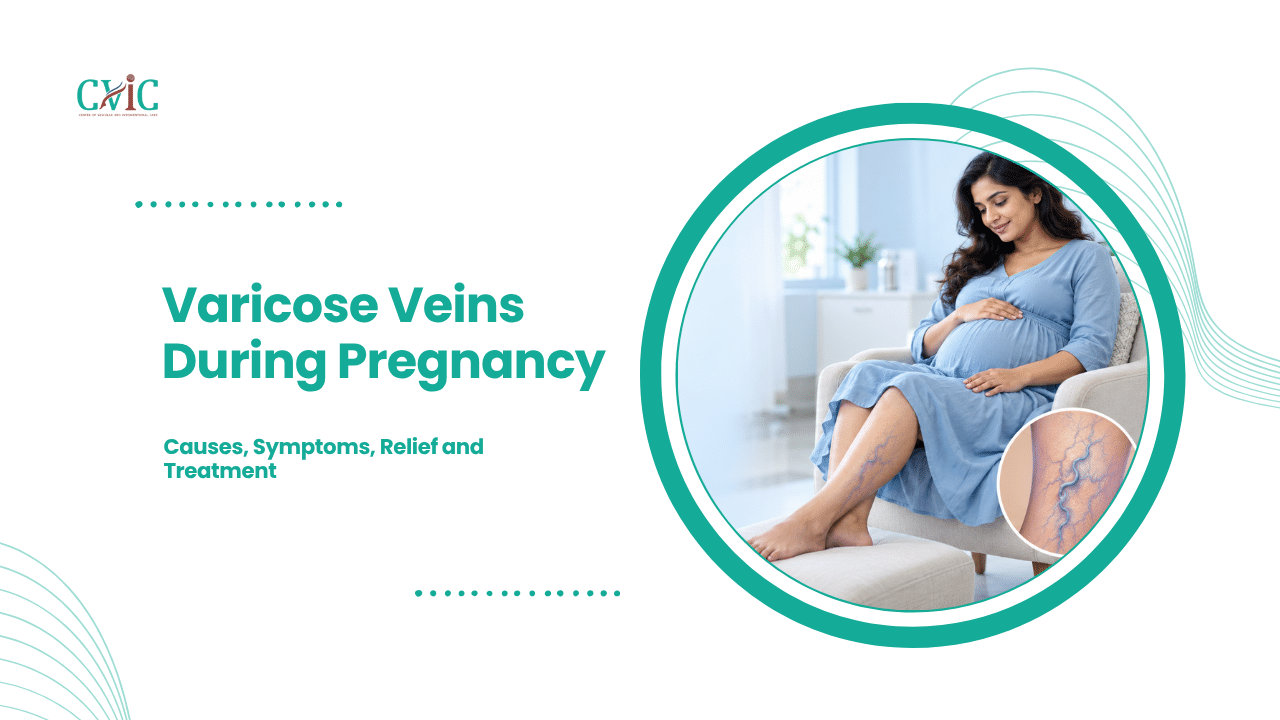
Pregnancy brings many changes to your body. For many women, one of them is swollen, twisted, bluish veins on the legs. These are varicose veins, and they are very common during pregnancy.
The good news is that varicose veins during pregnancy are usually harmless and often improve within a few months after delivery. But they can cause aching, heaviness, and discomfort, and in rare cases they need medical attention.
At CVIC Indore, we help mothers-to-be understand their varicose veins and manage them safely. In this guide, we explain in simple words why varicose veins appear in pregnancy, which symptoms are normal, warning signs to watch for, and safe ways to find relief.
Key Takeaways
- Varicose veins during pregnancy are common and usually not dangerous.
- They happen because of higher blood volume, pregnancy hormones, and pressure from the growing womb.
- Leg elevation, walking, compression stockings, and avoiding long standing can ease symptoms.
- Most veins improve within a few months after delivery; those that remain can be treated later.
- Sudden pain, swelling, warmth or redness in one leg needs urgent medical care.
What Are Varicose Veins?
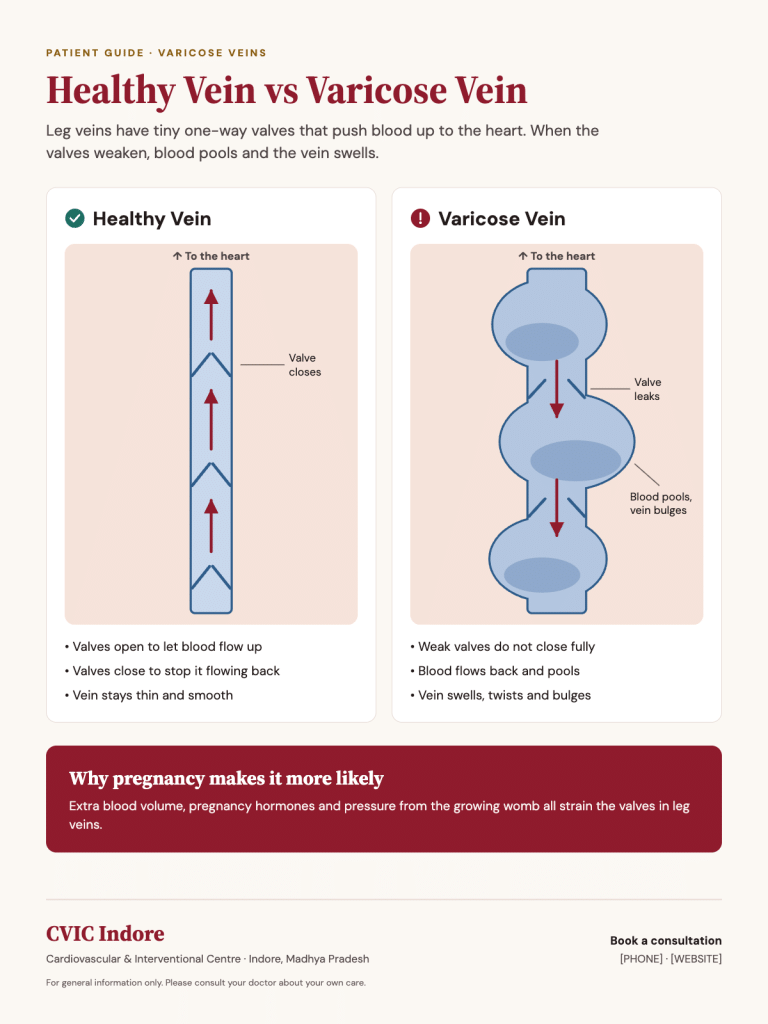
Varicose veins are veins that have become swollen, enlarged, and twisted. They usually look blue or purple and may bulge above the skin, most often on the legs.
Your leg veins carry blood back up to the heart against gravity. To do this, they have tiny one-way valves that stop blood from flowing backwards. When these valves weaken, blood pools in the vein. The vein stretches and becomes a varicose vein.
You may also notice spider veins. These are small, thin, red or purple lines just under the skin, often in a web-like pattern. They are a milder form of the same problem and are usually only a cosmetic concern.
Also Read: Varicose Veins vs DVT (Deep Vein Thrombosis): How to Tell the Difference
Why Do Varicose Veins Happen During Pregnancy?
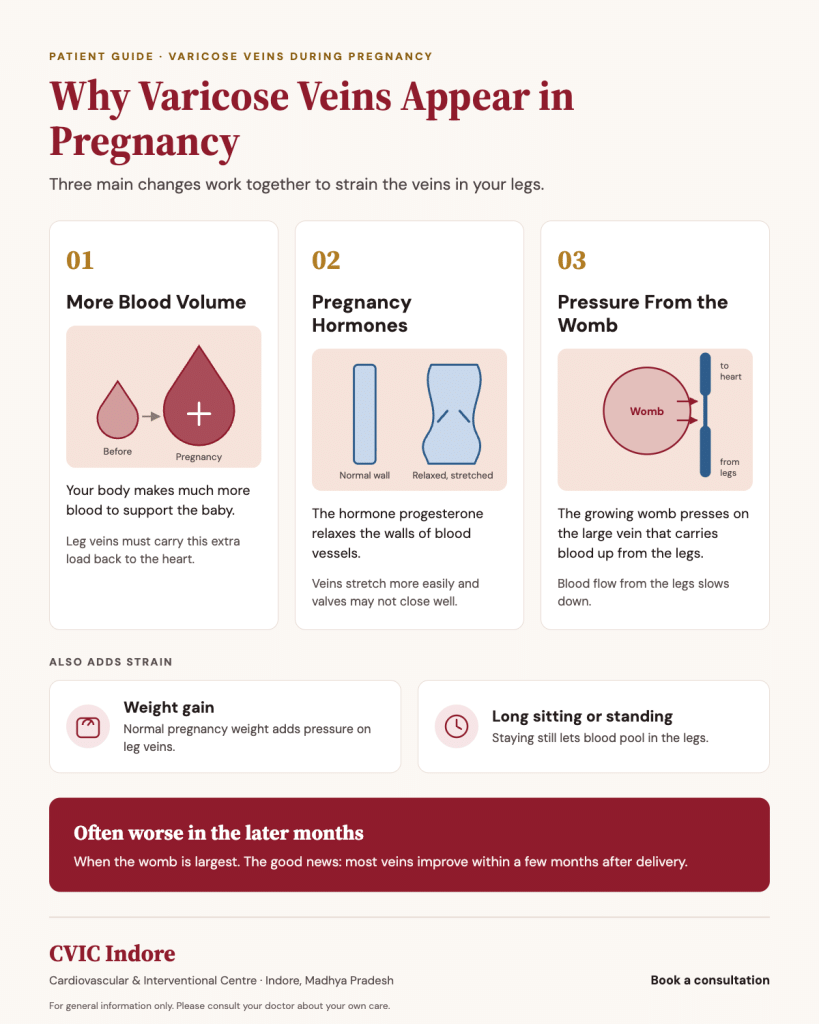
Several pregnancy changes work together to put extra strain on your leg veins:
- More blood in the body: Blood volume rises a lot in pregnancy to support the baby. Your veins have to carry this extra load.
- Pregnancy hormones: The hormone progesterone relaxes the walls of blood vessels. Relaxed vein walls stretch more easily, and valves may not close as well.
- Pressure from the growing womb: As the uterus (womb) grows, it presses on the large vein on the right side of the abdomen (the inferior vena cava). This slows blood returning from the legs.
- Weight gain: Normal pregnancy weight gain adds more pressure on leg veins.
- Less movement: Long periods of sitting or standing let blood pool in the legs.
Who Is More Likely to Get Them?
- Women with a family history of varicose veins
- Women who already had varicose veins before pregnancy
- Second or later pregnancies
- Pregnancy with twins or more
- Jobs that need long hours of standing or sitting
- Being overweight before pregnancy
- Older age at pregnancy
Varicose veins often appear or get worse in the later months of pregnancy, when the womb is largest.
Symptoms of Varicose Veins During Pregnancy
Some women have no symptoms at all, only visible veins. Others notice:
- Blue or purple, swollen, twisted veins
- Aching, heavy, or tired legs, especially at the end of the day
- Mild swelling around the ankles and feet
- Itching or a burning feeling over the vein
- Throbbing or cramping in the legs, often at night
- Symptoms that feel worse after standing and better after resting with legs raised
Also Read: Laser Treatment for Varicose Veins: Is It the Best Option?
Where Can They Appear?
- Legs: The most common place, especially the calves, behind the knees, and inner thighs.
- Vulva (vulvar varicose veins): Swollen veins in the genital area. They can feel heavy or uncomfortable and usually settle after delivery.
- Rectum (haemorrhoids): Haemorrhoids, or piles, are also a type of swollen vein. They are common in pregnancy, often worsened by constipation.
If you notice swollen veins in the vulva, tell your doctor. They are usually harmless but your doctor may want to note them before delivery.
Are Varicose Veins During Pregnancy Dangerous?
In most cases, no. Varicose veins during pregnancy are usually a comfort and cosmetic issue, not a threat to you or your baby.
However, pregnancy also raises the risk of blood clots. That is why it is important to know the difference between normal discomfort and warning signs.
Possible Complications
- Superficial thrombophlebitis: A small clot in a vein just under the skin. The vein becomes hard, red, warm, and tender. It is usually not serious but should be checked.
- Deep vein thrombosis (DVT): A clot in a deep vein, usually in the leg. It is less common but serious, because a piece of the clot can travel to the lungs.
- Bleeding: A vein close to the skin can bleed if injured. Press firmly and raise the leg, then see a doctor.
- Skin changes: Long-standing varicose veins can cause darkening or itchy, dry skin around the ankles.
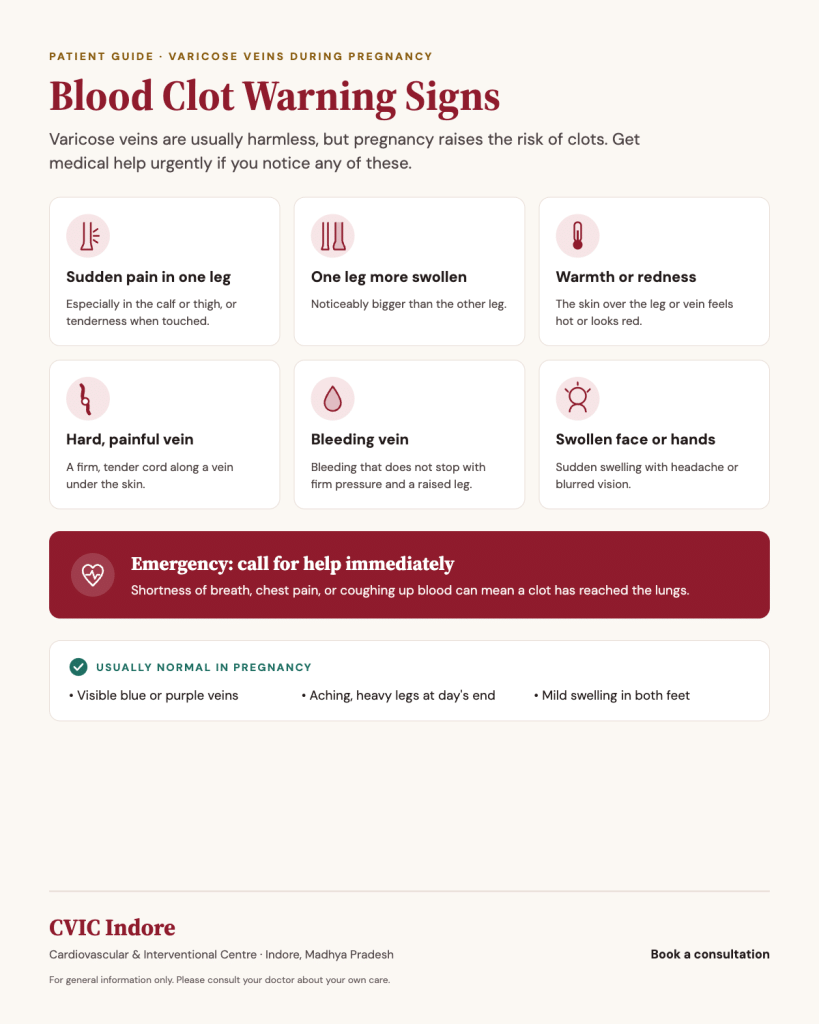
Warning Signs: Get Medical Help Urgently
- Sudden pain, swelling, or tenderness in one leg, especially the calf or thigh
- One leg noticeably more swollen than the other
- Warmth, redness, or a hard, painful cord along a vein
- Shortness of breath, chest pain, or coughing up blood (call emergency services immediately)
- A vein that bleeds and does not stop with firm pressure
Swelling in both feet is common in pregnancy. But sudden swelling of the face, hands, or legs with headache or blurred vision needs urgent care, as it may signal high blood pressure in pregnancy.
Also Read: Varicose Veins: Causes, Symptoms, and the Best Treatment in Indore
Safe Relief for Varicose Veins During Pregnancy
Most relief during pregnancy comes from simple daily habits. Always check with your doctor before starting anything new.
- Raise your legs: Rest with your feet above the level of your heart for 15 to 20 minutes, a few times a day.
- Keep moving: Gentle walking, swimming, or pregnancy-safe exercise helps your calf muscles pump blood upward.
- Avoid long standing or sitting: If your work keeps you on your feet, take short breaks to walk or sit with legs raised. If you sit for long, get up and move every hour.
- Wear compression stockings: These special stockings gently squeeze the legs to help blood flow upward. Ask your doctor which strength and size are right for you, and put them on in the morning before swelling starts.
- Sleep on your left side: This reduces pressure on the large vein on the right side of the abdomen and improves blood flow from the legs.
- Do not cross your legs for long periods while sitting.
- Wear comfortable footwear: Low-heeled shoes help your calf muscles work better than high heels.
- Avoid tight clothes: Tight waistbands or socks that leave marks can slow blood flow.
- Stay hydrated and eat fibre: This helps prevent constipation, which can worsen haemorrhoids.
- Simple ankle exercises: Point and flex your feet, or rotate your ankles, 10 to 15 times, several times a day.
Avoid creams, oils, supplements, or herbal remedies for veins unless your doctor approves them, as not all are safe in pregnancy.
How Are Varicose Veins Checked?
Most varicose veins can be identified simply by looking at the legs and asking about symptoms. If your doctor needs more information, or suspects a clot, they may advise a venous Doppler ultrasound.
A Doppler ultrasound uses sound waves to show the veins and how blood flows through them. It is painless, uses no radiation, and is safe during pregnancy. It can show weak valves and check for clots in deep veins.
Treatment of Varicose Veins During Pregnancy
During pregnancy, the focus is on comfort and safety, not on removing veins. Your doctor will usually recommend:
- Compression stockings
- Leg elevation and regular movement
- Monitoring for any warning signs
- Prompt treatment if a clot is found, using medicines that are safe in pregnancy
Procedures to close or remove varicose veins are generally not done during pregnancy. Doctors usually wait until after delivery, because many veins improve on their own and the body needs time to recover.
Do Varicose Veins Go Away After Pregnancy?
Often, yes. Many varicose veins shrink or fade within about three months to a year after delivery, as blood volume, hormones, and pressure return to normal.
Some veins may not fully disappear, especially after more than one pregnancy. If veins still cause pain, swelling, skin changes, or worry you after the postpartum period, modern minimally invasive treatments are available.
Treatment Options After Delivery
- Sclerotherapy: A medicine is injected into small varicose or spider veins, causing them to close and fade.
- Endovenous thermal ablation: A thin tube is placed inside the vein, guided by ultrasound, and heat from laser or radiofrequency energy seals it shut.
- Other image-guided vein closure methods: Techniques that close the vein from inside using special medical agents, also done through a small puncture.
- Minor surgery: Small bulging veins can be removed through tiny cuts.
These treatments are usually done under local anaesthesia (numbing only the area), through a needle or small puncture, with quick recovery. Your doctor will suggest the right timing, often after breastfeeding plans are discussed.
Can You Prevent Varicose Veins During Pregnancy?
You cannot always prevent varicose veins, especially if they run in your family. But you can lower the chance and keep them milder:
- Stay active every day with walking or doctor-approved exercise.
- Keep your weight gain within the range your doctor advises.
- Raise your legs whenever you rest.
- Avoid standing or sitting in one position for long.
- Start wearing compression stockings early if you have had varicose veins before.
- Sleep on your left side in later pregnancy.
- Eat fibre-rich food and drink enough water to avoid constipation.
Questions to Ask Your Doctor
- Are my varicose veins normal for pregnancy?
- Do I need a Doppler ultrasound?
- Should I wear compression stockings, and which strength?
- Which exercises are safe for me now?
- What signs of a blood clot should I watch for?
- Are my veins a concern for a normal delivery?
- Are vulvar varicose veins anything to worry about?
- Will my veins go away after delivery?
- When can I consider treatment if they stay?
- Will they get worse in a future pregnancy?
Why Choose CVIC Indore for Varicose Veins Care
Varicose veins are a blood vessel condition, and CVIC Indore is a centre built around vascular imaging and minimally invasive, image-guided intervention. Whether you need a check during pregnancy or treatment after delivery, our team offers clear guidance and modern care for women from Indore and across Madhya Pradesh.
Our Specialist Team
- Dr. Alok K Udiya — Neuroradiology and Vascular Imaging: Dr. Udiya brings deep expertise in vascular imaging, including assessing blood flow and veins. This helps in accurate evaluation of varicose veins and in checking for clots when needed.
- Dr. Shailesh Gupta — Interventional Neurology and Stroke Management: Dr. Gupta’s experience in managing blood clot-related conditions adds valuable insight to the centre’s careful, safety-first approach.
- Dr. Nishant Bhargava — Cerebrovascular Intervention: Dr. Bhargava specialises in minimally invasive, catheter-based procedures on blood vessels, reflecting the centre’s strength in image-guided vascular treatment.
What You Can Expect
- Doppler ultrasound to check veins and blood flow safely
- Pregnancy-safe guidance on relief and warning signs
- Minimally invasive vein treatments after delivery, when needed
- Simple explanations of every finding and option
- Respectful, patient-centric care at every stage
If varicose veins are troubling you during or after pregnancy, our team is here to help.
Frequently Asked Questions
Are varicose veins during pregnancy normal?
Yes. Varicose veins are very common in pregnancy because of higher blood volume, hormones, and pressure from the growing womb. They are usually harmless.
Can varicose veins harm my baby?
Varicose veins themselves do not harm the baby. The main concern is a rare blood clot, so watch for warning signs like sudden pain or swelling in one leg.
Do varicose veins go away after pregnancy?
Often they do. Many varicose veins improve within about three months to a year after delivery. Veins that remain can be treated later.
Is it safe to wear compression stockings during pregnancy?
Yes, compression stockings are generally safe and helpful. Ask your doctor for the right strength and size before you start.
When do varicose veins start in pregnancy?
They can appear at any stage, but they often show up or worsen in the second and third trimesters, when the womb is larger.
Can varicose veins be treated during pregnancy?
During pregnancy, care focuses on relief: stockings, leg elevation, and movement. Procedures to close or remove veins are usually done after delivery.
What are vulvar varicose veins?
They are swollen veins in the genital area during pregnancy. They can feel heavy or uncomfortable and usually go away after delivery. Tell your doctor if you notice them.
Can varicose veins cause blood clots?
Varicose veins slightly raise the risk of clots, and pregnancy raises it further. Sudden pain, swelling, warmth, or redness in one leg needs urgent medical care.
Will varicose veins return in my next pregnancy?
They often return or worsen with each pregnancy. Starting compression stockings and healthy habits early can help.
Where can I get varicose veins checked in Indore?
CVIC Indore offers Doppler ultrasound, vascular imaging, and minimally invasive vein care with an experienced team. You can book a consultation for advice.
Conclusion
Varicose veins during pregnancy are common, usually harmless, and often improve after delivery. Simple steps like raising your legs, staying active, sleeping on your left side, and wearing compression stockings can make a big difference to your comfort.
At the same time, know the warning signs. Sudden pain, swelling, warmth, or redness in one leg should never be ignored. And if veins still bother you after pregnancy, effective minimally invasive treatments are available.
Concerned about varicose veins? Book a consultation at CVIC Indore with our specialist team, including Dr. Alok K Udiya, Dr. Shailesh Gupta, and Dr. Nishant Bhargava, for safe, clear guidance during and after pregnancy.
Medical disclaimer: This article is for general information only and is not a substitute for professional medical advice, diagnosis, or treatment. Pregnant women should consult their obstetrician or doctor before trying any new treatment, exercise, or product.