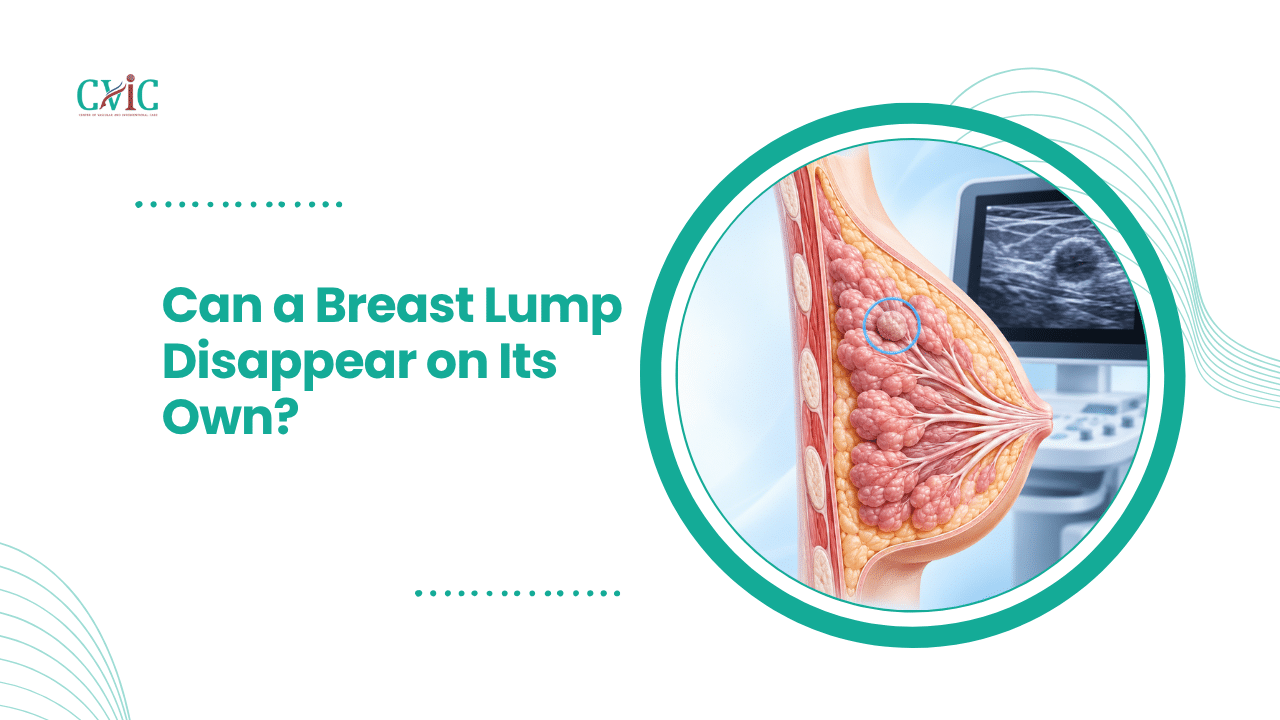
Finding a breast lump can be frightening. Many women feel their heart race the moment their fingers touch something new. Then comes the question: will it just go away?
The honest answer is: sometimes, yes. Many breast lumps are harmless and some do disappear on their own, especially those linked to the menstrual cycle. But some do not, and a few need prompt medical attention. You cannot tell which is which just by touch.
At CVIC Indore, we help women understand their breast lump with clear answers and accurate imaging. In this guide, we explain in simple words which lumps can go away, which ones stay, warning signs to watch for, and how a breast lump is checked.
Key Takeaways
- Most breast lumps are not cancer. Many are cysts, fibroadenomas, or hormone-related changes.
- Lumps linked to periods, cysts, or infections can shrink or disappear on their own.
- Fibroadenomas often stay, and cancerous lumps do not go away without treatment.
- A lump that lasts beyond one full menstrual cycle, grows, or feels hard and fixed should be checked.
- Ultrasound, mammography, and if needed a needle biopsy give a clear answer quickly.
What Is a Breast Lump?
A breast lump is any swelling, bump, or area that feels different from the rest of your breast tissue. It may feel firm, rubbery, soft, smooth, or irregular. Some move easily under the skin, while others feel fixed in place.
Breast tissue is naturally a little lumpy for many women. It contains milk glands, ducts (tiny tubes that carry milk), fat, and supportive tissue. This texture also changes with hormones during the month, pregnancy, breastfeeding, and menopause.
That is why a new lump can mean many things. Most breast lumps are benign (not cancer). Still, every new or changing lump deserves a proper check, because only a doctor with the right tests can say for sure.
Can a Breast Lump Disappear on Its Own?
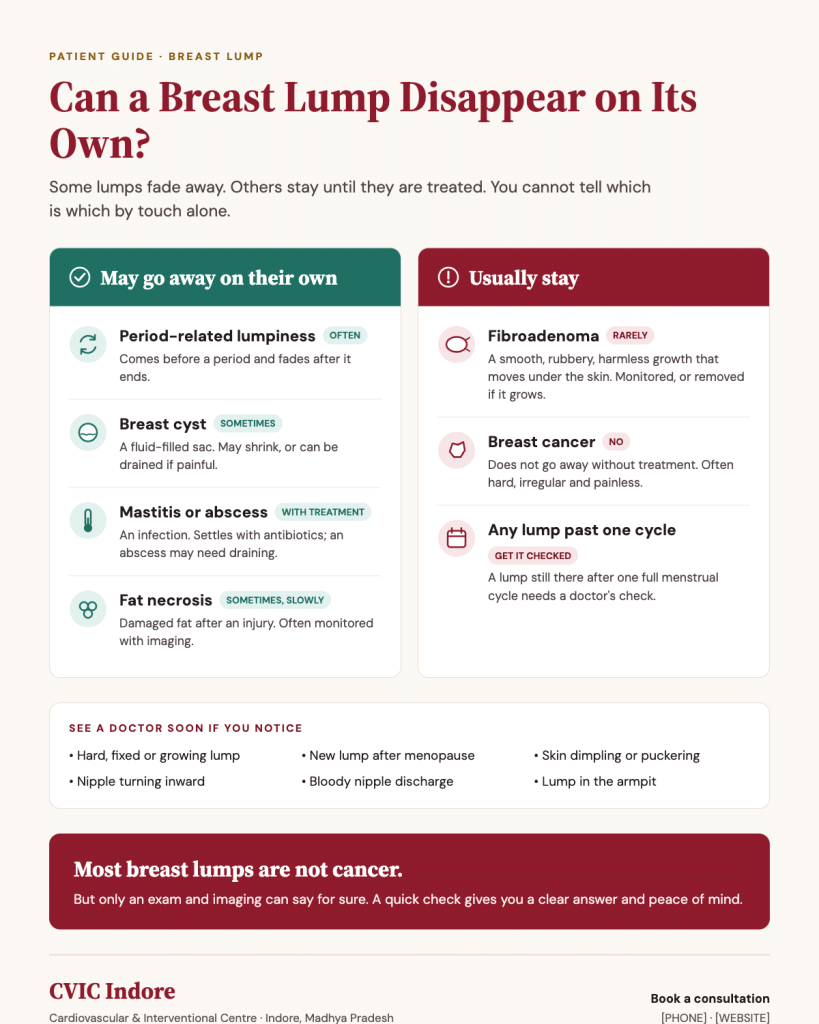
Yes, some breast lumps can disappear on their own. This usually happens when the lump is caused by hormones, fluid, or a temporary infection. Once the cause settles, the lump shrinks or goes away.
But other lumps stay the same or slowly grow. A lump that disappears is often reassuring, while a lump that stays needs to be checked. Even a lump that seems to come and go should be shown to a doctor if it keeps returning.
Also Read: Breast Lumps: A Comprehensive Guide to Symptoms and Treatments
Breast Lumps That May Go Away vs. Those That Usually Stay
| Type of lump | Can it go away on its own? | What usually happens |
|---|---|---|
| Period-related (cyclical) lumpiness | Yes, often after the period ends | Comes and goes with the monthly cycle |
| Breast cyst (fluid-filled sac) | Sometimes | May shrink, or can be drained if painful |
| Mastitis or abscess (infection) | Swelling settles with treatment | Needs antibiotics; an abscess may need draining |
| Fat necrosis (damaged fat after injury) | Sometimes, slowly | Often monitored with imaging |
| Fibroadenoma (solid, harmless growth) | Rarely; may shrink after menopause | Monitored or removed if it grows |
| Breast cancer | No | Needs prompt diagnosis and treatment |
The key message: a lump going away is good news, but waiting too long on a lump that stays can delay important care.
Common Causes of a Breast Lump
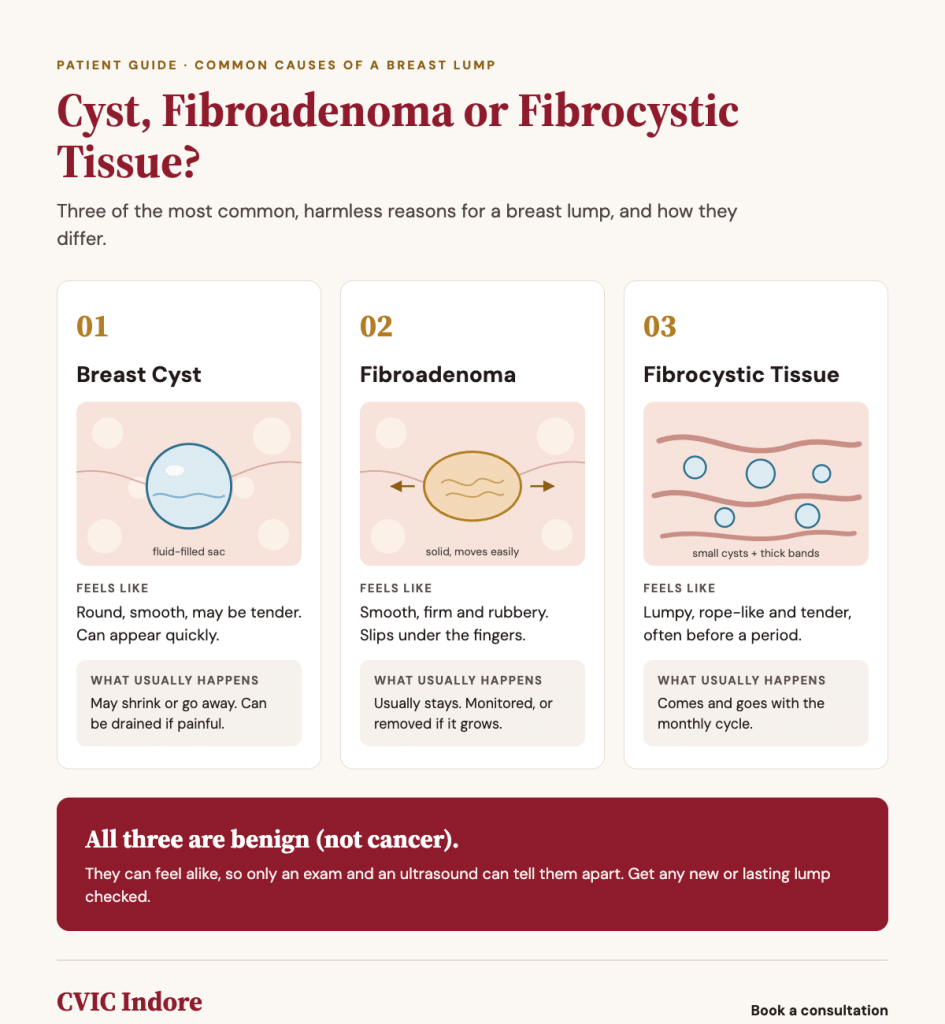
Most breast lumps have harmless causes. Here are the most common ones:
- Fibrocystic breast changes: Lumpy, tender breasts linked to hormones. Often feel worse before a period and better after.
- Breast cysts: Round, smooth, fluid-filled sacs. They can appear quickly, feel tender, and change size with the cycle. Common in women in their 30s and 40s.
- Fibroadenoma: A smooth, firm, rubbery lump that moves easily under the skin, sometimes called a “breast mouse.” Common in younger women and almost always benign.
- Mastitis and breast abscess: Infection of breast tissue, often during breastfeeding. Causes pain, redness, warmth, and sometimes fever. An abscess is a collection of pus.
- Fat necrosis: A firm lump formed when fatty tissue is damaged, often after an injury, surgery, or radiation.
- Lipoma: A soft, slow-growing lump of fat tissue. Usually painless and harmless.
- Intraductal papilloma: A small, wart-like growth inside a milk duct. It may cause nipple discharge.
- Breast cancer: Less common than the causes above, but important to rule out. It often feels hard, irregular, and fixed, and is usually painless.
Only proper examination and imaging can tell these apart. This is why self-diagnosis is never a safe substitute for a check-up.
Also Read: What Patients Need to Know Before a Breast Biopsy with the Encor Enspire System
Warning Signs: When to See a Doctor About a Breast Lump
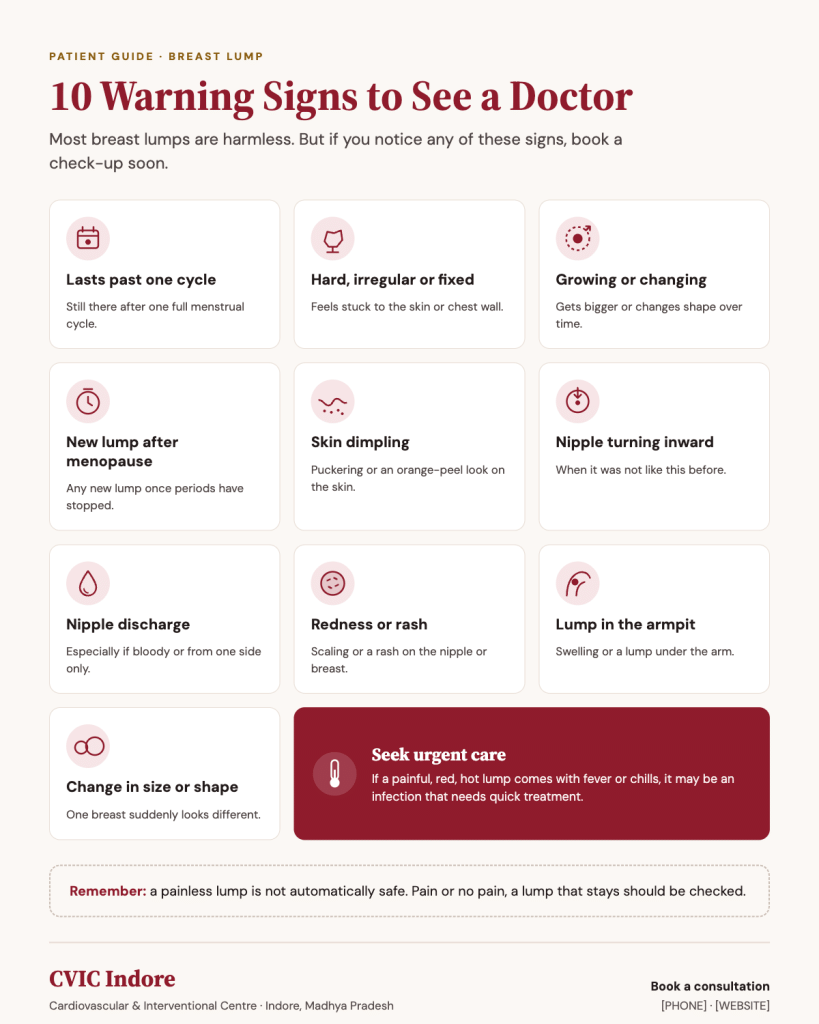
See a doctor soon if you notice any of the following:
- A lump that lasts beyond one full menstrual cycle
- A lump that feels hard, irregular, or fixed to the skin or chest wall
- A lump that is growing or changing shape
- A new lump after menopause
- Skin dimpling, puckering, or an orange-peel look on the breast
- Nipple turning inward (when it was not like this before)
- Nipple discharge, especially if bloody or from one side only
- Redness, scaling, or a rash on the nipple or breast skin
- A lump or swelling in the armpit
- One breast suddenly changing in size or shape
Seek urgent care if a painful, red, hot lump comes with fever or chills, as this may be an infection that needs quick treatment.
A painless lump is not automatically safe. In fact, many lumps that need attention do not hurt. Pain or no pain, a lump that stays should be checked.
How Is a Breast Lump Checked?
Checking a breast lump is usually quick, simple, and done in a few steps. Your doctor will choose the tests based on your age, symptoms, and what they find on examination.
1. History and Clinical Breast Examination
Your doctor asks when you noticed the lump, whether it changes with your periods, and about any family history. They then gently examine both breasts and armpits to feel the lump’s size, shape, and movement.
2. Breast Ultrasound
An ultrasound uses sound waves to create images of breast tissue. It is painless, uses no radiation, and is very good at telling a fluid-filled cyst from a solid lump. It is often the first test for younger women.
3. Mammography
A mammogram is a low-dose X-ray of the breast. It can show changes that cannot be felt, such as tiny calcium spots. It is commonly advised for women over 40, or when the doctor needs more detail.
4. MRI (When Needed)
Breast MRI uses magnets and radio waves to show breast tissue in fine detail. It is used in selected cases, for example when other tests are unclear.
5. Image-Guided Needle Biopsy
If a solid lump looks unusual on imaging, a small tissue sample may be taken. A thin needle is guided to the exact spot using ultrasound, usually under local anaesthesia (numbing only the area). The sample is studied under a microscope to confirm what the lump is.
6. Follow-Up Plan
Based on the results, your doctor may advise reassurance and routine checks, monitoring with repeat scans, draining a cyst, or referral for treatment. Clear results bring peace of mind and the right next step.
Also Read: Vacuum-Assisted Breast Biopsy vs Core Needle Biopsy: 5 Reasons to Choose Encor Enspire
How Long Should You Wait Before Getting a Breast Lump Checked?
If you are still having periods and the lump feels tender and smooth, it is reasonable to watch it through one menstrual cycle. Many hormone-related lumps fade once the period is over.
But do not wait if:
- You are past menopause
- The lump feels hard, irregular, or fixed
- You notice any of the warning signs listed above
- You have a strong family history of breast or ovarian cancer
- The lump is still there after one cycle
In these cases, book a check-up without delay. Early answers almost always mean simpler choices.
Simple Breast Self-Awareness Tips
Knowing what is normal for you makes changes easier to notice:
- Check your breasts once a month, about a week after your period ends, when they are least tender.
- After menopause, pick a fixed date each month.
- Look in the mirror with arms down, then raised, for changes in shape, skin, or nipples.
- Lying down, use the flat pads of your three middle fingers to press gently in small circles.
- Cover the whole breast, from collarbone to bra line and from armpit to breastbone.
- Note anything new and how it changes over a cycle.
Self-checks help you know your body, but they do not replace a doctor’s examination or advised screening.
Coping With the Worry
It is natural to fear the worst when you find a breast lump. Many women delay a check-up because they are scared of what they might hear. Remember: most lumps turn out to be harmless, and getting checked is the fastest way to stop worrying.
- Book the appointment early rather than waiting and wondering.
- Take a family member or friend with you for support.
- Write down when you first noticed the lump and any changes since.
- Avoid relying on internet searches or forwarded messages for answers.
- If worry feels overwhelming, talk to someone you trust or ask your doctor about support.
Questions to Ask Your Doctor
- What do you think is causing my breast lump?
- Is this lump likely to go away on its own?
- Which tests do I need: ultrasound, mammogram, or both?
- Do I need a biopsy? If yes, how is it done?
- If it is a cyst, does it need to be drained?
- Should we monitor it, and how often?
- What changes should make me come back sooner?
- Does my family history change my risk or screening plan?
- How soon will I get my results?
- How should I check my breasts at home from now on?
Why Choose CVIC Indore for Breast Lump Evaluation
When you find a breast lump, you need fast, accurate answers from a team you can trust. CVIC Indore combines advanced imaging, image-guided procedures, and experienced specialists, so women from Indore and across Madhya Pradesh can get clarity without delay.
Our Specialist Team
- Dr. Alok K Udiya — Neuroradiology and Vascular Imaging: Dr. Udiya brings deep expertise in reading complex scans and planning precise image-guided procedures. This imaging experience supports accurate assessment and safe, targeted needle sampling when a biopsy is needed.
- Dr. Shailesh Gupta — Interventional Neurology and Stroke Management: Dr. Gupta is part of the centre’s senior specialist team, contributing to a patient-first, multidisciplinary approach to care.
- Dr. Nishant Bhargava — Cerebrovascular Intervention: Dr. Bhargava brings experience in minimally invasive, image-guided intervention, strengthening the centre’s focus on safe, precise procedures.
What You Can Expect
- Advanced imaging for a clear view of the breast lump
- Image-guided needle biopsy when a tissue sample is needed
- Team-based review of unclear findings
- Simple explanations of every report and next step
- Respectful, private, patient-centric care for every woman
If you have noticed a breast lump in Indore, our team is here to help you move from worry to a clear answer.
Frequently Asked Questions
Can a breast lump go away on its own?
Yes, some can. Lumps caused by hormones, cysts, or infection may shrink or disappear. Fibroadenomas often stay, and cancerous lumps do not go away without treatment.
How long does it take for a breast lump to go away?
Hormone-related lumps often fade within one menstrual cycle. If a lump is still there after one full cycle, get it checked.
Are most breast lumps cancer?
No. Most breast lumps are benign, such as cysts, fibroadenomas, or fibrocystic changes. Only tests can confirm the cause.
Is a painful breast lump less worrying than a painless one?
Not always. Painful lumps are often cysts or infections, but a painless lump can still need attention. Any lump that stays should be checked.
Can a breast lump come and go?
Yes. Lumps linked to the menstrual cycle often appear before a period and fade after it. If it keeps returning, show it to a doctor.
Which test is best for a breast lump?
Ultrasound is often the first test, especially for younger women. Mammography is common for women over 40. Your doctor decides based on your age and findings.
Does every breast lump need a biopsy?
No. Many lumps, like simple cysts, are diagnosed on ultrasound alone. A biopsy is advised when a solid lump looks unusual.
Can men get breast lumps?
Yes. Men can develop breast lumps, most often from harmless breast tissue enlargement. Any new lump in a man should also be checked.
Can a breast lump appear during pregnancy or breastfeeding?
Yes. Blocked ducts, milk-filled cysts, and mastitis are common at this time. A lump that does not settle in a few days should still be checked.
Where can I get a breast lump checked in Indore?
CVIC Indore offers advanced imaging and image-guided procedures with an experienced specialist team. You can book a consultation for a clear evaluation.
Conclusion
So, can a breast lump disappear on its own? Sometimes, yes, especially when it is linked to your periods, a cyst, or an infection. But many lumps stay, and you cannot tell the difference by touch alone.
The safest approach is simple: watch a soft, tender lump through one cycle at most, and get any lump that stays, grows, or feels unusual checked promptly. Most lumps turn out to be harmless, and a quick check gives you peace of mind.
Noticed a breast lump? Book a consultation at CVIC Indore with our specialist team, including Dr. Alok K Udiya, Dr. Shailesh Gupta, and Dr. Nishant Bhargava. Get clear answers, accurate imaging, and caring guidance on your next step.
Medical disclaimer: This article is for general information only and is not a substitute for professional medical advice, diagnosis, or treatment. Every patient’s situation is different. Please consult a qualified doctor about any breast lump or change.