Madhya Pradesh is a big state. A family in Rewa, Sagar, Satna, Khandwa, or Ratlam may live hundreds of kilometres from a city with advanced treatment. When a doctor says, “You may need a biopsy, a stent, or a procedure to block a bleeding vessel,” the first questions are often practical. Who treats this? Do I have to go to a big city? Will I need a big operation? How long will I stay away from home?
Many of these problems can now be treated through a needle-sized opening in the skin, guided by live images. The doctor who does this is called an interventional radiologist. Because these procedures are often gentle, patients can usually recover faster and travel home sooner.
If you are searching for an interventional radiologist in Madhya Pradesh, this guide is for you. It explains in simple English who an interventional radiologist is, what conditions they treat, what common procedures involve, how to prepare if you are travelling from another city, and how the team at CVIC Indore with Dr. Alok K Udiya, Dr. Shailesh Gupta, and Dr. Nishant Bhargava supports patients from across the state.
What Is an Interventional Radiologist?
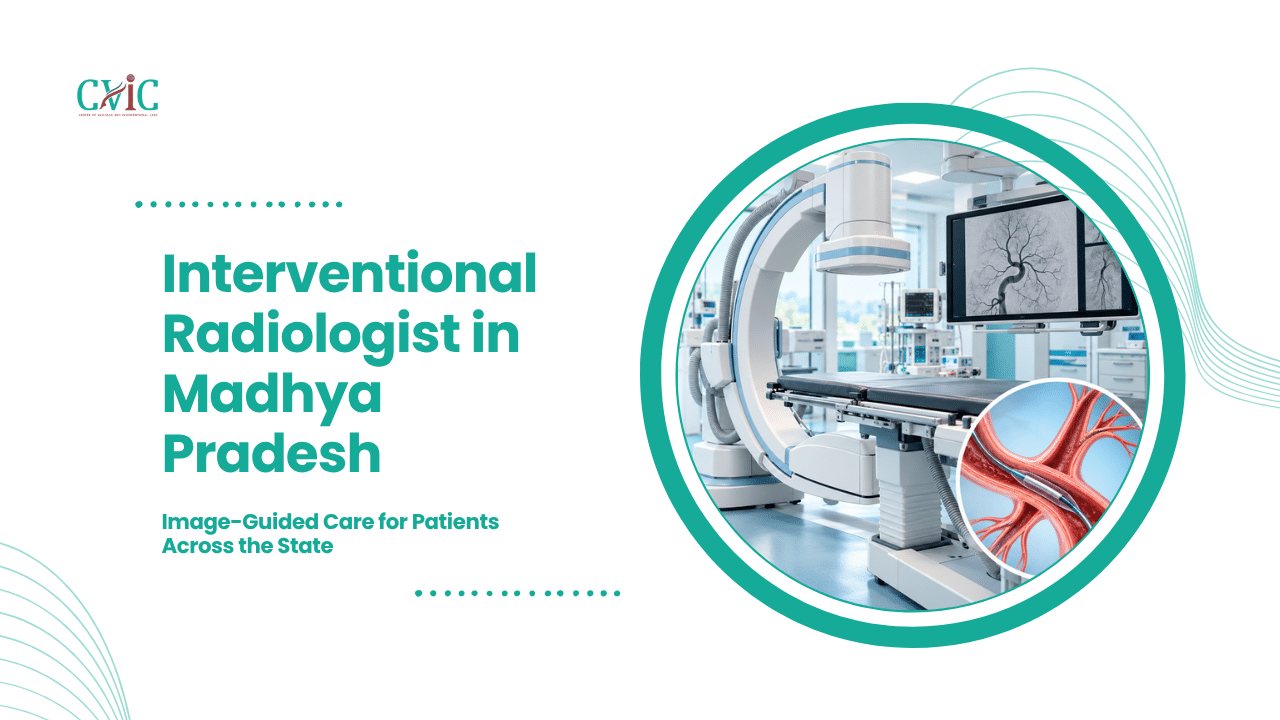
An interventional radiologist is a doctor who treats diseases using image-guided, minimally invasive procedures. They use ultrasound, CT scan, live X-ray, or MRI to see inside the body in real time. With this live view, they guide thin needles, wires, and tubes (called catheters) to the exact place that needs treatment.
Instead of making a large cut, the doctor goes in through a tiny puncture in the skin. The tools travel through blood vessels or tissues to the target. Think of it as using a GPS inside the body. The scan is the map, and the doctor steers the tools safely to the destination.
Interventional radiology is often called IR. It is one of the fastest-growing fields in medicine because many procedures offer less pain, lower risk, and quicker recovery than traditional surgery.
Also Read: Best Neuro Interventional Radiologist in Indore | Advanced Neurovascular Care at CVIC Indore
Radiologist or Interventional Radiologist: What Is the Difference?
People often mix these up.
Radiologist: A doctor who reads and explains medical images such as X-rays, ultrasound, CT, and MRI to help diagnose a disease.
Interventional radiologist: A radiologist with extra training who also performs treatments and procedures guided by those images.
Simply put, a radiologist helps find the problem. An interventional radiologist can also treat many problems on the spot. In good centres they work closely with surgeons, physicians, cancer specialists, and pathologists so that the patient gets a joined-up plan.
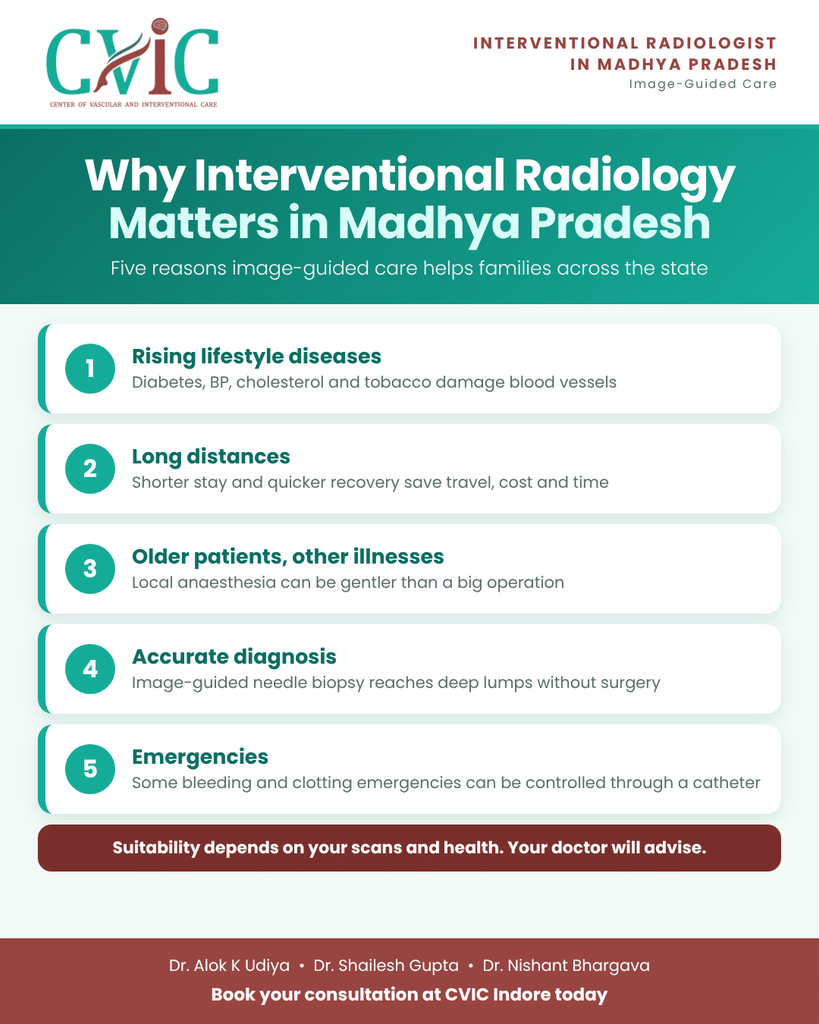
Why Is Interventional Radiology Important for Madhya Pradesh?
Healthcare needs across the state are wide. Here are some reasons why this field matters here.
1. Rising lifestyle diseases. Diabetes, high blood pressure, high cholesterol, and tobacco use are common. These damage blood vessels and can cause blocked arteries, clots, and non-healing foot wounds. Many of these problems can be treated with image-guided methods.
2. Long distances. For a family travelling from a district town, a shorter hospital stay and quicker recovery make a real difference. A procedure that allows discharge in a day or two saves travel, cost, and time away from work and home.
3. Older patients and other illnesses. Many patients are older or have heart, kidney, or lung problems. A smaller procedure with local anaesthesia can be gentler on the body than a large operation.
4. Need for accurate diagnosis. Many diseases, including cancers, need a tissue sample before treatment. An image-guided needle biopsy can reach deep lumps without an operation.
5. Emergencies. Some bleeding and clotting emergencies can be controlled with catheter-based methods, sometimes avoiding major surgery.
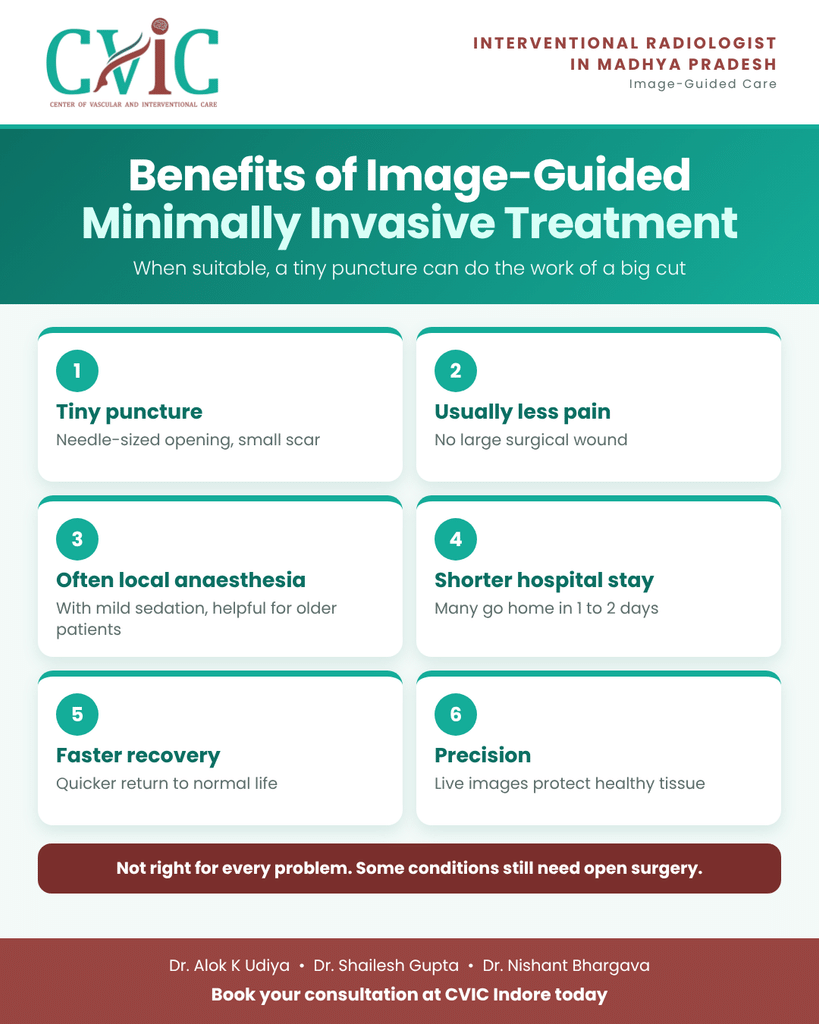
Benefits of Image-Guided Minimally Invasive Treatment
Here is why many patients and doctors prefer interventional procedures when they are suitable.
- Tiny punctures instead of large cuts. Scars are small.
- Less pain after the procedure.
- Often local anaesthesia with mild sedation, which helps older patients and those who are not strong enough for general anaesthesia.
- Shorter hospital stay. Many patients go home the same day or within a day or two.
- Faster recovery. Patients return to normal activity sooner.
- Lower risk of infection because the opening is so small.
- Precision. Live imaging lets the doctor target a small area and protect the healthy tissue around it.
These procedures are not right for every condition. Some problems still need open surgery. A good interventional radiologist will explain honestly which approach suits you.
Also Read: Best Interventional Radiologist in Indore for Non-Surgical Treatment | CVIC Indore
Conditions an Interventional Radiologist Treats
The range is wide. Here are the main areas.
1. Image-Guided Biopsy
A biopsy takes a small sample of tissue from a lump or abnormal area to find out what it is. Using ultrasound or CT guidance, the doctor can reach lesions deep in the liver, lung, kidney, or lymph nodes with a thin needle, often without a surgical operation. If a first report is unclear, you can read our guide on what happens if a biopsy report is inconclusive.
2. Blocked Arteries
Narrowed arteries in the legs, neck, kidneys, or belly can be opened with a balloon (angioplasty) and held open with a stent.
3. Aneurysms
A weak, bulging spot in an artery can be repaired from inside using a covered stent graft or coils in suitable patients.
4. Blood Clots
For fresh clots in veins or arteries, catheter-based treatment can dissolve or remove the clot and restore blood flow. In selected patients, a small filter may help stop clots from reaching the lungs.
5. Varicose Veins
Laser or radiofrequency treatment closes faulty leg veins from inside through a tiny puncture. Injections (sclerotherapy) treat smaller veins.
6. Embolisation to Control Bleeding
Embolisation means blocking a blood vessel on purpose using tiny particles, coils, or glue sent through a catheter. It can control bleeding, including some emergency bleeding, without major surgery.
7. Uterine Fibroid Embolisation
Fibroids are common non-cancerous growths in the womb. Blocking the arteries that feed them can make them shrink. This may be an option for some women who want to avoid or delay surgery, depending on fibroid size and number and the woman’s plans for pregnancy. It needs a careful specialist discussion.
8. Liver Tumour Treatment
For certain liver tumours, treatments such as TACE (transarterial chemoembolisation) deliver treatment directly into the tumour’s blood supply. Ablation, using heat or microwaves through a needle, can destroy small tumours. A team decides after reviewing scans and the patient’s overall health.
9. Drainage of Abscess and Fluid
When pus or fluid collects in the body, a thin drain can be placed under imaging guidance to remove it. This also includes drains for blocked bile ducts. It can quickly relieve symptoms and may avoid a larger operation.
10. Dialysis Access Care
People on dialysis depend on a working fistula or graft. When it narrows or blocks, balloon angioplasty can reopen it.
11. Spine and Pain Procedures
Some patients with painful spine fractures or specific pain problems benefit from procedures such as vertebroplasty or targeted injections.
12. Central Lines and Ports
Patients needing long-term chemotherapy or medicines may need a special catheter or port placed in a large vein under image guidance.
13. Stroke and Brain Vessel Care
In selected patients, catheters can be used to open blocked brain arteries or treat aneurysms. To understand why time matters, read our guide on what happens during a brain stroke.
How an Image-Guided Procedure Works
Although every procedure is different, most follow similar steps.
Step 1: Consultation and planning. The doctor reviews your symptoms, reports, and scans. Blood tests are often advised to check clotting, kidney function, and general health. The doctor explains the procedure, benefits, risks, and alternatives.
Step 2: Preparation. You are told when to stop eating and drinking and which medicines to pause or continue, especially blood thinners.
Step 3: Positioning and numbing. You lie on a procedure table. The skin is cleaned and numbed. Mild sedation may be given for comfort.
Step 4: Imaging guidance. Ultrasound, CT, or live X-ray shows the target on a screen. The doctor chooses the safest path.
Step 5: The procedure. A thin needle or catheter is guided to the spot. Depending on the case, the doctor may take a sample, open a vessel, place a stent, drain fluid, or deliver treatment.
Step 6: Closing and recovery. The tools are removed, pressure is applied to the puncture, and a small dressing is placed. The team monitors your pulse, blood pressure, and the puncture site.
Step 7: Going home. Many patients go home the same day or the next day with clear instructions and a follow-up plan.
Also Read: Interventional Radiologist Near Me in Indore: How to Find the Best One
Imaging: The Backbone of Interventional Radiology
Everything in interventional radiology depends on clear images.
- Ultrasound shows organs and fluid in real time, without radiation. It is often used for biopsies and drains.
- CT scan gives detailed cross-section images and helps guide needles to deeper lesions.
- Fluoroscopy and angiography are live X-ray methods that show blood vessels and moving tools during stents, angioplasty, and embolisation.
- MRI gives very clear soft-tissue detail and helps plan certain procedures.
- Doppler ultrasound shows blood flow in arteries and veins and is often the first test for vein and artery problems.
At CVIC Indore, Dr. Alok K Udiya brings expertise in advanced imaging and image-guided procedures. His careful reading of scans helps the team choose the safest route and the right treatment before the first needle is placed.
Travelling from Another City in Madhya Pradesh: A Practical Guide
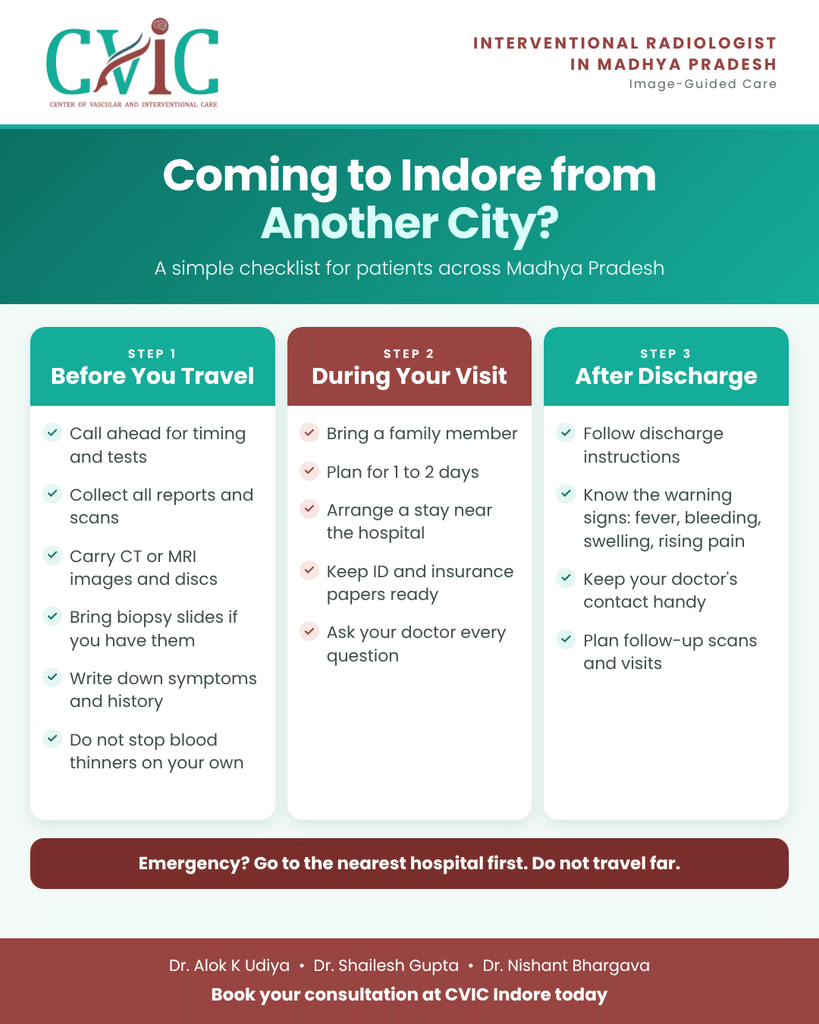
Many patients come to Indore from other parts of the state. Here is how to make the visit smoother. This section is general guidance for patients coming from places like Ujjain, Dewas, Ratlam, Khandwa, Khargone, Dhar, Bhopal, Sagar, Jabalpur, Gwalior, and other towns.
Before You Travel
- Call or message first. Ask about appointment timing, which tests are needed, and what documents to bring.
- Collect your reports. Bring all scans (CT, MRI, ultrasound), including the actual images or discs if possible, plus reports, prescriptions, and your medicine list.
- Bring biopsy slides or blocks if you have had a biopsy elsewhere, since the pathology slides may be reviewed.
- Note your history. Write down your symptoms, when they started, other illnesses, allergies, and past surgeries.
- Know your medicines. Do not stop blood thinners or diabetes medicines on your own. Ask your doctor what to do before a procedure.
Plan for the Visit
- Bring a family member. Someone should come with you, especially if sedation is planned.
- Plan for one to two days. Many consultations and tests can be done together, and some procedures allow same-day or next-day discharge. Your doctor will tell you what to expect.
- Arrange stay and travel. If you need to stay, plan ahead for a place near the hospital.
- Keep ID and insurance papers ready if you plan to use any health scheme or insurance. Check eligibility before you travel.
After the Procedure
- Follow discharge instructions carefully, especially about medicines and activity.
- Know the warning signs such as fever, increasing pain, bleeding, or swelling at the puncture site, and who to contact.
- Arrange follow-up. Ask whether follow-up scans or check-ups can be arranged close to your home and what reports to share with the team.
Emergency note: If you have sudden severe pain, heavy bleeding, a cold pale limb, sudden weakness on one side, or trouble speaking, do not travel long distances. Go to the nearest emergency department first.
When Should You See an Interventional Radiologist?
You may be referred by your doctor, or you can ask for a consultation directly. Consider it if:
- You have been advised a biopsy and want it done with precise imaging guidance
- A first biopsy was unclear or inconclusive
- You have a blocked artery, aneurysm, clot, or varicose veins
- You have a liver, kidney, or other tumour and want to know about minimally invasive options
- You have an abscess or fluid collection that needs drainage
- You have heavy, repeated bleeding from fibroids and want options other than surgery
- You are on dialysis and your fistula is not working well
- You have been told you need surgery and want to know whether a less invasive option exists
- You want a second opinion on a complex case
How Safe Are Interventional Procedures?
These procedures are widely used and have a good safety record, especially when carefully planned and performed by a trained team. Still, no medical procedure is completely risk-free. Possible risks depend on the procedure but may include:
- Bleeding or bruising at the puncture site
- Infection (uncommon)
- Reaction to contrast dye or effect on the kidneys
- Injury to a nearby organ or vessel (rare)
- Pain after the procedure
- The need for a repeat procedure in some cases
Your doctor should explain the specific risks for your case before you decide. The chance of problems goes down when the team is experienced, planning is careful, and the patient follows medicine and follow-up advice.
Recovery and Aftercare
First few days:
- Keep the puncture site clean and dry
- Avoid heavy lifting and strenuous activity as advised
- Take medicines exactly as prescribed
- Watch for fever, increasing pain, swelling, redness, or bleeding and contact your doctor if they occur
- If you have a drain, follow care instructions carefully
Following weeks:
- Return to routine activity gradually
- Keep follow-up visits and scans
- Control diabetes, blood pressure, and cholesterol
Long term:
- Avoid tobacco in all forms
- Eat a balanced diet with less salt, oil, and processed food
- Exercise regularly
- Follow the plan from your treating team, especially for liver disease, fibroids, or vascular disease
A procedure treats the problem at hand. Healthy habits and regular follow-up protect the result.
The Team at CVIC Indore
The best care comes from a team that plans, treats, and follows up together. At CVIC Indore (Center of Vascular and Interventional Care), specialists work as a group.
Dr. Alok K Udiya brings strong expertise in advanced imaging and image-guided procedures. Accurate imaging is the first step toward a safe and precise procedure.
Dr. Shailesh Gupta brings clinical leadership and interventional experience. His approach is to look at the patient’s whole health picture before choosing a treatment.
Dr. Nishant Bhargava brings interventional skills for catheter-based treatments such as angioplasty, stenting, and related procedures.
Together, Dr. Alok K Udiya, Dr. Shailesh Gupta, and Dr. Nishant Bhargava review complex cases from different angles. This reduces the chance of missed details and gives patients and families more confidence in the plan.
Why Patients from Across Madhya Pradesh Choose CVIC Indore
- Specialist focus: Vascular and interventional care is the main work, not an extra service.
- Image-guided precision: Detailed imaging helps plan safe and accurate procedures.
- Minimally invasive approach: Wherever suitable, treatment is planned through small punctures for quicker recovery and shorter stays.
- Honest advice: You will be told whether you need a procedure, medicines only, or monitoring. A second opinion is always welcome.
- Whole-health view: Many conditions are linked with diabetes, hypertension, heart, liver, and kidney health, so these are looked at together.
- Clear communication: Diagnosis, options, risks, and expected results are explained in simple language so families can decide calmly.
- Follow-up support: Care does not end with the procedure. Regular review helps keep the result long lasting.
How to Choose the Right Interventional Radiologist in Madhya Pradesh
Use this simple checklist.
- Training and experience. Ask how often the team performs the procedure you need.
- Range of procedures. A team that offers several options can give more balanced advice.
- Imaging and procedure facilities. Good imaging equipment and a well-equipped procedure room are essential for safety.
- Team approach. Complex cases need more than one expert opinion.
- Emergency readiness. Bleeding, clots, and infections can be time-critical. Ask how emergencies are handled.
- Clear explanation. The doctor should explain the diagnosis, options, risks, and expected cost before you decide.
- Follow-up plan. Ask about reviews and what to do if a problem appears after you go home.
- Honesty. A trustworthy specialist will tell you when a procedure is not needed and will support a second opinion.
Common Myths About Interventional Radiology
Myth 1: Radiologists only read scans. Fact: Interventional radiologists perform treatments, not only diagnosis.
Myth 2: Minimally invasive means no risk. Fact: These procedures are gentler, but every procedure has some risk. Careful planning and experience lower it.
Myth 3: Interventional radiology is only for cancer. Fact: It treats many problems, including blocked arteries, clots, varicose veins, bleeding, fibroids, abscesses, and dialysis access.
Myth 4: If a biopsy is unclear, nothing more can be done. Fact: A repeat image-guided biopsy or extra tests on the same sample often gives an answer.
Myth 5: I must go to a very big city for every procedure. Fact: Many tests and consultations can be planned in advance, and some treatments are possible with a short stay. Ask your doctor what can be done near home and what needs specialist care.
Myth 6: These procedures replace all surgery. Fact: Some problems still need open surgery. Often the best plan combines approaches.
Frequently Asked Questions
Q1. What is an interventional radiologist? An interventional radiologist is a doctor who treats diseases using image-guided, minimally invasive procedures through tiny punctures, guided by ultrasound, CT, X-ray, or MRI.
Q2. Who is the best interventional radiologist in Madhya Pradesh? The best choice is a team with solid training, regular experience, good imaging and procedure facilities, and a habit of explaining options honestly. CVIC Indore brings together Dr. Alok K Udiya, Dr. Shailesh Gupta, and Dr. Nishant Bhargava for this kind of focused care.
Q3. Are interventional procedures painful? Most are done with local anaesthesia and mild sedation. You may feel pressure but usually little pain. Mild soreness afterwards is common.
Q4. Will I need to stay in the hospital? Many procedures allow discharge on the same day or after a day or two. Complex or emergency cases may need longer.
Q5. I live outside Indore. How should I plan my visit? Call ahead, bring all reports and scans, bring a family member, and plan for one to two days. Your doctor will tell you what to expect after reviewing your case.
Q6. What happens if my biopsy is inconclusive? Your doctor may repeat the biopsy with better targeting, run extra tests on the same sample, or advise another approach based on your scans and symptoms.
Q7. Can fibroids be treated without surgery? In suitable patients, embolisation is an option that shrinks fibroids by blocking their blood supply. Your doctor will advise after examining you and reviewing your scans.
Q8. Can liver tumours be treated without big surgery? In selected patients, procedures such as TACE or ablation may be options. A team decides after reviewing scans and your overall health.
Conclusion
Interventional radiology has changed how many diseases are treated. Problems that once needed large operations can often be treated through a tiny puncture, guided by clear images, with less pain and a quicker return to normal life. For patients across a large state like Madhya Pradesh, shorter stays and faster recovery can make a big difference to families.
If you are looking for an interventional radiologist in Madhya Pradesh, choose a team that listens, uses modern imaging, offers different treatment options, and cares about your long-term health. At CVIC Indore, Dr. Alok K Udiya, Dr. Shailesh Gupta, and Dr. Nishant Bhargava work together to give patients clear answers and safe, effective treatment.
If you want a city-focused view, you can also read our guides on choosing an interventional radiologist in Indore, an endovascular surgeon in Indore, a vascular surgeon in Madhya Pradesh, and what to expect at a vascular clinic in Indore.
Do not ignore a lump, a blocked vessel, or a symptom that will not go away. Book a consultation with the team at CVIC Indore today and take the first step toward a clear diagnosis and the right treatment.
Disclaimer: This blog is for general educational purposes only and is not a substitute for professional medical advice, diagnosis, or treatment. If you have symptoms, please consult a qualified doctor. In an emergency, go to the nearest hospital immediately.