A stroke is one of the leading causes of disability and death worldwide. It occurs when the blood supply to a part of the brain is interrupted or when a blood vessel in the brain ruptures. Because brain cells begin to die within minutes of losing oxygen, every second counts when treating a stroke.
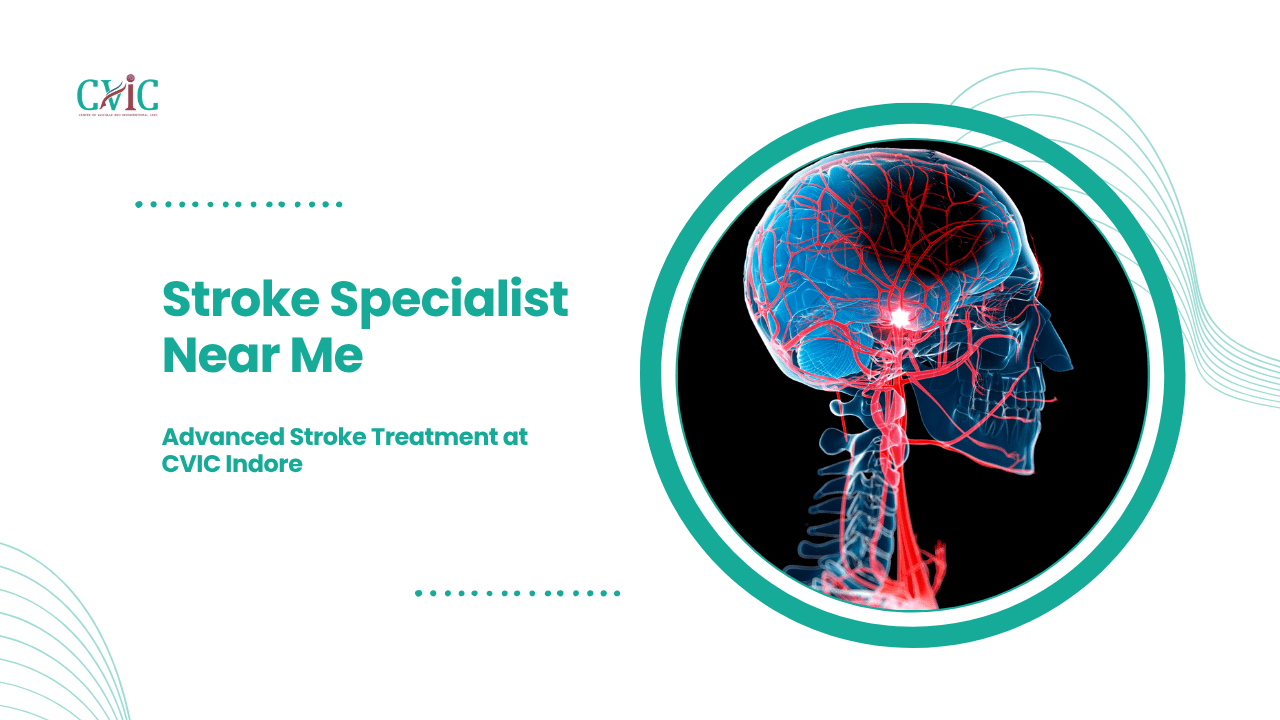
If you’ve searched for “Stroke specialist near me”, you’re likely looking for immediate, expert care for yourself or a loved one. Choosing an experienced stroke specialist and a hospital equipped with advanced neurovascular technology can significantly improve outcomes.
At CVIC Indore, experienced neurovascular specialists including Dr. Alok K Udiya, Dr. Shailesh Gupta, and Dr. Nishant Bhargava provide comprehensive stroke evaluation and advanced minimally invasive treatments. Conveniently located near Gita Bhawan Indore, CVIC offers modern diagnostic imaging and evidence-based stroke care.
This guide explains what a stroke is, its warning signs, available treatments, recovery, prevention, and why early intervention is essential.
What Is a Stroke?
A stroke occurs when the brain does not receive enough blood and oxygen.
Without prompt treatment, brain cells begin to die, potentially leading to permanent neurological damage.
There are three main types of stroke:
- Ischemic Stroke
- Hemorrhagic Stroke
- Transient Ischemic Attack (TIA)
Each requires urgent medical evaluation.
Also Read: Brain Stroke Treatment Cost in India: A Complete Guide by CVIC Indore
Types of Stroke
1. Ischemic Stroke
This is the most common type of stroke.
It occurs when a blood clot blocks an artery supplying blood to the brain.
Approximately 80–85% of strokes are ischemic.
2. Hemorrhagic Stroke
A hemorrhagic stroke occurs when a blood vessel ruptures, causing bleeding inside or around the brain.
Common causes include:
- High blood pressure
- Brain aneurysm
- Arteriovenous malformation (AVM)
- Head injury
3. Transient Ischemic Attack (TIA)
Often called a “mini-stroke,” a TIA temporarily blocks blood flow to the brain.
Although symptoms resolve, a TIA is a warning sign that the risk of a future stroke is higher.
Common Stroke Symptoms
Recognizing stroke symptoms early can save lives.
Remember the FAST Test
F – Face Drooping
One side of the face may droop or feel numb.
A – Arm Weakness
The person may be unable to lift one arm properly.
S – Speech Difficulty
Speech may become slurred or difficult to understand.
T – Time to Call Emergency Medical Services
Immediate medical attention is essential.
Also Read: Stroke vs Heart Attack: Differences, Symptoms, and Treatment | CVIC Indore
Other Stroke Symptoms
- Sudden severe headache
- Vision loss
- Double vision
- Difficulty walking
- Dizziness
- Loss of balance
- Confusion
- Difficulty understanding speech
- Numbness on one side of the body
- Loss of consciousness
When Should You Search for a Stroke Specialist Near Me?
Seek emergency medical care immediately if someone develops sudden neurological symptoms.
Do not wait to see if the symptoms improve.
The earlier treatment begins, the greater the chance of reducing brain damage and improving recovery.
What Causes a Stroke?
Several factors increase stroke risk.
Common causes include:
- High blood pressure
- Diabetes
- Smoking
- High cholesterol
- Obesity
- Heart disease
- Atrial fibrillation
- Family history
- Previous stroke
- Carotid artery disease
Managing these risk factors is an important part of stroke prevention.
How Is a Stroke Diagnosed?
Rapid diagnosis is essential to determine the type of stroke and the most appropriate treatment.
Investigations may include:
CT Brain
Often the first imaging test performed in emergency settings.
MRI Brain
Provides detailed information about brain tissue and may detect smaller strokes.
Also Read: What Happens During a Brain Stroke? A Complete Guide
CT Angiography (CTA)
Evaluates blood vessels to identify blockages or abnormalities.
MR Angiography (MRA)
Provides detailed images of blood vessels without invasive procedures.
Digital Subtraction Angiography (DSA)
DSA is considered the gold standard for evaluating certain neurovascular conditions and is also used to guide some interventional procedures.
Blood Tests
Help identify underlying medical conditions and guide treatment.
Advanced Stroke Treatments
Treatment depends on the type of stroke, the timing of symptom onset, and individual patient factors.
Intravenous Thrombolysis
For eligible patients with ischemic stroke, clot-dissolving medication may be administered within an appropriate treatment window.
Mechanical Thrombectomy
Mechanical thrombectomy is a minimally invasive procedure used to remove large blood clots from blocked brain arteries in eligible patients.
The procedure involves:
- Inserting a catheter through the wrist or groin
- Guiding it to the blocked artery
- Removing the clot
- Restoring blood flow to the brain
Timely thrombectomy can significantly improve outcomes in selected patients.
Treatment for Hemorrhagic Stroke
Management depends on the cause of the bleeding and may include:
- Blood pressure control
- Neurocritical care
- Endovascular procedures
- Surgical intervention when necessary
Brain Aneurysm Coiling
If a ruptured brain aneurysm causes bleeding, minimally invasive endovascular coiling may be recommended for selected patients.
Why Early Stroke Treatment Is Critical
The phrase “Time is Brain” emphasizes that millions of brain cells can be lost each minute during an untreated stroke.
Early treatment can:
- Reduce brain damage
- Improve recovery
- Lower disability
- Increase independence
- Improve long-term quality of life
Recovery After Stroke
Recovery varies depending on:
- Stroke severity
- Area of the brain affected
- Age
- Overall health
- Time to treatment
Many patients benefit from rehabilitation programs that may include:
- Physiotherapy
- Occupational therapy
- Speech therapy
- Psychological support
- Nutritional counseling
Recovery often continues for months after the stroke.
Can Stroke Be Prevented?
Many strokes are preventable.
Lifestyle measures include:
- Control blood pressure
- Manage diabetes
- Stop smoking
- Exercise regularly
- Maintain a healthy weight
- Eat a heart-healthy diet
- Limit alcohol
- Take prescribed medications
- Attend regular medical check-ups
Why Choose CVIC Indore?
Patients seeking a Stroke specialist near me choose CVIC Indore for comprehensive neurovascular care.
Highlights
- Advanced stroke imaging
- Modern angiography suite
- Mechanical thrombectomy expertise
- Brain aneurysm treatment
- Neurovascular evaluation
- Personalized treatment plans
- Multidisciplinary care
- Advanced minimally invasive procedures
- Comprehensive follow-up
The center is led by experienced specialists including Dr. Alok K Udiya, Dr. Shailesh Gupta, and Dr. Nishant Bhargava, providing expert stroke care near Gita Bhawan Indore.
Who Is at Higher Risk of Stroke?
People with the following conditions should undergo regular health evaluations:
- Hypertension
- Diabetes
- High cholesterol
- Heart rhythm disorders
- Obesity
- Smoking history
- Family history of stroke
- Previous TIA
- Carotid artery disease
Managing these conditions can significantly reduce stroke risk.
Frequently Asked Questions
1. When should I see a stroke specialist?
Seek emergency medical attention immediately if you experience sudden weakness, facial drooping, speech difficulty, vision changes, or severe dizziness.
2. Who is the best stroke specialist near me in Indore?
Patients looking for advanced stroke care can consult the experienced specialists at CVIC Indore, including Dr. Alok K Udiya, Dr. Shailesh Gupta, and Dr. Nishant Bhargava.
3. What is mechanical thrombectomy?
Mechanical thrombectomy is a catheter-based procedure used to remove blood clots from blocked brain arteries in eligible patients with acute ischemic stroke.
4. Can stroke be treated without open surgery?
Yes. Many patients are candidates for minimally invasive endovascular procedures depending on the type of stroke and individual clinical factors.
5. What is the golden period for stroke treatment?
The earlier treatment begins, the better the chances of preserving brain function. Specific treatment windows vary depending on the therapy and the patient’s clinical assessment.
6. Can young people have a stroke?
Yes. Although stroke is more common in older adults, it can occur at any age due to various medical conditions and risk factors.
7. How is a stroke diagnosed?
Doctors may use CT scans, MRI, CT angiography, MR angiography, blood tests, and Digital Subtraction Angiography (DSA) to evaluate stroke.
8. Can stroke be prevented?
Many strokes can be prevented by controlling blood pressure, diabetes, cholesterol, avoiding smoking, exercising regularly, and following medical advice.
9. What is a TIA?
A Transient Ischemic Attack (TIA) is a temporary interruption of blood flow to the brain. It is an important warning sign that requires urgent medical evaluation.
10. Where can I receive advanced stroke treatment in Indore?
Patients can visit CVIC Indore, near Gita Bhawan Indore, where Dr. Alok K Udiya, Dr. Shailesh Gupta, and Dr. Nishant Bhargava provide comprehensive stroke diagnosis and advanced neurovascular treatment.
Conclusion
If you are searching for a Stroke specialist near me, remember that stroke is a medical emergency requiring immediate diagnosis and treatment. Prompt recognition of symptoms and rapid access to specialized care can greatly improve recovery and reduce long-term disability.
Modern treatments such as intravenous thrombolysis and mechanical thrombectomy have transformed stroke care for many eligible patients, especially when performed within appropriate treatment windows.
At CVIC Indore, Dr. Alok K Udiya, Dr. Shailesh Gupta, and Dr. Nishant Bhargava provide advanced stroke diagnosis, neurovascular imaging, and minimally invasive treatment options using state-of-the-art technology. Conveniently located near Gita Bhawan Indore, CVIC is dedicated to delivering timely, evidence-based stroke care focused on achieving the best possible outcomes for every patient.