You’ve had headaches before. Everyone has. The dull ache after a stressful day, the throbbing pain of a migraine, the heavy pressure of a sinus infection. Headaches are so common that most of us treat them as a routine annoyance — take a painkiller, drink some water, sleep it off.
But somewhere in the back of your mind, a question may have surfaced, especially after hearing about someone who collapsed suddenly from a brain haemorrhage: “How do I know my headache isn’t something serious — like a brain aneurysm?”
It’s a fair question. And it deserves a clear, detailed, honest answer.
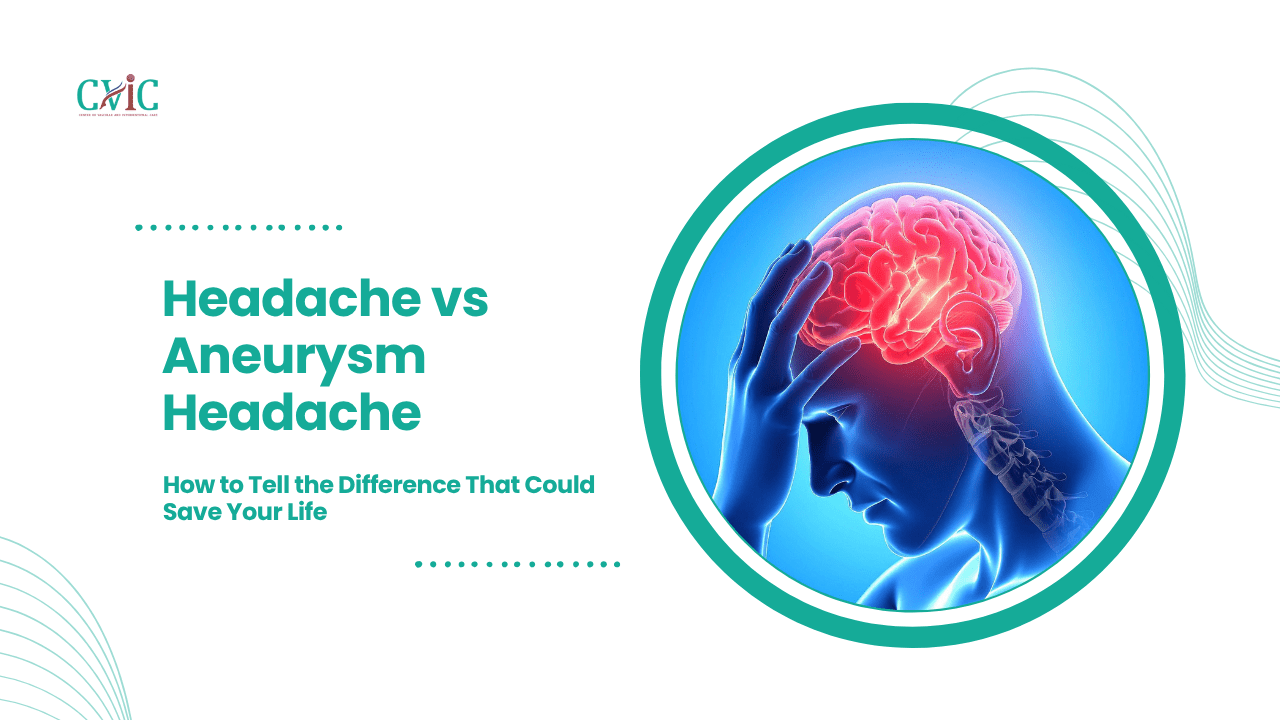
Understanding the difference between a headache vs aneurysm headache is one of the most valuable pieces of health knowledge you can have — because while ordinary headaches are harmless, an aneurysm headache is a life-threatening emergency where every minute counts.
In this comprehensive guide, the expert team at CVIC Indore — Dr. Alok K Udiya, Dr. Shailesh Gupta, and Dr. Nishant Bhargava — explains exactly how a normal headache differs from an aneurysm headache, what warning signs to watch for, and what to do if you suspect the worst.
First, What Exactly Is a Brain Aneurysm?
Before we compare the two types of headaches, it helps to understand what an aneurysm actually is.
A brain aneurysm (also called a cerebral or intracranial aneurysm) is a weak, bulging spot on the wall of an artery in the brain — much like a thin, over-inflated balloon on a garden hose. Blood pressure constantly pushes against this weakened area, and over time the bulge can grow.
Here’s what most people don’t realise: an estimated 2–3% of the population is walking around with an unruptured brain aneurysm — and the vast majority never know it, because unruptured aneurysms usually cause no symptoms at all.
The danger arises when an aneurysm ruptures. A ruptured aneurysm causes bleeding into the space around the brain — a condition called subarachnoid haemorrhage (SAH). This is a catastrophic medical emergency:
- Roughly 25% of patients do not survive the first 24 hours
- Another significant percentage die within weeks from complications
- Of those who survive, many are left with permanent neurological deficits
But here is the hopeful part, and the reason this blog exists: outcomes improve dramatically with early recognition and rapid treatment. Patients who reach a specialised centre quickly — like CVIC Indore, where Dr. Alok K Udiya and his team perform advanced endovascular aneurysm treatment — have far better chances of survival and full recovery.
Recognising the aneurysm headache is the first, most critical step.
Also Read: Vacuum-Assisted Breast Biopsy vs Core Needle Biopsy: 5 Reasons to Choose Encor Enspire
The Ordinary Headache: What “Normal” Feels Like
More than 90% of all headaches are primary headaches — meaning the headache itself is the condition, not a symptom of something dangerous inside the brain. These include:
Tension Headaches
The most common headache in the world. It feels like:
- A dull, aching, band-like pressure around the forehead or back of the head
- Mild to moderate intensity — uncomfortable, but you can usually keep working
- Gradual onset over hours
- Often linked to stress, poor posture, eye strain, or lack of sleep
- Relieved by rest, hydration, or simple painkillers
Migraines
More intense and disabling, migraines typically involve:
- Throbbing or pulsating pain, usually on one side of the head
- Building up over minutes to hours — not instantly
- Nausea, vomiting, sensitivity to light and sound
- Sometimes preceded by an “aura” — visual disturbances like flashing lights or zigzag lines
- A pattern: most migraine sufferers recognise their attacks because they’ve had similar ones before
Cluster Headaches
Severe, burning pain around one eye, occurring in cycles or “clusters” over weeks. Extremely painful, but again — they follow a recognisable pattern.
Sinus Headaches
Pressure and fullness around the forehead, cheeks, and nose, usually accompanying a cold or sinus infection, worsening when you bend forward.
The key features that unite all these “ordinary” headaches:
- They build up gradually — over minutes or hours
- Their intensity, while sometimes severe, is usually familiar — you’ve felt something like it before
- They respond, at least partially, to rest and medication
- They are not accompanied by neck stiffness, loss of consciousness, or sudden neurological changes
Keep these features in mind. The aneurysm headache violates every single one of them.
Also Read: MRI vs Ultrasound vs Stereotactic Breast Biopsy | Encor Enspire | CVIC Indore
The Aneurysm Headache: “The Worst Headache of My Life”
When a brain aneurysm ruptures, the escaping blood irritates the sensitive membranes surrounding the brain and causes a sudden spike in pressure inside the skull. The result is a headache so distinctive that doctors have a special name for it: the thunderclap headache.
Patients who survive describe it in remarkably consistent ways:
“It felt like I was hit on the head with a hammer.” “Like an explosion went off inside my skull.” “The worst headache of my life — nothing I’d ever felt came close.”
Here’s what defines an aneurysm headache:
1. Sudden, Instant Onset
This is the single most important distinguishing feature. An aneurysm headache reaches its maximum intensity within seconds to one minute. There is no build-up, no warning, no gradual worsening. One moment you’re fine; the next, you’re in the grip of unbearable pain.
Compare this with a migraine, which typically takes 30 minutes to several hours to peak. Speed of onset — not just severity — is the biggest clue.
2. Unprecedented Severity
Patients don’t say “this is a bad headache.” They say “this is the worst headache of my life.” If you’ve had migraines for 20 years and this pain is unlike anything you’ve experienced, that difference matters enormously.
3. Accompanying Symptoms
A ruptured aneurysm rarely causes headache alone. Watch for:
- Stiff neck — blood irritating the membranes makes it painful or impossible to touch your chin to your chest
- Nausea and projectile vomiting
- Sensitivity to light (photophobia)
- Loss of consciousness — even a brief blackout or fainting spell
- Seizure
- Blurred or double vision, or a drooping eyelid
- Confusion or drowsiness
- Weakness or numbness on one side of the body
4. It Doesn’t Respond to Painkillers
An ordinary headache eases with paracetamol and rest. An aneurysm headache does not meaningfully improve with any over-the-counter medication.
Dr. Nishant Bhargava at CVIC Indore puts it simply: “When a patient tells us the headache hit like lightning and was instantly the worst pain of their life, we treat it as a ruptured aneurysm until proven otherwise. That assumption saves lives.”
Also Read: Encor Enspire vs. Mammotome: Which Breast Biopsy System Is Right for You?
Headache vs Aneurysm Headache: Side-by-Side Comparison
| Feature | Ordinary Headache | Aneurysm Headache |
|---|---|---|
| Onset | Gradual — minutes to hours | Instant — peaks within seconds (“thunderclap”) |
| Severity | Mild to severe, but familiar | “Worst headache of my life” — unprecedented |
| Pattern | Often recurring, recognisable | Completely new and different |
| Neck stiffness | Absent | Often present |
| Nausea/vomiting | Possible with migraine | Common, often sudden and projectile |
| Loss of consciousness | Never | Possible — even brief fainting |
| Vision changes | Migraine aura (gradual, temporary) | Sudden double vision, drooping eyelid |
| Response to painkillers | Usually improves | Little to no relief |
| Trigger | Stress, hunger, sleep, screens | Often none; sometimes exertion or straining |
| What to do | Rest, hydrate, medicate | Call emergency services immediately |
If your headache matches the right-hand column — even partially — do not wait. Get emergency care now.
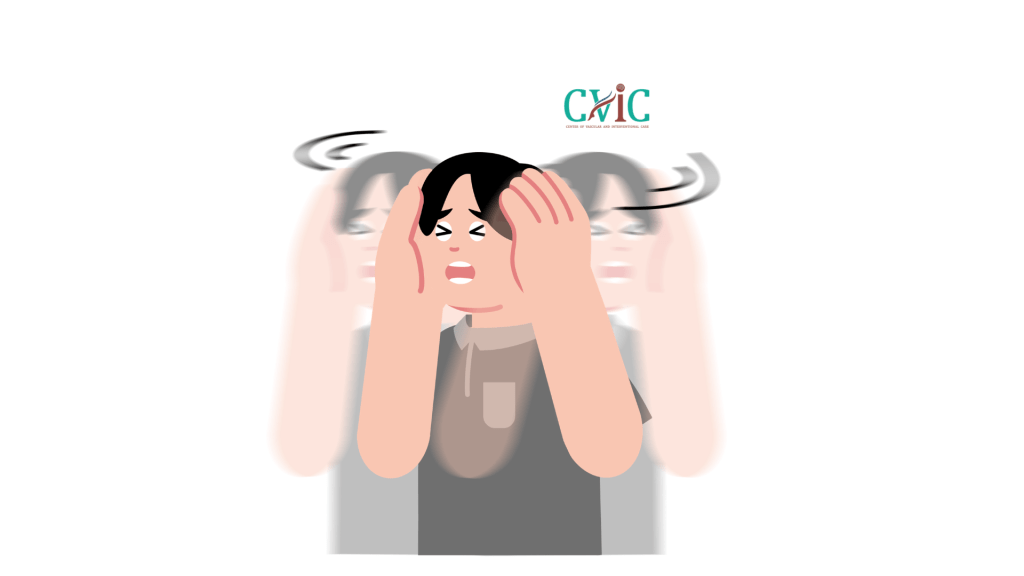
The Warning Leak: The Aneurysm’s One Warning Shot
Here is something critically important that too few people know about.
In up to 30–50% of patients who suffer a major aneurysm rupture, the aneurysm gives a warning days or weeks beforehand — a phenomenon called a sentinel headache or warning leak.
A sentinel headache happens when the aneurysm leaks a tiny amount of blood before the major rupture. It causes:
- A sudden, severe headache — often thunderclap in character, but sometimes less dramatic
- Pain that may settle on its own within hours or days
- Sometimes mild neck stiffness or nausea
Because the pain subsides, many patients dismiss it as “a really bad migraine” and never seek help. Then — days to weeks later — the aneurysm ruptures catastrophically.
This is the tragedy the team at CVIC Indore works hard to prevent. A sentinel headache is the aneurysm’s one warning shot. If it is recognised and investigated — with a CT scan, and if needed a CT angiogram or DSA (digital subtraction angiography) — the aneurysm can be found and treated before it ruptures, converting a potential fatality into a planned, safe procedure.
Dr. Shailesh Gupta of CVIC Indore advises: “If you experience a sudden, severe headache unlike anything before — even if it goes away — get evaluated. Never assume you’re in the clear just because the pain faded. The most dangerous words in aneurysm care are ‘it got better on its own.'”
Can an Unruptured Aneurysm Cause Headaches?
This is one of the most common questions patients ask at CVIC Indore.
The honest answer: usually not. Most unruptured aneurysms are silent and are discovered incidentally on scans done for other reasons.
However, a large or growing aneurysm can sometimes press on nearby nerves and structures, producing warning signs such as:
- A localised, persistent headache or pain above and behind one eye
- A dilated pupil in one eye
- Double vision or other vision changes
- A drooping eyelid (ptosis)
- Numbness on one side of the face
These symptoms — especially a new drooping eyelid or double vision with headache — should never be ignored. They can indicate an aneurysm that is enlarging and at risk of rupture, and they warrant urgent imaging.
What Should You Do If You Suspect an Aneurysm Headache?
If you or someone near you experiences a thunderclap headache, act on these steps immediately:
- Call emergency services (112) or rush to the nearest hospital with neuro-emergency facilities. Do not drive yourself.
- Do not take aspirin or other blood thinners — they can worsen bleeding.
- Do not lie down and “wait to see if it passes.” Delay is the biggest killer in aneurysm rupture.
- Note the exact time the headache started — this information helps doctors enormously.
- If the person loses consciousness, place them on their side and ensure they are breathing while help arrives.
At the hospital, doctors will typically perform a CT scan (which detects bleeding in over 95% of cases when done early), followed by a CT angiography or DSA to locate the aneurysm precisely.
How Are Brain Aneurysms Treated at CVIC Indore?
The good news: brain aneurysms — both ruptured and unruptured — are highly treatable when managed at a specialised centre.
At CVIC Indore (Central Vascular & Interventional Care), the interventional neuroradiology team led by Dr. Alok K Udiya, alongside Dr. Shailesh Gupta and Dr. Nishant Bhargava, offers advanced, minimally invasive endovascular treatments:
Endovascular Coiling
A thin catheter is guided from an artery in the wrist or groin up to the brain aneurysm. Tiny platinum coils are placed inside the aneurysm sac, sealing it off from circulation so it can no longer bleed. No open skull surgery is required.
Flow Diverter Stents
For large or complex aneurysms, a specialised mesh stent is placed across the aneurysm’s neck, redirecting blood flow along the normal artery and allowing the aneurysm to shrink and heal over time.
Balloon- and Stent-Assisted Coiling
For wide-necked aneurysms, additional devices help keep coils securely in place.
These minimally invasive techniques mean smaller risks, shorter hospital stays, and faster recovery compared to traditional open surgery — and for many patients with unruptured aneurysms detected early, treatment is a planned procedure with excellent outcomes.
Reducing Your Risk: Can Aneurysms Be Prevented?
While not every aneurysm can be prevented, you can significantly reduce your risk of formation and rupture:
- Control blood pressure — hypertension is the single biggest modifiable risk factor
- Stop smoking — smoking dramatically increases both aneurysm formation and rupture risk
- Limit alcohol and avoid stimulant drugs
- Manage cholesterol and diabetes
- Know your family history — if two or more first-degree relatives have had brain aneurysms, discuss screening with a specialist
Screening with a non-invasive MR angiogram may be advisable for people with a strong family history or conditions like polycystic kidney disease. The team at CVIC Indore can guide you on whether screening makes sense for you.
The Bottom Line: Headache vs Aneurysm Headache
Let’s distil everything into the essentials you should remember:
An ordinary headache builds gradually, feels familiar, responds to rest and medication, and comes without neurological symptoms. It is unpleasant — but not dangerous.
An aneurysm headache strikes instantly like a thunderclap, is the worst pain of your life, often brings neck stiffness, vomiting, vision changes, or loss of consciousness — and demands immediate emergency care.
And in between lies the deceptive sentinel headache — the sudden severe headache that fades and lulls you into false security. Treat it with the same urgency.
When it comes to the brain, it is always better to be checked and reassured than to wait and regret. A CT scan takes minutes. A ruptured aneurysm can take everything.
When in Doubt, Get Expert Help — CVIC Indore
If you have experienced a sudden severe headache, have a family history of brain aneurysms, or have been told you have an unruptured aneurysm and want an expert opinion on treatment, the specialists at CVIC Indore are here to help.
Dr. Alok K Udiya, Dr. Shailesh Gupta, and Dr. Nishant Bhargava bring together extensive experience in the diagnosis and minimally invasive endovascular treatment of brain aneurysms, stroke, and complex neurovascular conditions — right here in Indore, with outcomes matching leading centres.
Don’t gamble with a headache that feels different. Contact CVIC Indore today for expert evaluation.
Frequently Asked Questions (FAQs)
1. How can I tell a normal headache from an aneurysm headache?
The biggest clue is speed of onset. A normal headache (tension or migraine) builds up gradually over minutes to hours, while an aneurysm headache hits instantly — reaching maximum, unbearable intensity within seconds. It is typically described as “the worst headache of my life” and is often accompanied by neck stiffness, vomiting, vision changes, or loss of consciousness. If your headache came on like a thunderclap, seek emergency care immediately.
2. Can a brain aneurysm cause headaches before it ruptures?
Sometimes. Most unruptured aneurysms are silent, but two warning patterns exist. A sentinel headache — a sudden severe headache caused by a tiny warning leak — can occur days to weeks before a major rupture and often fades on its own, which is why it’s dangerously easy to dismiss. Separately, a large aneurysm pressing on nerves can cause persistent pain behind one eye, double vision, or a drooping eyelid. Both situations need urgent evaluation.
3. Will a painkiller help an aneurysm headache?
No. Unlike ordinary headaches, an aneurysm headache does not meaningfully improve with over-the-counter painkillers. In fact, taking aspirin or other blood-thinning medicines can worsen the bleeding. If a sudden severe headache is not responding to your usual medication, treat it as an emergency — do not take more medicine and wait.
4. What tests confirm whether my headache is due to an aneurysm?
A CT scan is the first test and detects bleeding in over 95% of cases when done early. If bleeding is found — or suspicion remains high — a CT angiography or DSA (digital subtraction angiography) is performed to precisely locate the aneurysm. These investigations are available at CVIC Indore, where Dr. Alok K Udiya, Dr. Shailesh Gupta, and Dr. Nishant Bhargava specialise in diagnosing and treating brain aneurysms.
5. Can a brain aneurysm be treated without open surgery?
Yes. At CVIC Indore, most aneurysms are treated with minimally invasive endovascular techniques — such as coiling, flow diverter stents, and stent-assisted coiling — performed through a small puncture in the wrist or groin, with no opening of the skull. These procedures mean lower risk, shorter hospital stays, and faster recovery, and outcomes are excellent when aneurysms are detected and treated early.
Disclaimer: This article is for educational purposes only and is not a substitute for professional medical advice, diagnosis, or treatment. If you are experiencing a sudden severe headache or any emergency symptoms described above, call emergency services or visit the nearest hospital immediately.