
 — safe, effective, no cuts.)
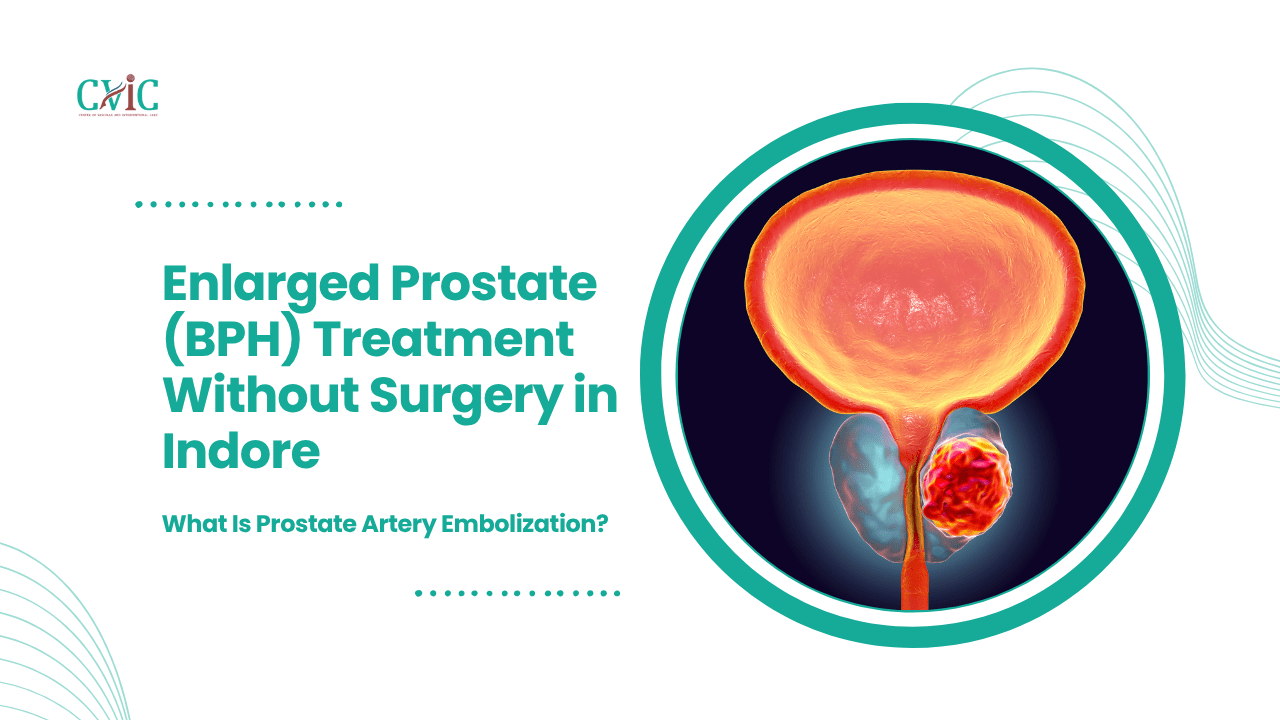
Quick answer: Yes — an enlarged prostate (BPH) can now be treated without surgery in Indore through Prostate Artery Embolization (PAE), available at CVIC Indore (Center Of Vascular And Interventional Care). PAE is a day-care, catheter-based procedure that blocks the excess blood supply feeding the enlarged prostate, shrinking it by roughly 20% and cutting urinary symptom scores by more than half within a year — all without cuts, general anesthesia, or a hospital stay. It is not for every patient, and this guide explains exactly who qualifies, how the procedure works, what results to expect, and when traditional surgery is still the right choice.
If you are a man over 50 in Indore who has started waking up two or three times a night to urinate, straining to start the stream, or feeling like your bladder never quite empties, you are almost certainly dealing with Benign Prostatic Hyperplasia (BPH) — the medical term for an enlarged prostate. It is one of the most common conditions of aging in men, and for decades the only real solutions were “wait it out,” take lifelong medication, or undergo surgery to cut away part of the gland.
That middle ground has changed. Prostate Artery Embolization, offered at CVIC Indore, gives men a genuine non-surgical option — one that treats the underlying enlargement rather than just managing symptoms with pills, and does so without the sexual side effects, bleeding risk, and hospital stay associated with surgical prostate removal. This guide walks through the science, the honest pros and cons, and exactly what to expect if you are considering Enlarged Prostate treatment at CVIC Indore.
What Is an Enlarged Prostate (BPH)?
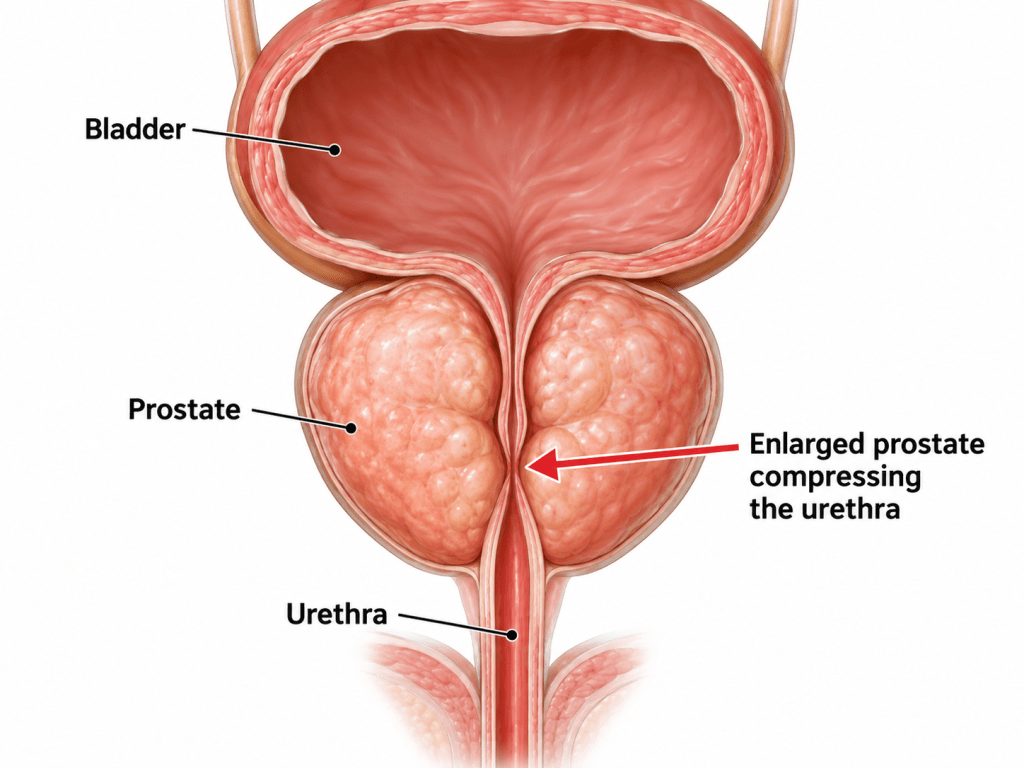
The prostate is a walnut-sized gland that sits just below the bladder and surrounds the urethra, the tube that carries urine out of the body. As men age, the prostate naturally continues to grow — a process driven by hormonal changes that has nothing to do with prostate cancer. When it grows enough to squeeze the urethra, it restricts urine flow and irritates the bladder, producing a cluster of symptoms doctors call Lower Urinary Tract Symptoms (LUTS).
BPH is extraordinarily common. About 50% of men between the ages of 51 and 60 already have BPH, and that number climbs to roughly 70% of men in their 60s and around 80% of men over 70. In other words, if you are an Indori man in your sixties reading this article, the odds are stacked toward “yes, this is you” rather than “no.”
The most common symptoms of an enlarged prostate include:
- A weak or slow urinary stream
- Difficulty starting urination, or straining to begin
- Frequent urination, especially at night (nocturia)
- A sudden, hard-to-control urge to urinate
- A sensation that the bladder never fully empties
- Stopping and starting again mid-stream
- Dribbling at the end of urination
- In advanced cases, urinary retention (complete inability to urinate) or recurrent urinary tract infections
It is worth saying clearly: BPH is not prostate cancer, and having an enlarged prostate does not mean you have cancer or are at higher risk of it. The two conditions can, however, coexist, which is why any responsible workup for an enlarged prostate — including at CVIC Indore — includes a PSA blood test and, when indicated, imaging to rule out malignancy before any BPH-specific treatment begins.
Also Read: Prostate Artery Embolization in Indore: Advanced Non-Surgical Treatment at CVIC Indore
Why Consider Treatment Without Surgery?
For years, men diagnosed with a bothersome enlarged prostate faced a narrow set of choices. Watchful waiting works for mild symptoms but does nothing once the gland is significantly enlarged. Daily medications (alpha-blockers and 5-alpha-reductase inhibitors) can help, but they come with their own side effects — dizziness, low blood pressure, retrograde ejaculation, reduced libido — and many men find the improvement partial or temporary as the prostate keeps growing underneath the medication.
That left surgery, most commonly Transurethral Resection of the Prostate (TURP), often described as the surgical “gold standard.” TURP works, but it is still a surgical procedure performed under spinal or general anesthesia, typically requiring a hospital stay of one to three days, a urinary catheter for several days afterward, and a real risk of bleeding, infection, and — most significantly for many men — retrograde ejaculation, which affects the large majority of patients who undergo it.
This is precisely the gap Prostate Artery Embolization fills. It treats the enlargement at its source — the blood supply feeding the overgrown prostate tissue — through a pinhole-sized catheter entry point, with no incision, no spinal anesthesia, and typically no overnight hospital stay. For a man who wants his urinary symptoms fixed without surgery, without a lengthy recovery, and without a high risk of permanent sexual side effects, PAE has become one of the most significant advances in prostate care in the last two decades — and it is now available close to home at CVIC Indore.
Also Read: Prostatic Artery Embolization: A Breakthrough Treatment for Enlarged Prostate in Indore
What Is Prostate Artery Embolization (PAE)?
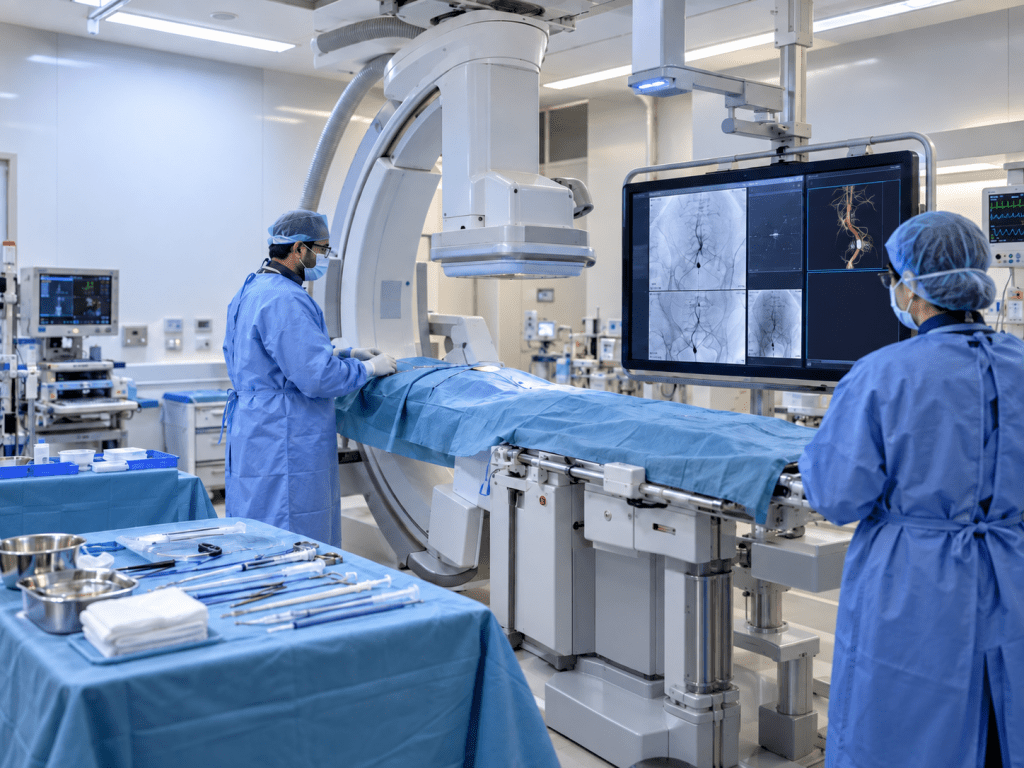
Prostate Artery Embolization is a minimally invasive, image-guided procedure performed by an interventional radiologist — a physician trained specifically in using imaging to guide tiny instruments through the body’s blood vessels. Rather than cutting into the prostate, PAE works from the inside of the blood vessels that feed it.
The prostate gland receives its blood supply through the prostatic arteries, small branches that come off the internal iliac arteries deep in the pelvis. In an enlarged prostate, these arteries have grown along with the gland, feeding the excess tissue that is now squeezing the urethra. During PAE, the interventional radiologist threads a thin catheter — usually through a tiny puncture in the wrist (radial access) or groin (femoral access) — through the body’s arterial network and into these prostatic arteries. Once positioned precisely, thousands of tiny particles, typically 300–500 micron microspheres, are injected through the catheter. These particles lodge in the small vessels feeding the prostate and permanently block blood flow to that tissue.
Deprived of its blood supply, the excess prostate tissue gradually shrinks over the following weeks and months, in much the same way a plant wilts when its water supply is cut off. As the gland shrinks, the pressure on the urethra eases, and urinary symptoms improve. Most men notice a meaningful improvement in urinary flow and symptoms within two to four weeks, with the full effect developing over one to three months as the prostate continues to shrink.
The PErFecTED Technique
Because the prostate’s blood supply is complex and highly variable from patient to patient — and because nearby arteries can supply the bladder, rectum, or penis — precision is everything in PAE. At CVIC Indore, the procedure follows the refined PErFecTED technique (Proximal Embolization First, Then Embolize Distal), a step-by-step approach that maps and treats each prostatic artery branch systematically, working from the larger proximal vessels toward the smaller distal branches that feed deep into the gland itself. This methodical approach is associated with more complete and durable prostate shrinkage compared with older, less selective embolization techniques.
Throughout the procedure, the interventional radiologist relies on digital subtraction angiography (DSA) and, at CVIC Indore, cone-beam CT imaging to map the pelvic vasculature in real time and confirm that the catheter tip is precisely within a prostatic artery before releasing any particles. In roughly a quarter of cases, small coils are placed to protect nearby non-target vessels before embolization, an extra safety step that significantly reduces the risk of particles straying into arteries that do not supply the prostate.
Also Read: Prostatic Artery Embolization: A Breakthrough Treatment for Enlarged Prostate
Who Is a Good Candidate for PAE?
Not every man with an enlarged prostate is best served by PAE, and a responsible clinic will say so plainly rather than recommend the same procedure to everyone. Based on the clinical evidence and the criteria used at centers performing PAE, good candidates generally share these features:
- Moderate-to-severe urinary symptoms, typically measured using the International Prostate Symptom Score (IPSS), a validated seven-question tool scored from 0 to 35. Men with an IPSS above roughly 13 — the moderate-to-severe range — are the ones most likely to benefit meaningfully from PAE.
- A significantly enlarged prostate, generally measured by ultrasound or MRI. Men with larger glands — prostate volumes above 80 grams — tend to see the most dramatic and reliable improvement, since PAE is especially effective at treating volume-driven obstruction.
- Symptoms that have not responded adequately to medication, or men who cannot tolerate the side effects of long-term BPH medications.
- Men who want to avoid general or spinal anesthesia — for example, those with significant heart or lung disease who are poor candidates for the anesthesia required by TURP or open surgery.
- Men concerned about preserving sexual function, since PAE carries a dramatically lower risk of retrograde ejaculation and erectile dysfunction than surgical options.
- Men on blood thinners who cannot safely stop them for surgery, since PAE can often be performed with less interruption to anticoagulation than TURP.
Who Should Not Consider PAE — Or May Need a Different Approach
Honesty matters more in medicine than almost anywhere else, and PAE is genuinely not the right fit for every patient:
- Very small prostates (generally under 40 grams) often respond less predictably to PAE, since the obstruction may be driven more by the bladder neck or prostate shape than by sheer tissue volume — these patients are frequently better served by other minimally invasive options or surgery.
- Men whose symptoms are storage-dominant rather than voiding-dominant — for example, primarily an overactive bladder pattern rather than a weak stream — may not improve as much, since PAE treats obstruction, not bladder muscle overactivity.
- Suspected or confirmed prostate cancer must be ruled out before PAE is considered, since PAE treats benign enlargement only.
- Unfavorable pelvic artery anatomy, such as severe atherosclerosis or anatomical variants that make safe catheterization of the prostatic arteries impossible, occasionally rules out PAE on technical grounds, discovered during the initial angiogram.
- Active urinary tract infection or bladder stones typically need to be treated first.
- Severe kidney disease, which can limit the safe use of the iodinated contrast dye needed for the angiogram.
At CVIC Indore, every patient undergoes a thorough evaluation — including IPSS scoring, prostate volume assessment, PSA testing, and a review of current medications — before PAE is recommended, so that the least invasive option that is genuinely appropriate for that specific patient is the one offered.
BPH Treatment Options Compared
| Treatment | Invasiveness | Anesthesia | Hospital Stay | Sexual Side Effects | Retreatment Needed |
|---|---|---|---|---|---|
| Watchful waiting | None | None | None | None | Symptoms may worsen over time |
| Daily medication | None | None | None | Possible (retrograde ejaculation, low libido) | Lifelong, ongoing cost |
| Prostate Artery Embolization (PAE) | Minimally invasive (pinhole access) | Local + light sedation | Usually day-care/overnight | Rare (well under 5%) | Uncommon; durable results in most patients |
| TURP (surgery) | Surgical (endoscopic resection) | Spinal/general | 1–3 days | Common (retrograde ejaculation in the majority of patients) | Occasional re-resection for regrowth |
| Open prostatectomy | Surgical (incision) | General | 3–5+ days | Common | Rare, but a major recovery |
Step-by-Step: What Happens During PAE at CVIC Indore
- Consultation and evaluation — A detailed history, IPSS symptom scoring, digital rectal exam, PSA testing, and ultrasound or MRI to measure prostate volume and map the pelvic anatomy.
- Pre-procedure planning — CT angiography is often used beforehand to study the prostatic artery anatomy, which varies from patient to patient and helps the team plan catheter access.
- Access — On the day of the procedure, a small needle puncture is made in the wrist or groin under local anesthesia. Most patients are comfortably sedated but awake throughout.
- Catheterization and mapping — Using X-ray guidance and digital subtraction angiography, a thin catheter is carefully navigated into the internal iliac artery and then selectively into each prostatic artery.
- Cone-beam CT confirmation — Advanced imaging confirms the catheter is precisely within the prostate’s blood supply and not near the bladder, rectum, or penile arteries.
- Embolization — Calibrated microspheres are slowly injected, following the PErFecTED technique, until blood flow to the target prostate tissue is blocked. The same process is repeated on the opposite side, since the prostate has both a left and right arterial supply.
- Closure and recovery — The catheter is removed, gentle pressure or a closure device seals the tiny access point, and the patient rests for a few hours before going home the same day or the following morning — no surgical incision, no stitches.
The entire procedure typically takes between 1.5 and 3 hours, depending on the complexity of the patient’s pelvic artery anatomy.
Results and Recovery
Because PAE works by gradually shrinking the prostate rather than immediately cutting away tissue, improvement unfolds over weeks rather than being instant — but the data on outcomes is strong. Pooled results from clinical studies, summarized in a detailed technical and clinical review published via PubMed Central, show that at 12 months after PAE, patients experience on average:
- An IPSS symptom score reduction of approximately 16 points — a dramatic improvement, often moving a patient from the “severe” symptom category down to “mild.”
- A prostate volume reduction of roughly 20%, with shrinkage continuing gradually over the following months.
- An improvement in peak urinary flow rate (Qmax) of about 6.5 mL/s, meaning a noticeably stronger, easier stream.
- Significant improvement in quality-of-life scores, reflecting less disruption to sleep, work, and daily activities.
- A long-term clinical success rate of roughly 76–85% at multi-year follow-up — meaning the large majority of appropriately selected patients remain satisfied with their results years later.
Recovery is typically fast. Most men experience mild pelvic discomfort, some burning during urination, and occasionally a small amount of blood in the urine or semen for a few days to a couple of weeks after the procedure — a cluster of expected, self-limited effects sometimes called “post-embolization syndrome.” Most patients return to normal daily activities within 2–3 days, and to full activity, including exercise, within a week — a fraction of the recovery time associated with TURP or open surgery.
Safety and Complications: An Honest Look
No medical procedure is without risk, and a trustworthy source should never suggest otherwise. Based on pooled data from clinical studies of PAE, approximately 32.9% of patients experience some form of adverse event — but this figure is far less alarming than it first sounds, because about 99% of these are minor and self-limited: transient pelvic pain, mild burning on urination, small amounts of blood in urine or semen, low-grade fever, or a brief episode of urinary retention, nearly all resolving within days to a couple of weeks without any specific treatment.
Major complications are rare — occurring in roughly 0.3% of cases — and can include non-target embolization (particles inadvertently affecting a nearby structure such as the bladder wall or rectum), which is precisely why the cone-beam CT confirmation and protective coiling steps described earlier are built into the CVIC Indore protocol.
Where PAE clearly distinguishes itself is in sexual function preservation. Studies report retrograde ejaculation rates of roughly 0–2.3% after PAE, compared with the majority of patients after TURP — clinical literature notes that most, if not all, TURP patients develop retrograde ejaculation, with erectile function otherwise preserved in about 90%. For men for whom preserving normal ejaculation matters, this difference is often the deciding factor between PAE and surgery.
PAE vs. TURP: A Closer Comparison
| Factor | Prostate Artery Embolization (PAE) | TURP (Surgery) |
|---|---|---|
| Access | Pinhole puncture (wrist or groin) | Endoscopic, through the urethra, under anesthesia |
| Anesthesia | Local + light sedation | Spinal or general |
| Hospital stay | Day-care or overnight | 1–3 days |
| Urinary catheter after procedure | Often not required, or removed same day | Required for several days |
| Blood loss | Minimal | Higher; occasional transfusion needed |
| Retrograde ejaculation | ~0–2.3% | Majority of patients |
| Erectile dysfunction risk | Very low | Present in a meaningful minority |
| Symptom (IPSS) improvement | Strong (~16-point average reduction) | Strong, often slightly greater in the short term |
| Best suited for | Men prioritizing sexual function preservation, faster recovery, or poor surgical/anesthesia candidates | Very large glands unresponsive to embolization, or when maximal immediate symptom relief is the priority |
| Return to normal activity | 2–3 days | 2–4 weeks |
Neither option is universally “better” — they serve overlapping but distinct patient profiles, which is exactly why a proper in-person evaluation matters more than a generic recommendation found online.
Why Choose CVIC Indore for Prostate Artery Embolization
CVIC Indore (Center Of Vascular And Interventional Care) is Central India’s dedicated vascular and interventional care center, built specifically around the kind of catheter-based, image-guided treatments that make procedures like PAE possible. A few reasons patients across Indore and the wider Madhya Pradesh region choose CVIC Indore for enlarged prostate treatment:
- Dedicated interventional radiology expertise. PAE is a technically demanding procedure that depends entirely on the operator’s skill in navigating small, variable pelvic arteries — this is the core specialty of CVIC Indore’s team, recognized among the best interventional radiologists in Indore.
- Advanced imaging infrastructure, including cone-beam CT and digital subtraction angiography, essential for the precision PAE demands.
- A comprehensive vascular and interventional radiology practice, with PAE offered alongside the clinic’s broader range of non-surgical, image-guided treatments and vascular radiology services, meaning the same expertise that treats uterine fibroids, varicose veins, and thyroid nodules without surgery is applied to enlarged prostate care.
- A day-care model designed around minimizing disruption to patients’ lives — most PAE patients at CVIC Indore go home the same day or the next morning.
- Straightforward, honest counseling — every patient is told plainly whether they are a good PAE candidate, a better fit for medication, or a case where surgery genuinely remains the right choice, rather than being steered toward one treatment regardless of fit.
Myths vs. Facts About Prostate Artery Embolization
Myth: An enlarged prostate always means prostate cancer. Fact: BPH is a benign (non-cancerous) enlargement. It can coexist with prostate cancer, which is why PSA testing is part of every proper evaluation, but the two are medically distinct conditions.
Myth: PAE is experimental or unproven. Fact: PAE has been studied in clinical trials and real-world practice for over a decade, with published long-term outcome data showing durable symptom relief in the majority of appropriately selected patients.
Myth: Non-surgical treatment can’t be as effective as surgery. Fact: For appropriately selected patients — particularly those with larger prostates — PAE delivers strong, clinically meaningful symptom improvement, with the added advantage of a much lower risk to sexual function.
Myth: Recovery from PAE takes as long as surgery. Fact: Most PAE patients are back to normal daily activity within 2–3 days, compared with weeks of recovery after TURP or open prostatectomy.
Myth: PAE is only for men who can’t have surgery. Fact: While PAE is an excellent option for men who are poor surgical or anesthesia candidates, many men actively choose PAE specifically to avoid the sexual side effects and longer recovery of surgery, not because surgery is off the table for them.
Frequently Asked Questions
1. Is Prostate Artery Embolization painful? Most patients feel only the initial local anesthetic injection at the access site. During the procedure itself, patients are sedated and comfortable. Mild pelvic discomfort or burning on urination for a few days afterward is common and manageable with simple medication.
2. How long do the results of PAE last? Long-term studies show clinical success rates of roughly 76–85% at multi-year follow-up, meaning most patients enjoy durable relief. As with any BPH treatment, the prostate can very gradually regrow over many years, and a small number of patients may eventually need a repeat procedure or an alternative treatment.
3. Will PAE affect my ability to get an erection? Erectile dysfunction after PAE is uncommon, and several studies report no significant negative impact on erectile function, distinguishing it clearly from surgical options.
4. How is PAE different from medication for enlarged prostate? Medications manage symptoms by relaxing prostate muscle tissue or slowing further growth, but must be taken indefinitely and do not shrink the gland substantially. PAE physically reduces prostate volume by cutting off its blood supply, addressing the underlying enlargement.
5. Do I need general anesthesia for PAE at CVIC Indore? No. PAE is performed under local anesthesia at the access site combined with light intravenous sedation for comfort — general or spinal anesthesia is not required.
6. How soon can I go back to work after PAE? Most patients resume normal, non-strenuous activity within 2–3 days. Those with more physically demanding jobs are typically advised to wait about a week.
7. Is Prostate Artery Embolization available in Indore? Yes. CVIC Indore offers Prostate Artery Embolization for eligible patients with an enlarged prostate, using advanced angiography and cone-beam CT imaging, performed by the clinic’s dedicated interventional radiology team.
Final Thoughts
An enlarged prostate is one of the most common — and most treatable — conditions of aging in men, yet many men in Indore still assume their only choices are “live with the symptoms” or “have surgery.” Prostate Artery Embolization has changed that equation, offering a genuinely effective, minimally invasive path to relief for the right patient, with a fraction of the risk to sexual function and a fraction of the recovery time associated with traditional surgery.
If nighttime bathroom trips, a weakening stream, or the constant feeling of incomplete emptying have started affecting your life, the right next step is a proper evaluation — not guesswork. The team at CVIC Indore can assess your IPSS score, prostate volume, and overall health to tell you honestly whether Prostate Artery Embolization is the right fit, or whether another option would serve you better.
Visit CVIC Indore
CVIC — Center Of Vascular And Interventional Care 403, Panama Tower, Gita Bhawan Road, near Crown Palace, South Tukoganj, Indore, Madhya Pradesh 452008
Phone: 0731 4675670 / +91-8103727728
Team: Dr. Alok K. Udiya (MD Radiology, Fellowship in Neuro Intervention Radiology, Switzerland), Dr. Shailesh Gupta (MD Radiology, PDCC in Interventional Radiology), Dr. Nishant Bhargava (MD Radiology, Fellowship in Neuro Intervention Radiology, Switzerland)
Disclaimer
This article is intended for general educational purposes only and does not constitute medical advice. Every patient’s anatomy, symptom severity, and overall health are different, and suitability for Prostate Artery Embolization can only be determined through an in-person clinical evaluation, including imaging and laboratory testing, by a qualified interventional radiologist or urologist. If you are experiencing urinary symptoms, please consult a doctor for personalized assessment and treatment planning.