

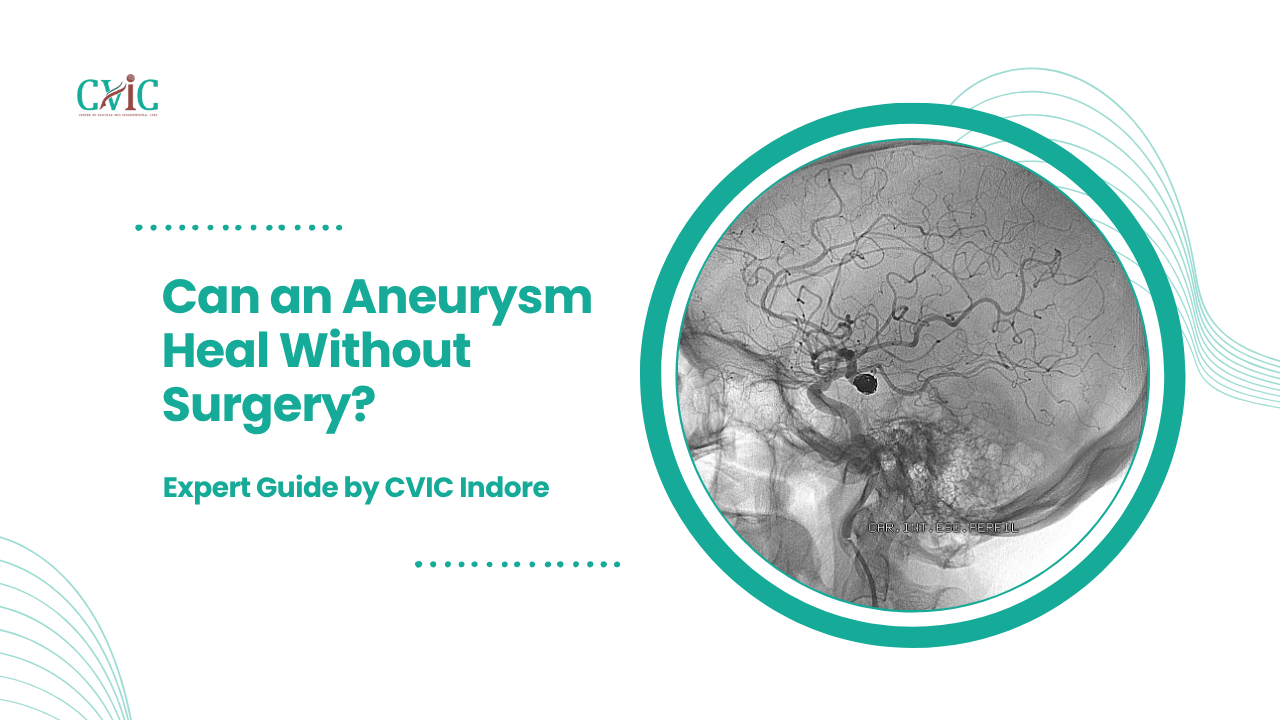
Hearing that you have an aneurysm can be frightening. One of the first questions that comes to most patients’ minds is:
“Can an aneurysm heal without surgery?”
The answer depends on several factors, including the type of aneurysm, its size, its location, how quickly it is growing, and your overall health.
The good news is that not every aneurysm requires immediate surgery. Some small aneurysms can be monitored with regular imaging and medical management, while others require timely treatment to prevent serious complications. The treatment plan is always based on an individual evaluation by a vascular specialist.
At CVIC Indore, experienced interventional radiologists Dr. Alok K Udiya, Dr. Shailesh Gupta, and Dr. Nishant Bhargava evaluate aneurysms using advanced imaging and recommend the most appropriate treatment for each patient.
In this guide, we’ll explain everything you need to know about aneurysms, whether they can heal on their own, when treatment becomes necessary, and how modern minimally invasive procedures have changed aneurysm care.
What is an Aneurysm?
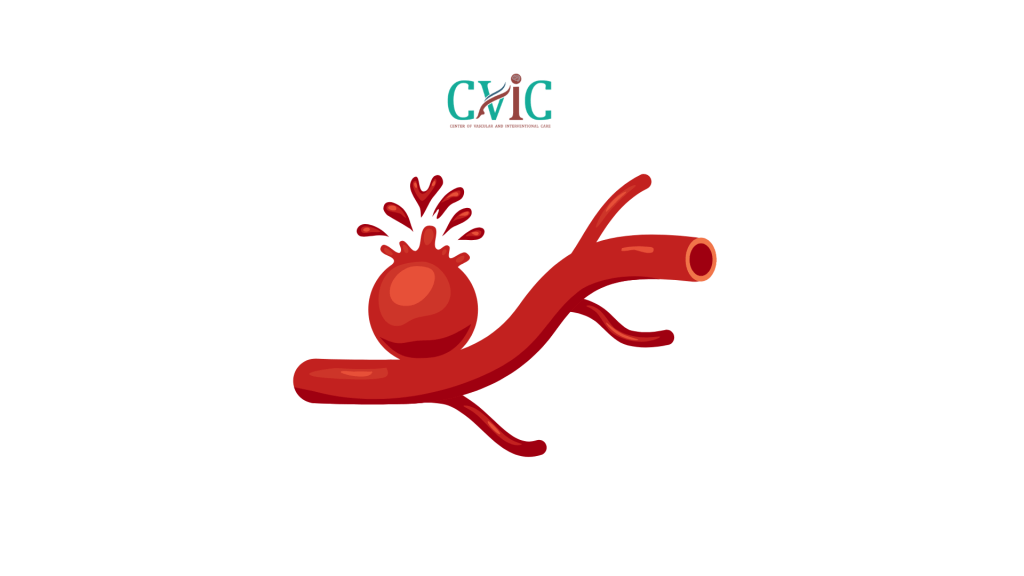
An aneurysm is an abnormal bulging or balloon-like swelling in the wall of a blood vessel, usually an artery.
Over time, the weakened blood vessel wall may stretch because of blood pressure. If the aneurysm grows too large or ruptures, it can become a medical emergency.
Aneurysms can occur in different parts of the body, including:
- Brain (Cerebral aneurysm)
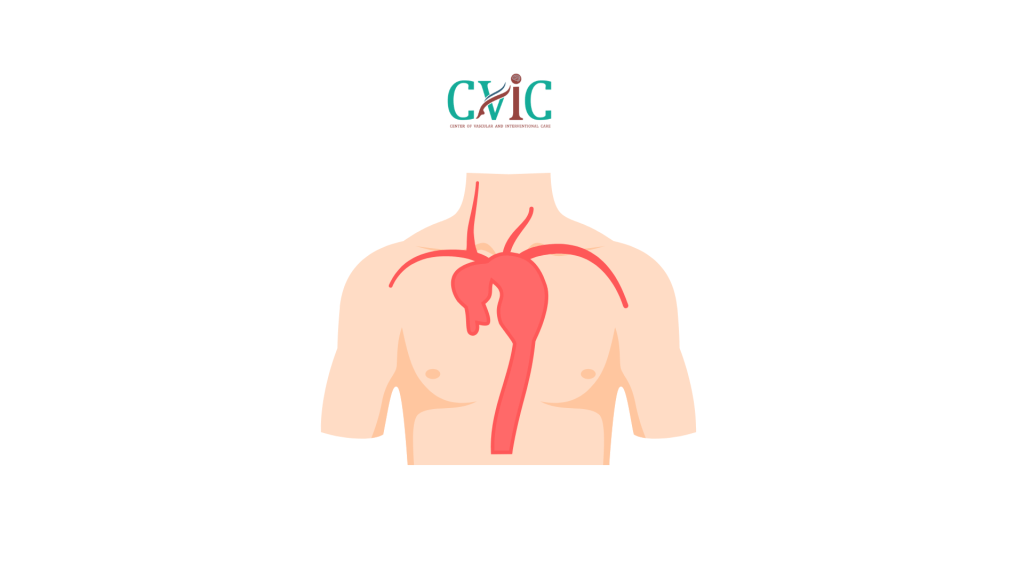
- Aorta (Aortic aneurysm)
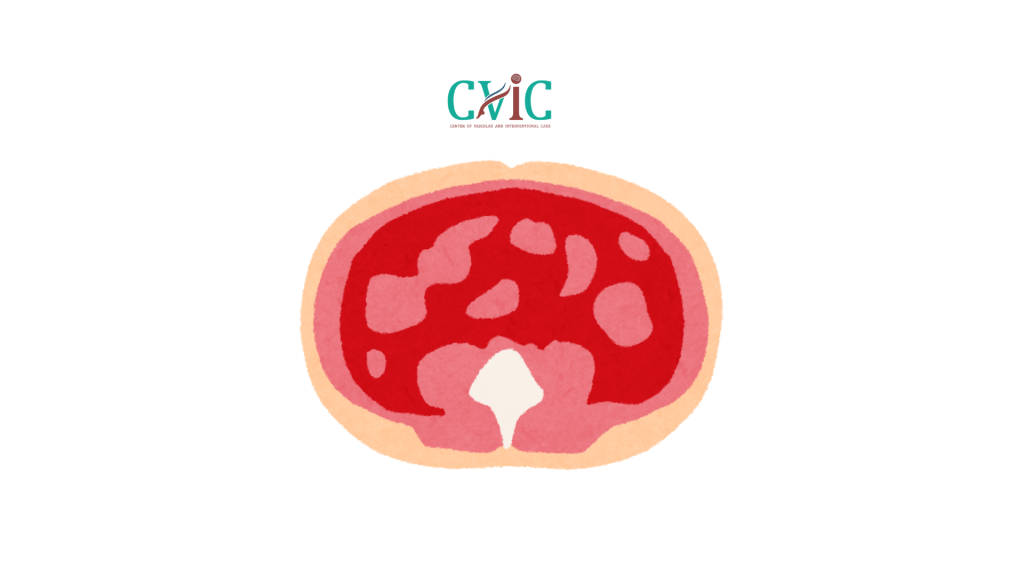
- Abdomen (Abdominal aortic aneurysm)
- Chest (Thoracic aortic aneurysm)
- Legs
- Arms
- Spleen
- Kidneys
Also Read: Symptoms Before Brain Aneurysm Rupture: What You Must Never Ignore
Why Does an Aneurysm Develop?
Several conditions can weaken the artery wall.
Common causes include:
- High blood pressure
- Smoking
- High cholesterol
- Atherosclerosis (hardening of arteries)
- Family history
- Increasing age
- Genetic disorders
- Previous injury
- Certain infections (rare)
Often, more than one factor contributes to aneurysm formation.
Also Read: Understanding Aneurysms Treatment in Indore – Neuro Intervention Explained
Can an Aneurysm Heal Without Surgery?
This is one of the most common questions patients ask.
The simple answer is:
Most aneurysms do not heal or disappear on their own.
Once an artery wall has weakened and formed an aneurysm, it usually does not return to its normal shape naturally.
However, not every aneurysm needs surgery immediately.
Many small aneurysms can be safely monitored with regular scans and treated by controlling the factors that increase the risk of growth or rupture.
The decision depends on:
- Size of the aneurysm
- Location
- Growth rate
- Symptoms
- Overall health
- Risk of rupture
When Can an Aneurysm Be Monitored?
Doctors may recommend regular observation when:
- The aneurysm is small.
- It is not causing symptoms.
- Imaging shows it is stable.
- The risk of rupture is low.
- The patient’s overall condition makes immediate intervention unnecessary.
Monitoring generally includes:
- CT scan
- MRI
- Ultrasound (for some aneurysms)
- Blood pressure management
- Lifestyle modification
- Scheduled follow-up visits
Also Read: When Should I Seek Emergency Help for an Aneurysm? Learn the Warning Signs
Can Medicines Cure an Aneurysm?
Many patients believe medicines can make an aneurysm disappear.
Unfortunately, there is currently no medicine that can shrink or completely cure an existing aneurysm.
However, medications play an important role in reducing complications.
Doctors may prescribe medicines to help control:
- High blood pressure
- High cholesterol
- Heart disease
- Blood clot risk (in selected patients)
These medicines help lower stress on the blood vessel wall but do not remove the aneurysm.
Lifestyle Changes That Help
Although lifestyle changes cannot cure an aneurysm, they can reduce the chances of growth and complications.
Important lifestyle changes include:
Control Blood Pressure
High blood pressure places additional stress on weakened arteries.
Keeping blood pressure within the recommended range is essential.
Stop Smoking
Smoking is one of the strongest risk factors for aneurysm growth and rupture.
Quitting smoking significantly benefits vascular health.
Eat a Heart-Healthy Diet
A balanced diet helps improve overall blood vessel health.
Choose foods rich in:
- Fruits
- Vegetables
- Whole grains
- Lean protein
- Healthy fats
Limit:
- Salt
- Fried food
- Processed food
- Excess sugar
Exercise Regularly
Moderate physical activity helps improve heart health.
However, patients with aneurysms should discuss exercise intensity with their doctor, especially before lifting heavy weights or starting strenuous activities.
Manage Diabetes and Cholesterol
Keeping diabetes and cholesterol under control reduces additional stress on blood vessels.
When Does an Aneurysm Need Treatment?
Treatment may be recommended if:
- The aneurysm becomes large.
- It grows rapidly.
- It causes symptoms.
- Imaging shows a higher risk of rupture.
- It is located in a high-risk area.
- The patient develops pain or other complications.
The decision is individualized after careful evaluation.
Symptoms That Should Never Be Ignored
Some aneurysms cause no symptoms.
Others may cause symptoms depending on their location.
Possible warning signs include:
- Severe headache
- Sudden chest pain
- Back pain
- Abdominal pain
- Pulsating abdominal swelling
- Vision problems
- Difficulty speaking
- Weakness on one side of the body
- Sudden dizziness
If an aneurysm ruptures, it becomes a medical emergency requiring immediate treatment.
Modern Treatment Options for Aneurysm
When treatment becomes necessary, surgery is not always the only option.
Today, many aneurysms can be treated using minimally invasive endovascular procedures.
Depending on the type and location, treatment options may include:
- Endovascular aneurysm repair (EVAR)
- Stent graft placement
- Coil embolization
- Flow diverter devices (for selected brain aneurysms)
- Open surgery (when appropriate)
The most suitable option depends on the patient’s condition and imaging findings.
What is Endovascular Treatment?
Endovascular treatment is a minimally invasive procedure.
Instead of making a large surgical incision, doctors access the blood vessel through a small puncture, usually in the groin or wrist.
Using imaging guidance, special catheters, wires, coils, or stent grafts are advanced to the aneurysm.
Benefits may include:
- Smaller incision
- Less pain
- Shorter hospital stay
- Faster recovery
- Reduced blood loss
Not every aneurysm is suitable for endovascular treatment, but many patients can benefit from this approach after proper evaluation.
How is an Aneurysm Diagnosed?
Doctors may use different imaging tests, including:
- Ultrasound
- CT Angiography (CTA)
- MR Angiography (MRA)
- Digital Subtraction Angiography (DSA)
These tests help determine:
- Size
- Shape
- Location
- Blood flow
- Risk factors
Accurate imaging is essential for treatment planning.
Is Every Aneurysm Dangerous?
Not necessarily.
Many aneurysms remain stable for years without causing symptoms.
However, every aneurysm deserves proper medical evaluation because some can enlarge or rupture over time.
Regular follow-up helps detect changes early.
Can Exercise Make an Aneurysm Worse?
Most patients can continue normal daily activities.
However, heavy weightlifting and activities that sharply increase blood pressure may not be suitable for everyone.
Your doctor will recommend safe activity levels based on:
- Aneurysm size
- Location
- Blood pressure
- Overall cardiovascular health
Can an Aneurysm Return After Treatment?
Some aneurysms may require long-term follow-up even after treatment.
Regular imaging helps ensure:
- The repair remains effective.
- Blood flow is normal.
- There are no new complications.
Your doctor will recommend an appropriate follow-up schedule.
Why Early Diagnosis Matters
Many aneurysms produce no symptoms until they become large or rupture.
Early detection allows doctors to:
- Monitor safely
- Plan treatment at the right time
- Reduce complications
- Improve long-term outcomes
Regular health checkups and timely imaging are especially important for people with risk factors such as high blood pressure, smoking, or a family history of aneurysm.
Why Choose CVIC Indore for Aneurysm Evaluation?
Patients looking for expert aneurysm care in Indore need experienced specialists, accurate diagnosis, and modern treatment options.
At CVIC Indore, patients benefit from:
- Advanced vascular imaging
- Comprehensive aneurysm evaluation
- Minimally invasive endovascular treatment options (when appropriate)
- Personalized treatment planning
- Experienced interventional radiology team
The team includes:
- Dr. Alok K Udiya
- Dr. Shailesh Gupta
- Dr. Nishant Bhargava
Their expertise in vascular and interventional radiology helps patients receive evidence-based care tailored to their condition.
Frequently Asked Questions
1. Can an aneurysm heal naturally?
Most aneurysms do not heal or disappear on their own. Some can be safely monitored, while others require treatment.
2. Can medicine cure an aneurysm?
Medicines help control risk factors such as high blood pressure but do not eliminate an existing aneurysm.
3. Does every aneurysm require surgery?
No. Some aneurysms can be monitored with regular imaging if the risk of rupture is low.
4. What happens if an aneurysm is left untreated?
Some aneurysms remain stable, while others may enlarge or rupture. Regular medical follow-up is essential.
5. Can lifestyle changes help?
Yes. Quitting smoking, controlling blood pressure, eating a healthy diet, and regular follow-up can help reduce the risk of aneurysm progression.
6. What imaging tests diagnose an aneurysm?
Doctors may use ultrasound, CT angiography, MR angiography, or digital subtraction angiography, depending on the location.
7. Is endovascular treatment safer than open surgery?
Both approaches have benefits and limitations. The most appropriate treatment depends on the patient’s anatomy and overall health.
8. Can young people develop an aneurysm?
Yes, although aneurysms are more common with increasing age, they can occur in younger individuals due to genetic or other medical conditions.
9. Who should get evaluated for an aneurysm?
People with symptoms, a family history, uncontrolled high blood pressure, or other risk factors should consult a specialist if advised by their doctor.
10. Where can I consult for aneurysm evaluation in Indore?
Patients can consult the experienced interventional radiology team at CVIC Indore, including Dr. Alok K Udiya, Dr. Shailesh Gupta, and Dr. Nishant Bhargava, for evaluation and personalized treatment planning.
Conclusion
An aneurysm is a serious medical condition, but it does not always require immediate surgery. While aneurysms generally do not heal on their own, many can be carefully monitored with regular imaging and appropriate medical management.
The right treatment depends on factors such as the aneurysm’s size, location, growth rate, symptoms, and overall risk of rupture. Modern minimally invasive endovascular techniques have expanded treatment options for many patients, reducing recovery time compared with traditional surgery in suitable cases.
If you have been diagnosed with an aneurysm or have concerns about your vascular health, timely evaluation is essential. At CVIC Indore, Dr. Alok K Udiya, Dr. Shailesh Gupta, and Dr. Nishant Bhargava provide expert assessment and personalized care to help patients make informed decisions based on the latest evidence and advanced imaging.